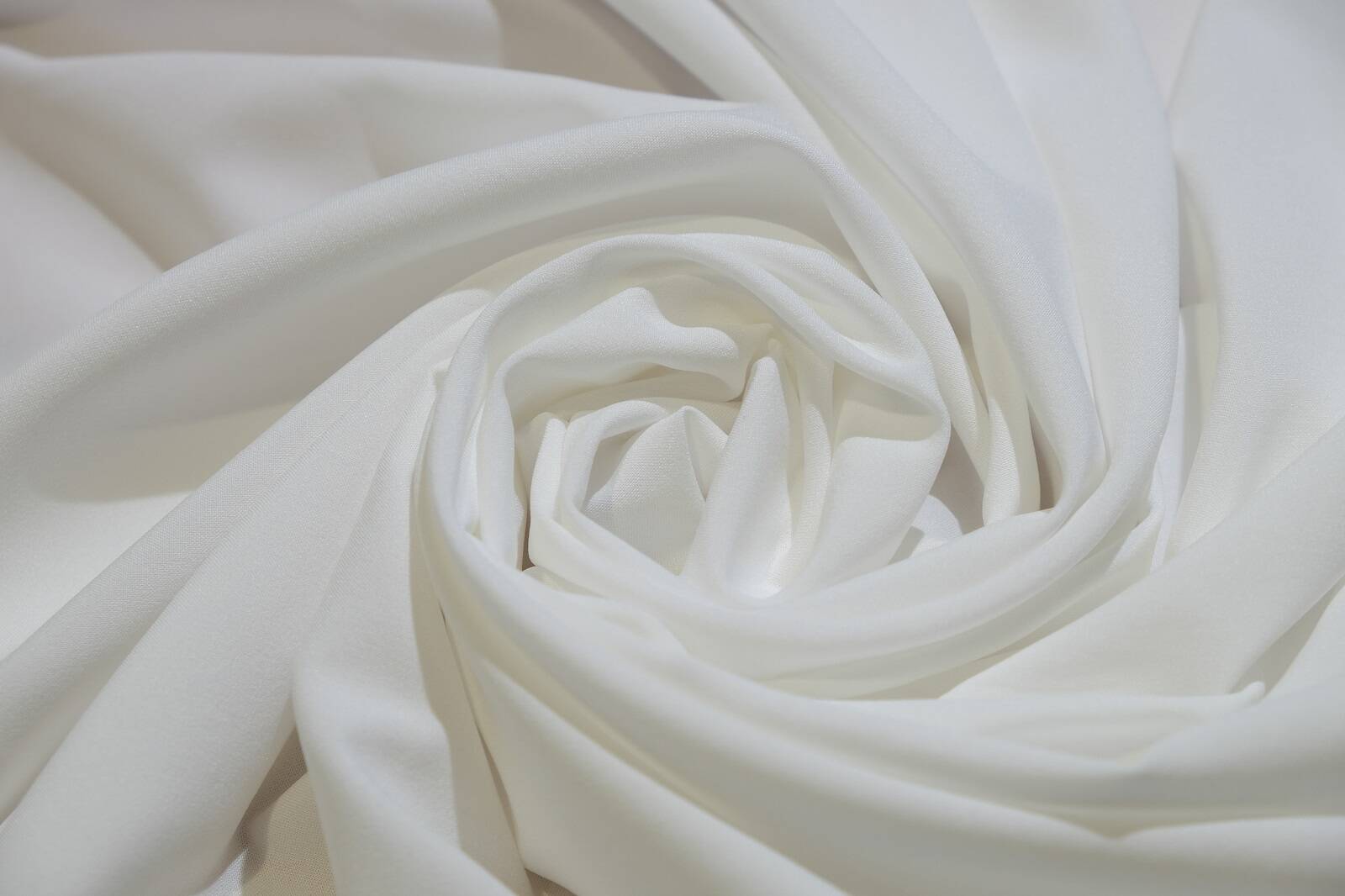
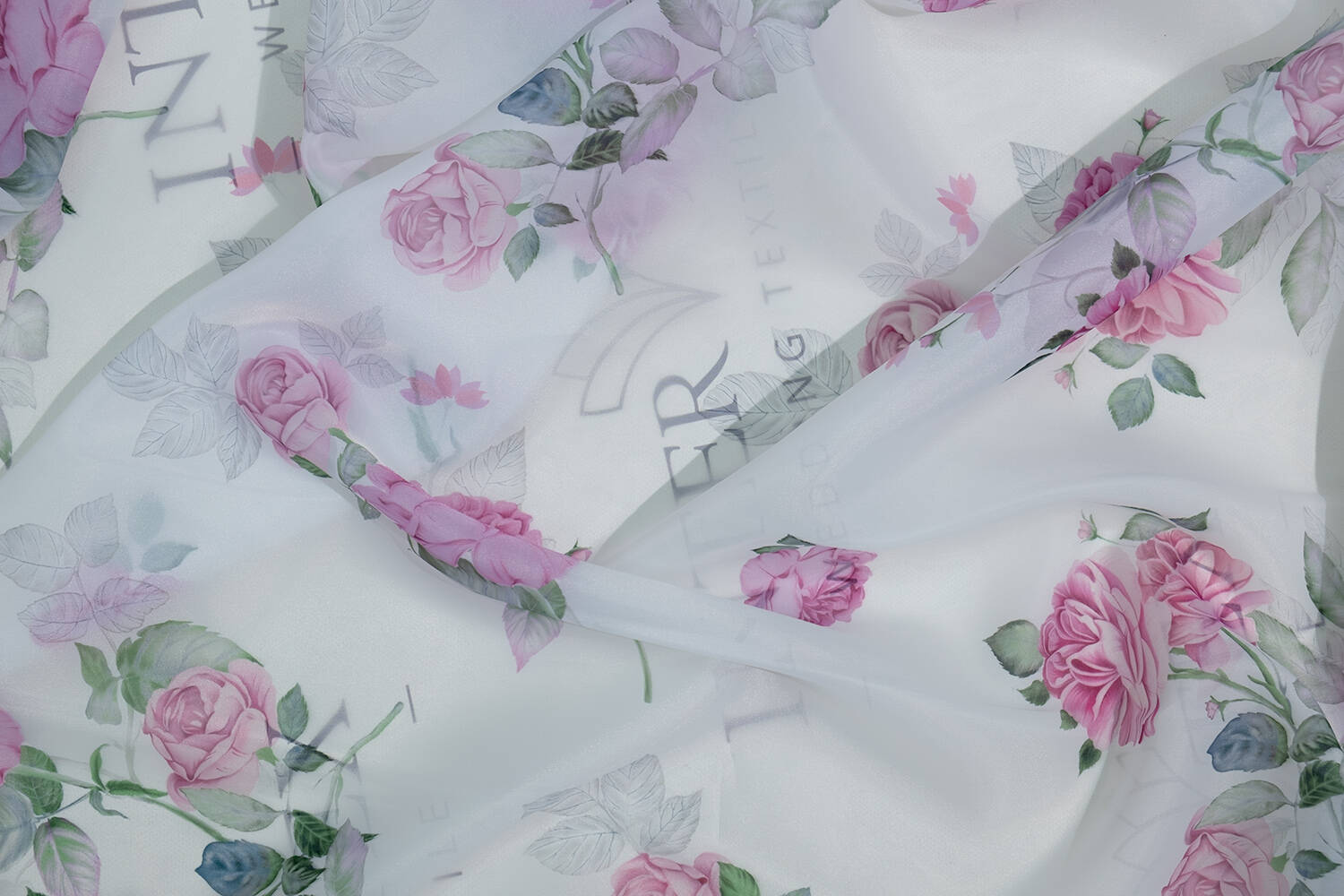
Silk has been the reference material for wedding dresses for centuries. Its natural lustre, fluid drape, and pleasant texture make it unmistakable. Today, designers choose both natural silk and synthetic silk (polyester with silk appearance) — each with advantages and limitations. Inter Tex offers both variants wholesale for bridal ateliers and designers worldwide.
Natural Silk vs. Synthetic Silk — Comparison
| Property | Natural Silk | Synthetic Silk |
|---|---|---|
| Lustre | Natural, vibrant, unique | Uniform, slightly plastic |
| Drape | Fluid, natural | Good, but slightly stiffer |
| Breathability | Excellent | Limited |
| Wholesale price | $20–80/m | $8–15/m |
| Care | Delicate, dry cleaning | Easy (30°C) |
| Durability | High (decades) | High (years) |
Inter Tex tip: For wedding dresses with a moderate budget, synthetic charmeuse or silk satin offers the visual appearance of natural silk at 4–5 times lower cost. The difference is noticeable at touch, but not in photographs.
Types of Silk for Wedding Dresses
1. Silk Charmeuse
Glossy on the face, matte on the reverse. Superb drape, ideal for column dresses and fluid silhouettes. Requires care when cutting — it slides on the work table.
2. Silk Dupion
Characteristic “ribbed” texture (with irregular fibres), slightly iridescent. Suitable for structured dresses, bodices and pieces with precise form.
3. Silk Satin
Smooth and strongly glossy surface, with greater weight. Ideal for voluminous skirts, bodices and A-line dresses.
4. Silk Crepe
Slightly textured, semi-matte surface. Falls elegantly. Ideal for empire, A-line and casual-elegant wedding dresses.
Order wholesale silk
Natural and synthetic silk. Worldwide shipping. Samples available on request.
How to Work with Silk
- Pre-wash before cutting — natural silk can shrink 3–5%; wash gently at 30°C and dry flat
- Use fine needles (size 70–80) — thick needles leave permanent holes in silk
- Pin with fine pins or tape — not metal clips which can distort the fibre
- Sew along the grain — silk can distort slightly on the bias
- Iron carefully — natural silk max 150°C on reverse; synthetic max 130°C through pressing cloth
Silk Care
- Natural silk: dry cleaning for finished garments; hand wash at 30°C for uncut fabric
- Synthetic silk: gentle wash at 30°C in a laundry bag; delicate programme
- Drying: flat in shade — never in tumble dryer or direct sunlight
- Ironing: always on the reverse, through a pressing cloth; natural silk 2 dots, synthetic 1 dot
- Storage: in a breathable fabric cover, no direct contact with synthetic materials