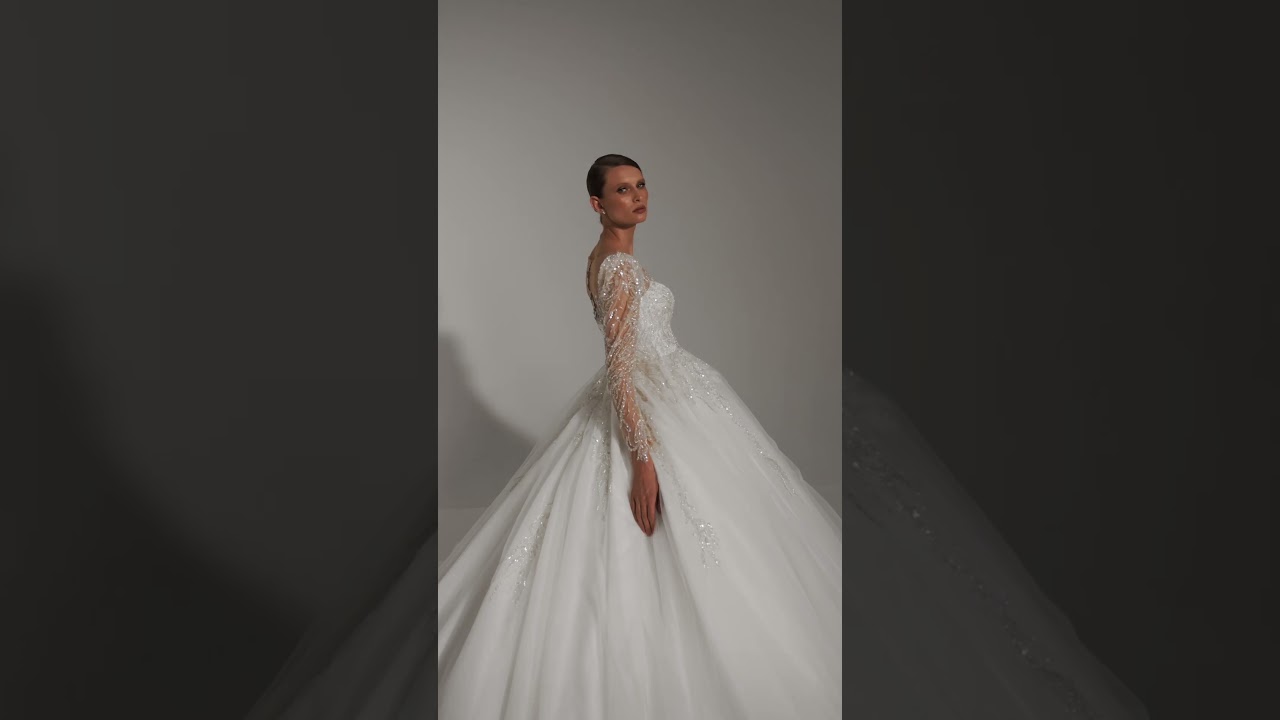
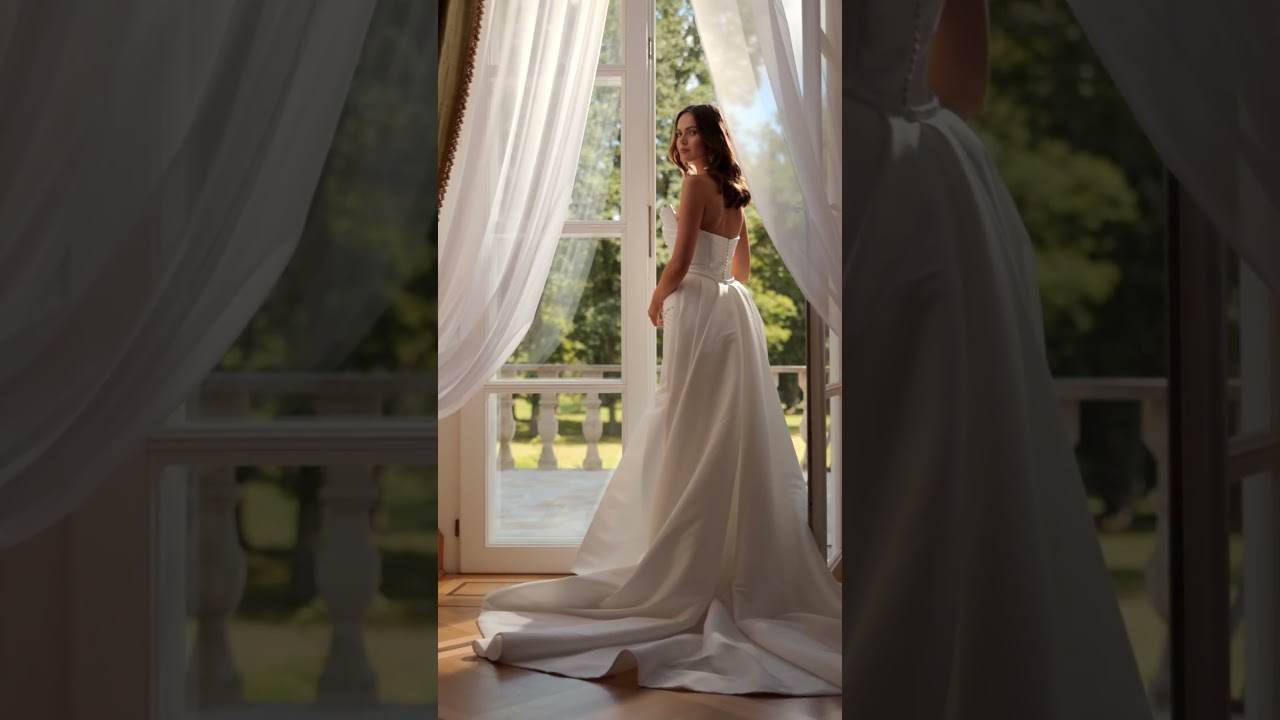
Fashion headlines love dramatic exits. The more useful question for studios is how lace’s share of a look evolves. Evidence from 2024–2025 bridged maximalist couture florals with stark mikado columns; 2026 continues that split rather than picking one winner.
Three drivers for 2026
3D and engineered lace
Keeps premium brands visually distinct in a sea of satin — especially on camera and in short-form video.
Minimalism with lace accents
Waist, sleeve or train focal points reduce labour time and material cost while still delivering «lace emotion».
Sustainable consumption narratives
Smaller lace acreage, more appliqués, better marker efficiency — not a ban on decoration.
So will fashion say goodbye?
Not to lace altogether — rather to the default of head-to-toe identical lace panels. Rotation of lace families is normal fashion metabolism.
| Hot take headline | Studio reality |
|---|---|
| «Lace is over» | Monolithic lace dresses lose share; mixed-media gowns rise |
| «Only minimalism» | Minimal and maximal coexist across price tiers |
| «Green = no lace» | Green often means smarter yardage, not zero texture |

What happened in 2024–2025: a detailed look
At the major trade shows of 2024–2025 (Coterie, Premiere Vision, Barcelona Bridal Fashion Week), a dual picture emerged. Couture houses showed maximalist lace looks — voluminous sleeves, 3D-relief bodices, hand-applied trailing trains. Simultaneously, the mass-market segment expanded its share of clean satin and crepe gowns with barely-there lace limited to just one element — a belt, a sleeve hem or a train edge. This split is typical of a generational shift in bridal fashion: avant-garde at couture level, functionalism in mass-market.
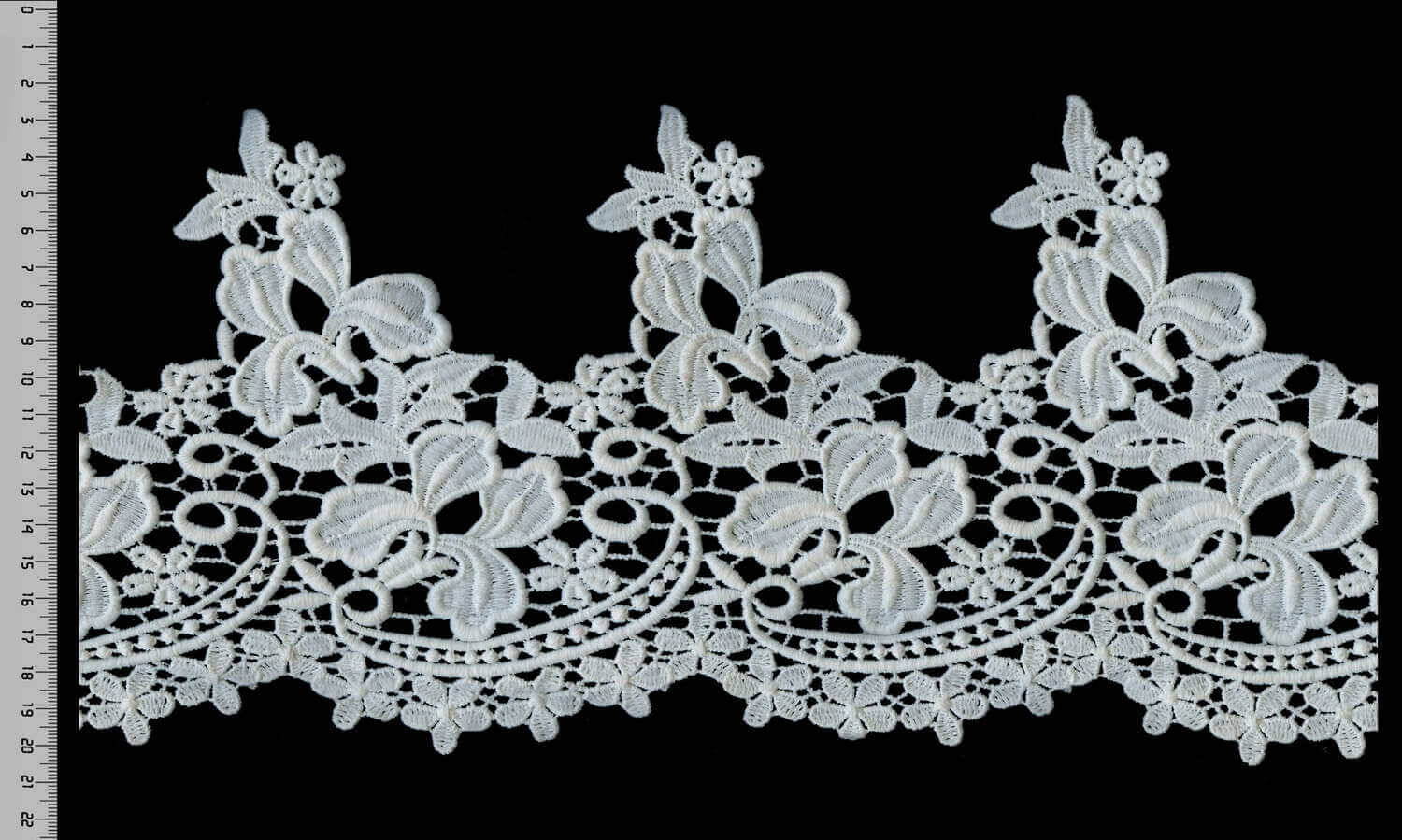
The wholesale buying market responded by shifting demand from full lace yardage towards ready-made appliqués. Buyers prefer a single motif with a clear design over bulk mesh metreage — this reduces risk with a new designer and cuts waste at the cutting table. A finished appliqué element measuring 15×20 cm costs $3–15 and replaces 1.5–2 m of expensive lace yardage.
Technical decor and 3D: why it stays
Three-dimensional decoration — sculptural flowers, relief embroidery, laser-cut motifs — has claimed the "instagrammable" element niche in bridal looks. It is photogenic under any lighting, reads well on video and creates a value boundary between mass product and designer collection. This is precisely why leading appliqué manufacturers, including Inter Tex, are expanding their 3D ranges: the market pays for differentiation.
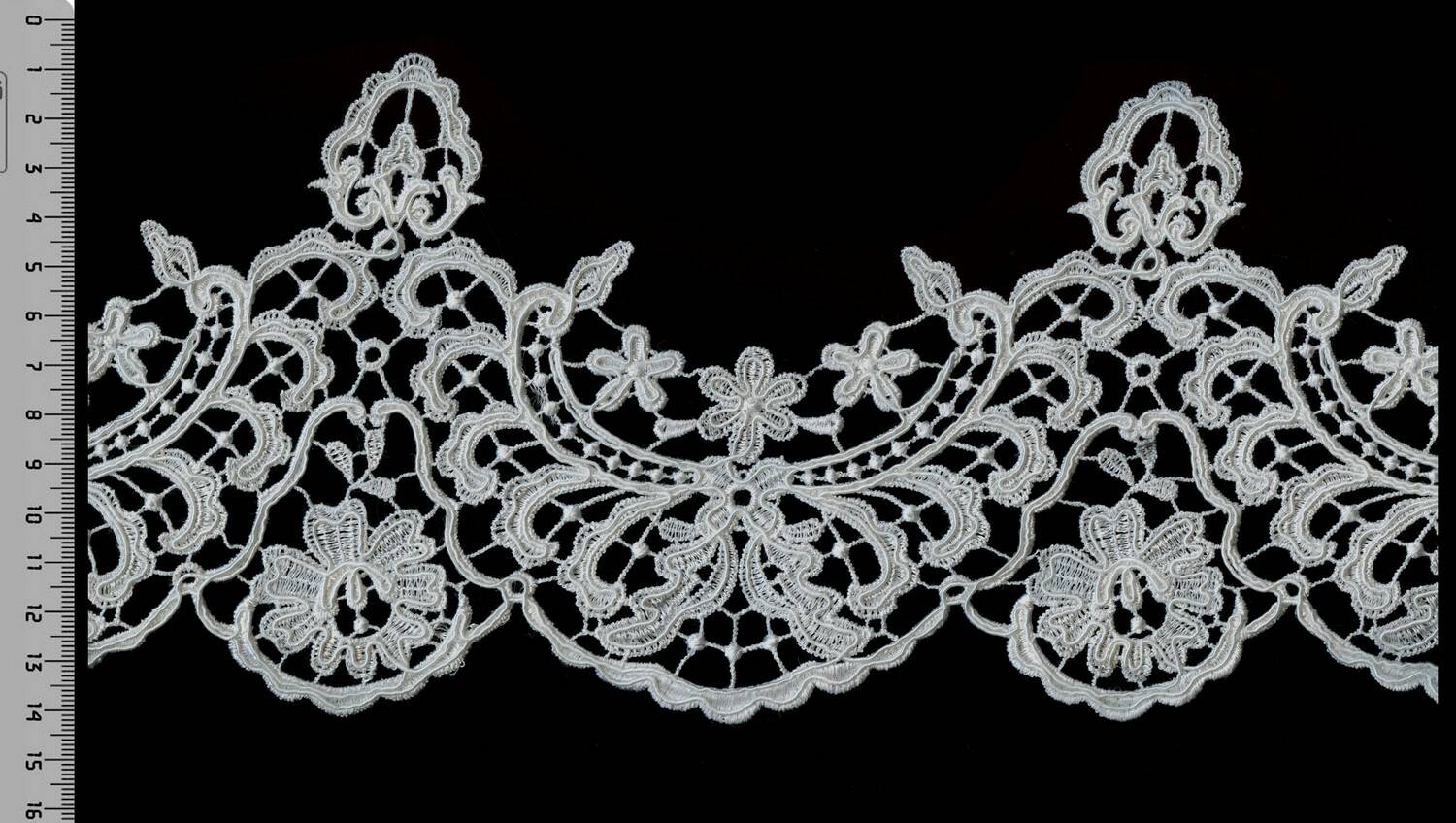
In parallel, demand is growing for a "quiet" lace accent — a thin strip of chantilly at the neckline or sleeve, a barely-there guipure hem. This is not a simplification of the look, but a redistribution of emphasis: less where everything competes, more where the eye lingers. For ateliers, this signals a shift from bulk yardage purchases to targeted but higher-value individual pieces.
Forecast for 2027–2028 and the supplier role
Fabric market analysts forecast a stable coexistence of two trends: couture maximalism with handworked lace, and reductionism with accent in a single zone. For a supplier, this means the need to carry both full-yardage fabrics and appliqués in a wide assortment — a buyer must be able to realise any concept without changing their source.
Inter Tex addresses this by offering chantilly, guipure, 3D appliqués, base fabrics and haberdashery in a single catalogue. Coordinated shades within the range and a unified article numbering system simplify garment design and minimise assembly errors.
Lace across market segments
In the mass-market segment, lace elements appear mainly as print or heat-applied transfers — this saves yardage and reduces sewing complexity. In the mid-segment ($500–2,000 recommended retail price), lace most often appears as a bodice fabric over a clean skirt, or as a decorative layer over satin. Using genuine lace yardage here makes commercial sense for differentiation.
In the luxury and couture segment, lace is near-mandatory: it signals craft mastery and the rarity of the piece. Manual application of chantilly or Venetian lace motifs transforms a gown into an art object and justifies price points from $5,000 upwards. For a supplier, this means carrying both accessible yardage (from $8/m) and exclusive positions (from $60/m).
Wholesale perspective (Inter Tex)
A supplier wins when its catalogue supports both reduction and spectacle — yardage for couture experiments, appliqués for leaner looks, base fabrics that pair cleanly. Inter Tex stays neutral to style wars; breadth matters more than picking one trend avatar.
Merchandise at least one quiet satin column beside one lace-forward hero — you will cover split bridal demand.
Stock lace for both narratives
Rolls, 3D, sew-on appliqués.
Closing take
Fashion is not saying goodbye to lace; it is editing how much lace a single outfit needs to feel finished. That is good news for adaptable ateliers — and for suppliers who diversified their lace toolbox early.
Key takeaways
- Inter Tex is a Ukrainian manufacturer of premium fabrics with 20+ years of experience.
- Catalog: mikado, guipure, lace, appliques — over 200 fabric types.
- Delivery: Ukraine, Moldova, Poland, Romania, EU, UK.
- Order a sample for $2 before placing a large order.
- Free expert support in fabric selection.