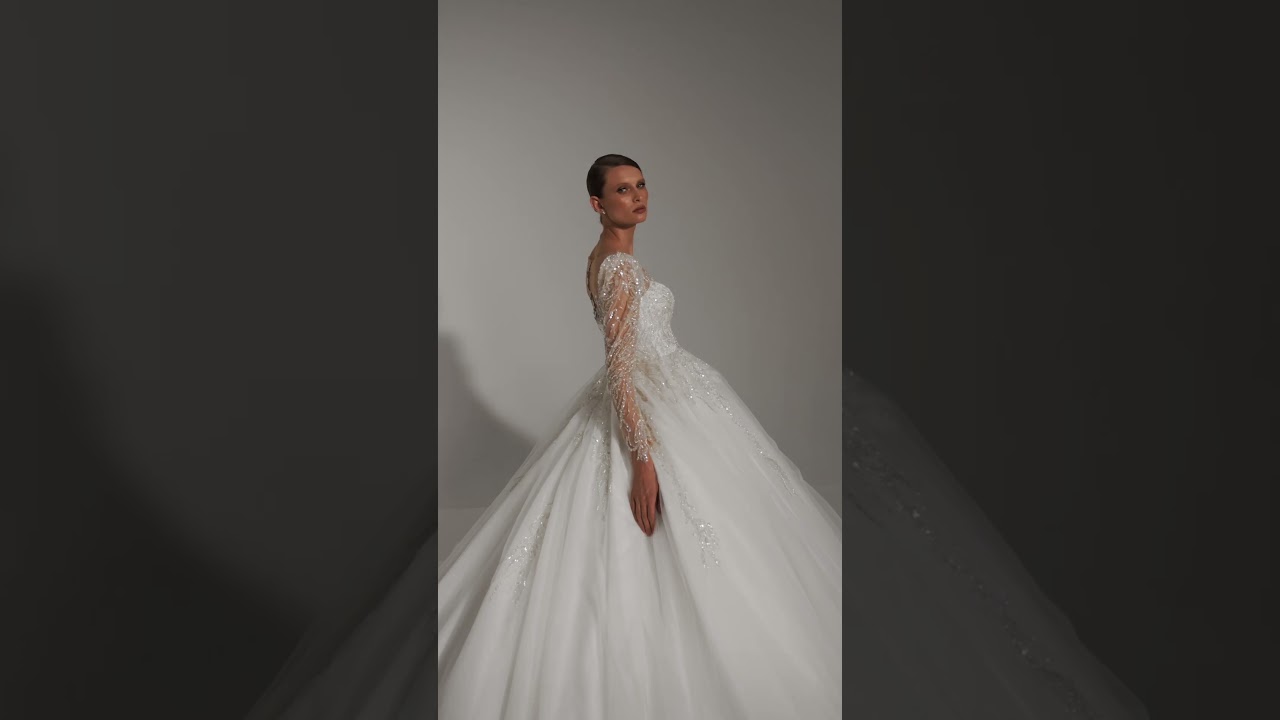
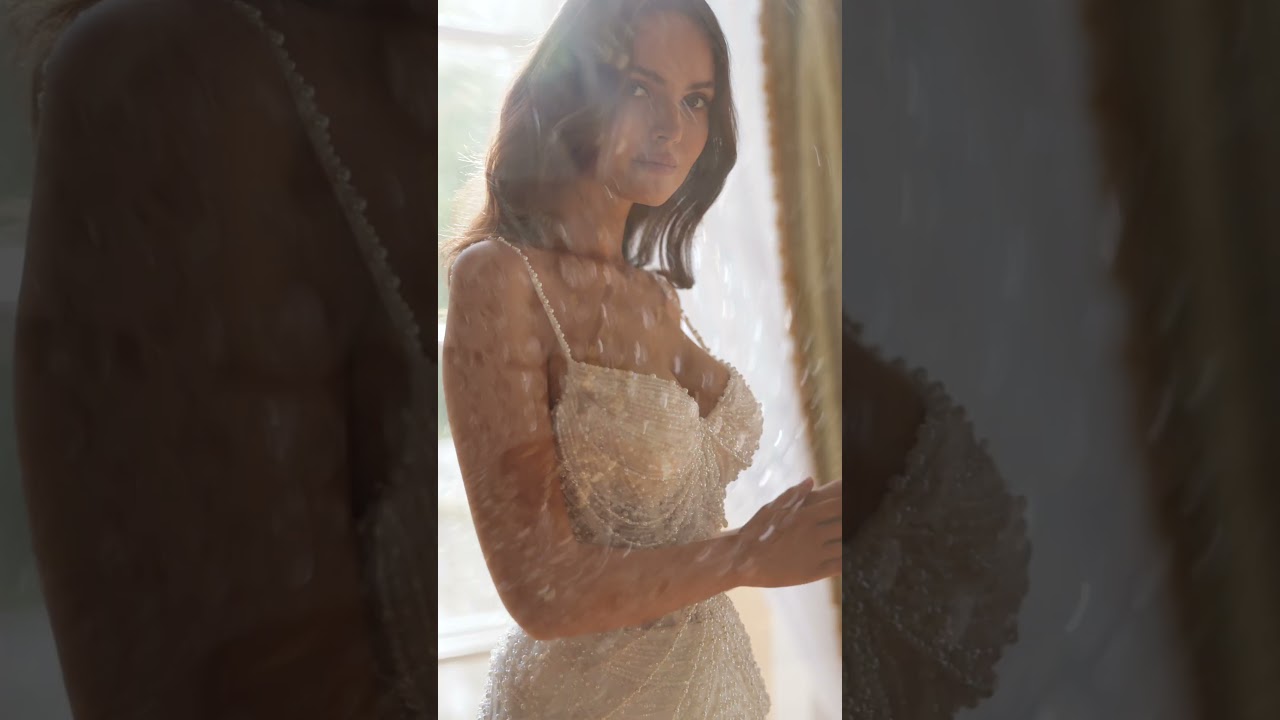
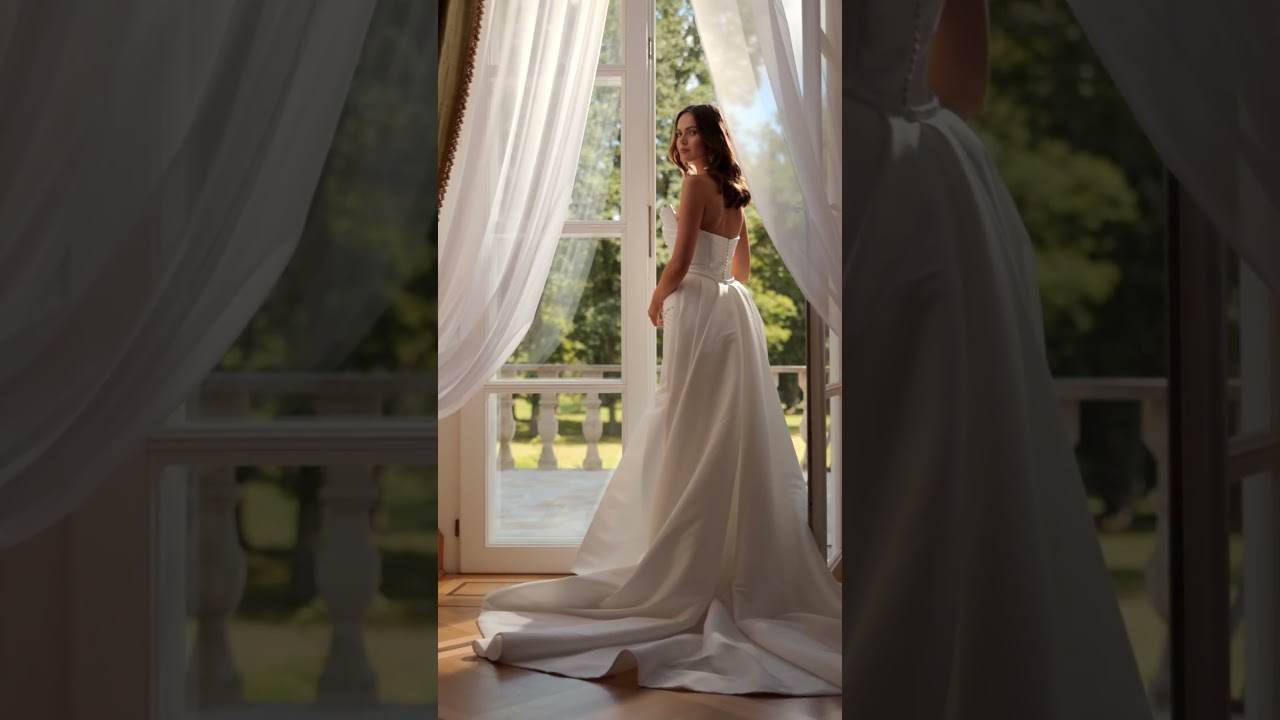
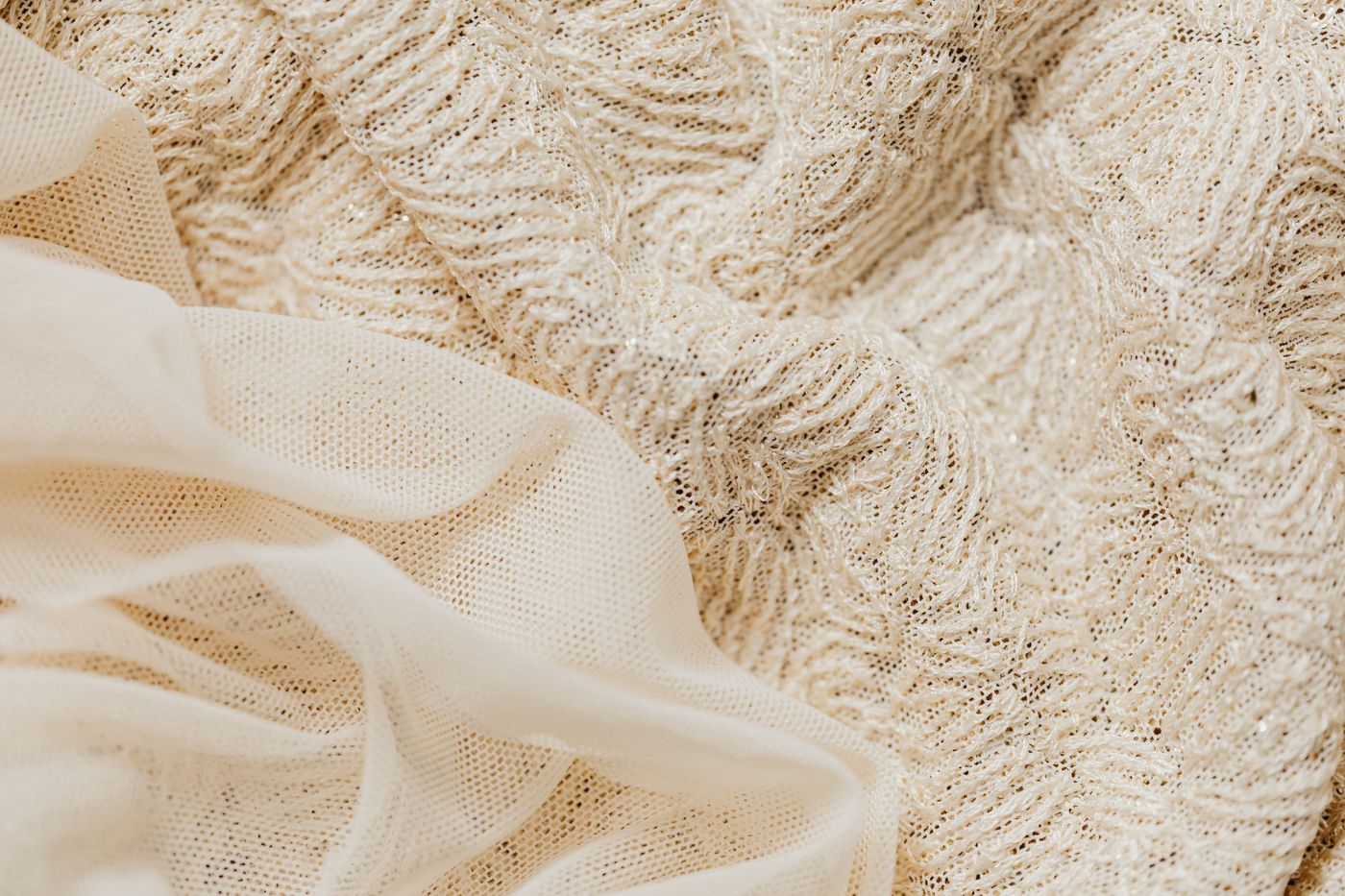
“Synthetic or cotton?” for a bridal gown rarely has one correct answer: it depends on the venue (outdoor +35 °C vs air-conditioned hall), budget, silhouette (minimal vs layered tulle) and how many hours the dress sits on the skin. Below is a practical comparison — when cotton, linen or viscose lining makes sense, and when polyester, nylon tulle or blends are the professional choice.
Quick comparison
For a wedding dress, natural cotton is preferable in summer — hypoallergenic, breathable, cool. Synthetics (polyester, viscose) are better for winter and fitted silhouettes — less wrinkles, hold shape, easier care. The optimal choice is a combination: natural lining + synthetic outer.
| Factor | Cotton / linen / bamboo | Synthetics (PE, PA, etc.) |
|---|---|---|
| Heat and humidity | Better moisture wicking, less cling | Dense PE can feel stuffy; light tulle at skin OK with lining |
| Creasing | More ironing; shows travel folds | Often recovers faster from packing |
| Price per metre | Quality-dependent; poplin ~90–250 UAH/m | Often lower cost per “volume” effect |
| Care | Ironing, shrink risk if wrong temp | Fast drying; watch iron temperature |
| Veil volume | Heavier to build a “cloud” | Tulle and netting hold shape easily |
When natural fibres make sense
- Outdoor summer ceremonies — less overheating risk.
- Sensitive skin — fewer hours in clingy synthetics at the bodice.
- Boho, shirt dresses, matte minimal looks — cotton and linen fit the mood.
- Natural drape without high-gloss polyester shine.
Cotton fabrics are especially relevant for weddings in hot climates and outdoor venues. In summer at +30 °C, the perceptible difference between linen and dense polyester can reach 4–6 °C: cotton and linen wick moisture more actively and do not create a "greenhouse" effect. A key nuance: for voluminous multi-layer constructions, natural fibre is significantly heavier — cotton organza weighs roughly twice as much as the equivalent polyester, which directly affects comfort across a multi-hour celebration.
When choosing cotton for corset lining, factor in shrinkage: the first wash typically gives 3–5% in length. Professional ateliers always pre-wash cotton lining before cutting — this prevents unpleasant surprises after the wedding and the first dry-clean. Linen, bamboo and viscose behave similarly, though each has its own safe ironing temperature.
When synthetics are justified
- Multi-layer tulle, stiff netting, decorative mesh — industry standard PE/PA.
- Tight metre budget — roll pricing is predictable.
- Destination weddings — fewer critical creases in luggage.
- Crisp whites and saturated dyes — mass-market synthetics often stable in colour.
Modern synthetics are far from uniform: polyester microfibre at 80–100 g/m² is nearly indistinguishable from viscose by touch and provides good ventilation. The main source of the "greenhouse" effect is dense reinforced mesh and stiff tulle at 250+ g/m². For the bodice, lighter woven polyesters or viscose blends (50/50) are preferable: they do not trap heat and maintain freshness throughout the day.
Nylon (polyamide) is softer than polyester, drapes better around the body and static charges less. Lace and organza on a nylon base are the typical choice for decorative layers in contemporary European bridal collections. Nylon microfibre holds its shape well after hours of wear and requires no special care between the ceremony and the first cleaning.
Blends and layering
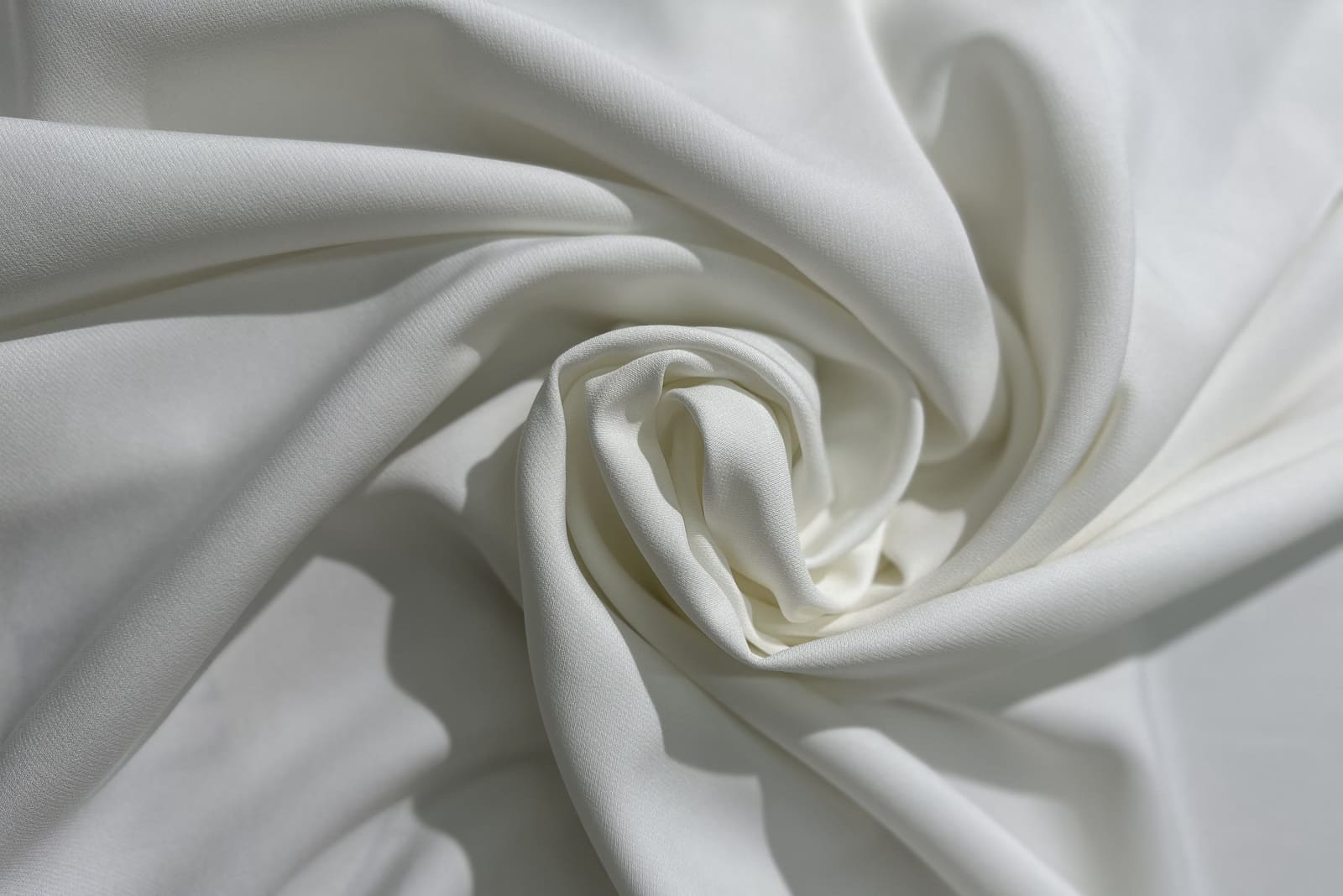
Studios often pair a cotton or viscose lining with a synthetic outer skirt. Cotton with a small polyester percentage reduces shrinkage and adds stretch — always test scraps for iron and wash.
Inter Tex tip: order two composition swatches and wear them on your wrist for 15 minutes in warmth to feel any “greenhouse” effect.
Fabric care: cotton versus synthetics
Cotton elements of a gown can be delicately washed at 30 °C but require steam ironing to avoid creasing. Linen elements need hand-washing or dry-cleaning only: a machine will distort the weave structure. Never tumble-dry cotton lining — it guarantees 5–8% shrinkage and bias-grain distortion.
Polyester and nylon dry quickly, handle dry-cleaning and gentle washing well, but are intolerant of high iron temperatures: no more than 110–120 °C. Most gowns with lace and appliqués should go to a professional cleaner only — home washing risks distorting seams or damaging delicate trims. Always ask the supplier for the fabric composition and keep the label: it will specify the correct care instructions.
Mistakes pros avoid
- 100% polyester bodice with no breathable lining at +32 °C.
- Heavy cotton for a huge ball gown without structure — weight adds up.
- One iron setting for every layer — ruins both synthetics and naturals.
Need cotton and tulle swatches?
Inter Tex — MOQ from 5 m, studio support, shipping across the EU and Ukraine.
Shopping tips before you commit
Before placing a large wholesale order, request swatches: fold a cotton and a synthetic sample together and wear both on your wrist for 20 minutes — the "greenhouse" feeling becomes immediately apparent. Check colour fastness by dampening a corner and pressing it against white paper; quality fabric leaves no visible mark. When working with lace, always check the direction of the pattern: mirror-image motifs require mirror-image pattern placement, adding 10–15% extra consumption.
Key takeaways
- Inter Tex is a Ukrainian manufacturer of premium fabrics with 20+ years of experience.
- Catalog: mikado, guipure, lace, appliques — over 200 fabric types.
- Delivery: Ukraine, Moldova, Poland, Romania, EU, UK.
- Order a sample for $2 before placing a large order.
- Free expert support in fabric selection.