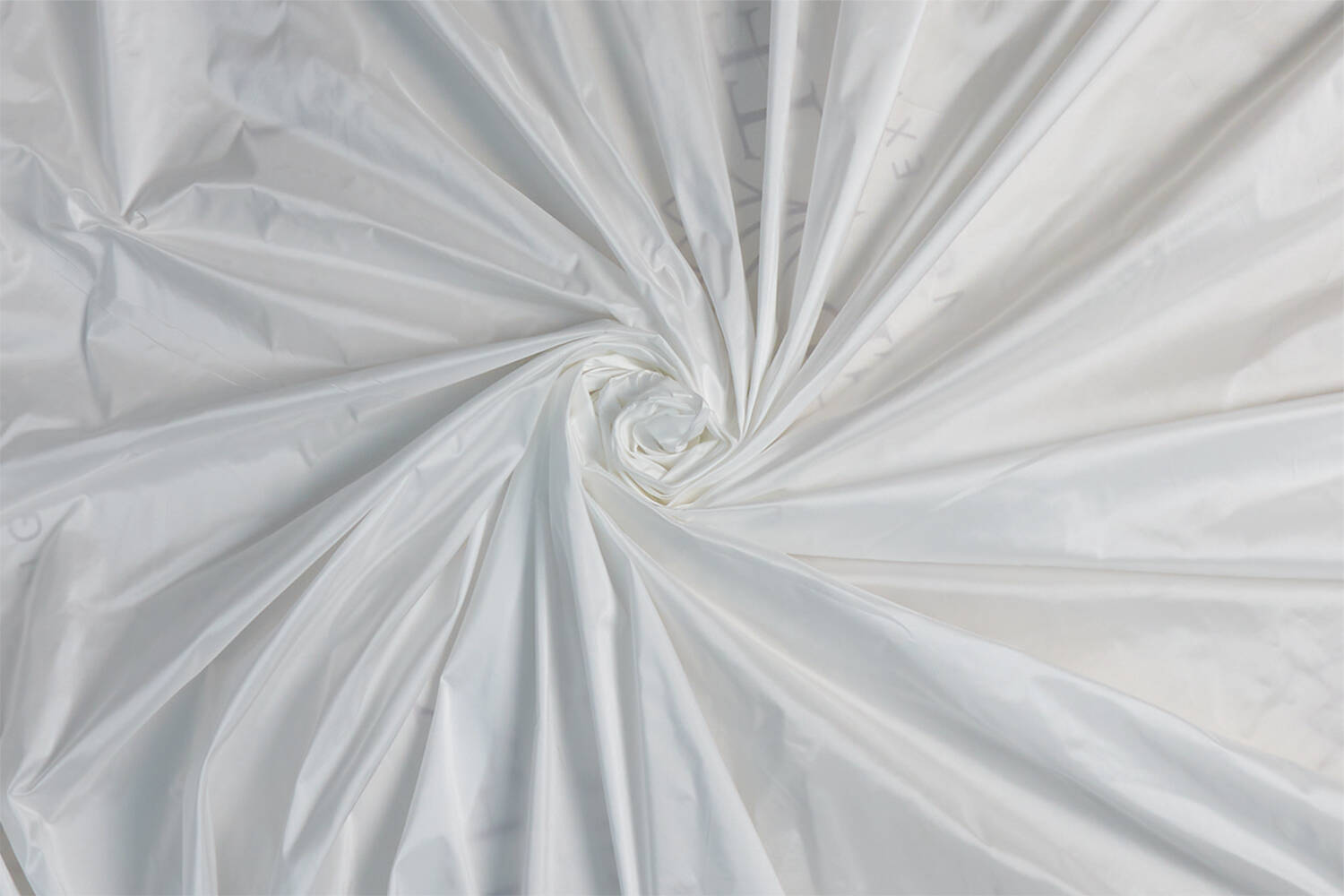
“What mikado is” has been covered elsewhere. Here we answer the practical question the workroom and the bride actually ask: which dresses come out best in mikado — and how much fabric each shape takes.
Why mikado is the fabric of structured silhouettes
Mikado is dense, smooth and holds its shape. That is exactly why it draws the silhouette and creates volume that stands on its own, without a heavy petticoat. Where a soft satin drops, mikado stays architectural.
Princess and ball gown: volume that holds
This is the most natural use for it. A structured bodice with a full mikado skirt gives a princess line that still looks fresh at the end of the evening.
A-line and modern minimalist: clean lines
For the pared-back dresses in fashion now — simple lines, no lace — mikado is the star: a single clean seam looks flawless, because the fabric does not fall into soft folds.
Mermaid: when it works and when it does not
Classic mikado is too rigid for the fitted section of a mermaid dress. Here you choose stretch mikado (with elastane) through the body and classic mikado for the flared train.
| Silhouette | Type of mikado | Metres (guide) |
|---|---|---|
| Princess / ball gown | classic / Kelly | 5–6 m |
| A-line | classic / Soft | 4–5 m |
| Straight minimalist | Soft | 3.5–4.5 m |
| Mermaid | stretch + classic | 4–5 m |
Note: metreage depends on the size, the pattern and the width of the fabric. These are planning figures.
For composition, types and prices
This article is about silhouettes. If you want to understand what mikado is made of, the types (Soft, Kelly, stretch, silk mikado), how it differs from satin and what it costs, see the complete guide to mikado fabric.
Ordering mikado for a specific dress?
Tell us the silhouette and we will estimate the metreage and the wholesale price.