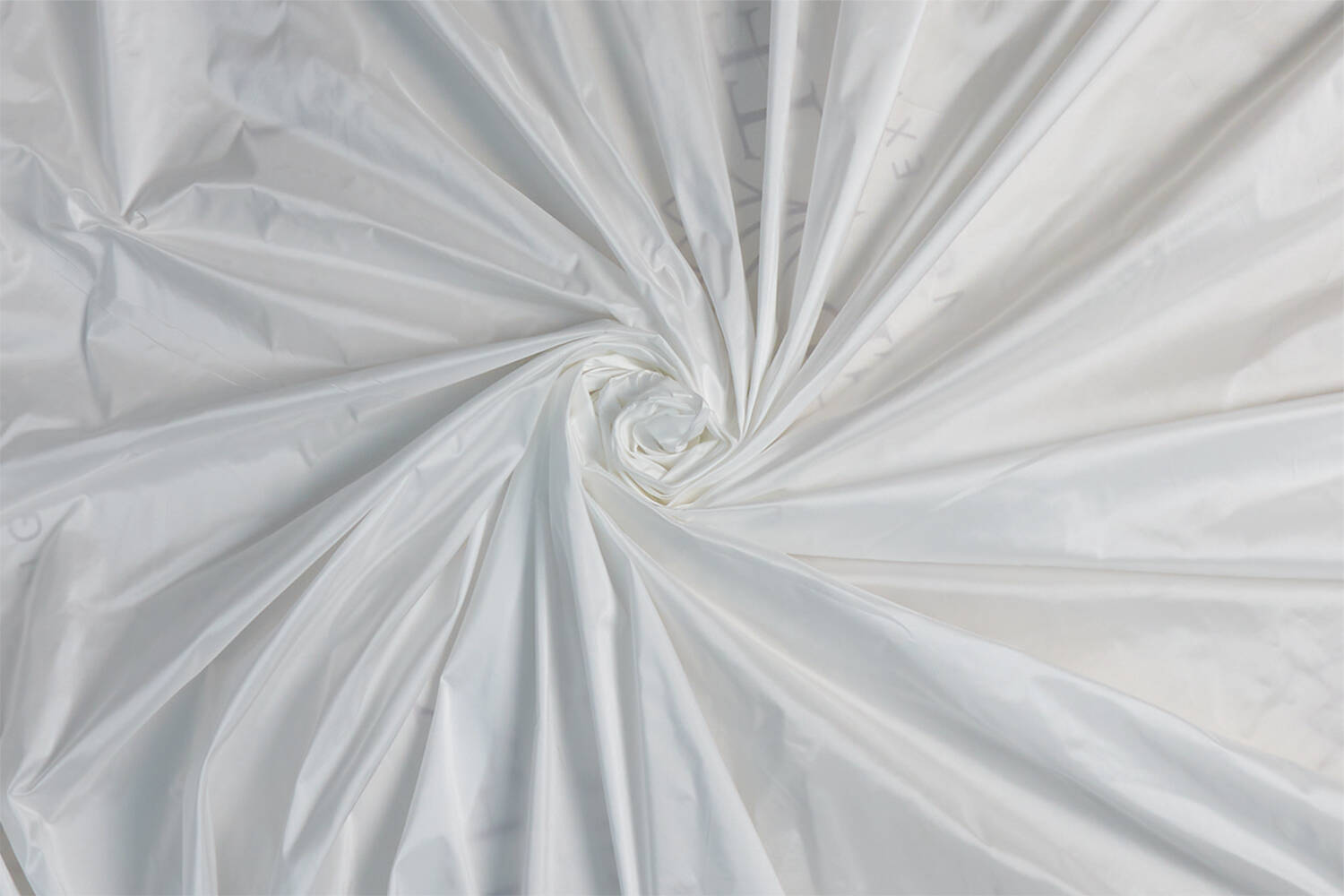
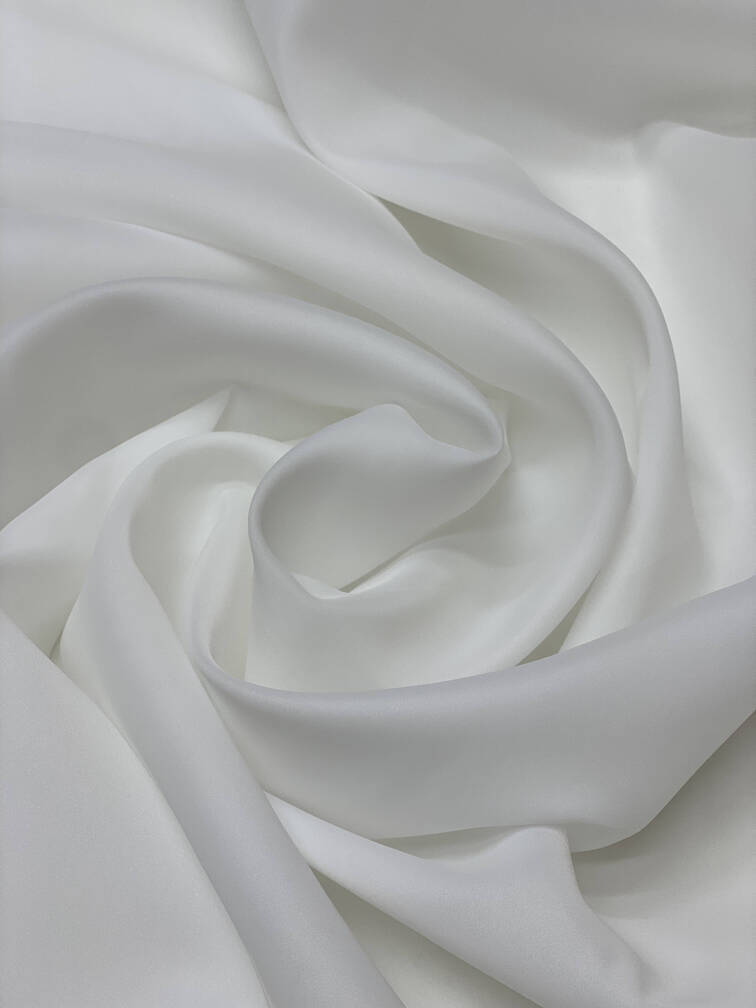
Taffeta is recognisable from the first touch: crisp, smooth, with a noble sheen and a signature "crunchy" rustle. The word taffeta means "woven" — and the tight twist of the yarns gives the fabric its defining strength: it holds sculptural volume like no soft, draping fabric can. That is why taffeta has been chosen for centuries as a main fabric for full ball-gown skirts and evening dresses, not as a lining.
This article is about the dense main taffeta (shot/jacquard). It should not be confused with lining fabric (euro-lining), which is sewn inside the dress — a separate, thinner and cheaper fabric with a different purpose.
What is taffeta: the technical side
Taffeta is a dense, plain-weave fabric made from tightly twisted yarns. It has a smooth, glossy face, crispness and spring, holds its shape and rustles noticeably. It is woven from natural (silk, cotton) or synthetic (polyester) fibres.
To check whether you are holding taffeta, squeeze it: if it keeps sharp creases and the fabric "crunches", it is taffeta. Thanks to its shape retention it holds pleats, bows and drapes without a stiff lining, which is why designers love it for sculptural silhouettes.
Types of taffeta
1. Silk taffeta
The premium option, woven from natural silk. The finest noble sheen and a light hand. Used in couture gowns. Requires delicate care and dry cleaning.
2. Polyester taffeta
The most common and practical option. Strong, wrinkles less, holds the shape of full skirts and is affordable. This is exactly the taffeta offered by Inter Tex — 100% polyester, 1.5 m wide.
3. Shot / jacquard taffeta (two-tone)
A special weave from two-tone yarns gives a striking "shot" effect — the fabric shimmers different colours at different angles. Denser than plain taffeta and even better at holding volume — ideal for ball and evening gowns.
Taffeta properties
| Parameter | Value |
|---|---|
| Composition | Silk, cotton or 100% polyester |
| Surface | Smooth, glossy, with a light rustle |
| Shape retention | Excellent — holds volume and pleats |
| Width | 1.5 m (50 m per roll) |
| Drape | Crisp, sculptural |
| Wrinkling | High (natural property) |
| Care | Low temperature, keep away from water |
| Price | Mid (polyester), high (silk) |
Where taffeta is used
- Full ball-gown skirts — taffeta holds volume without a frame
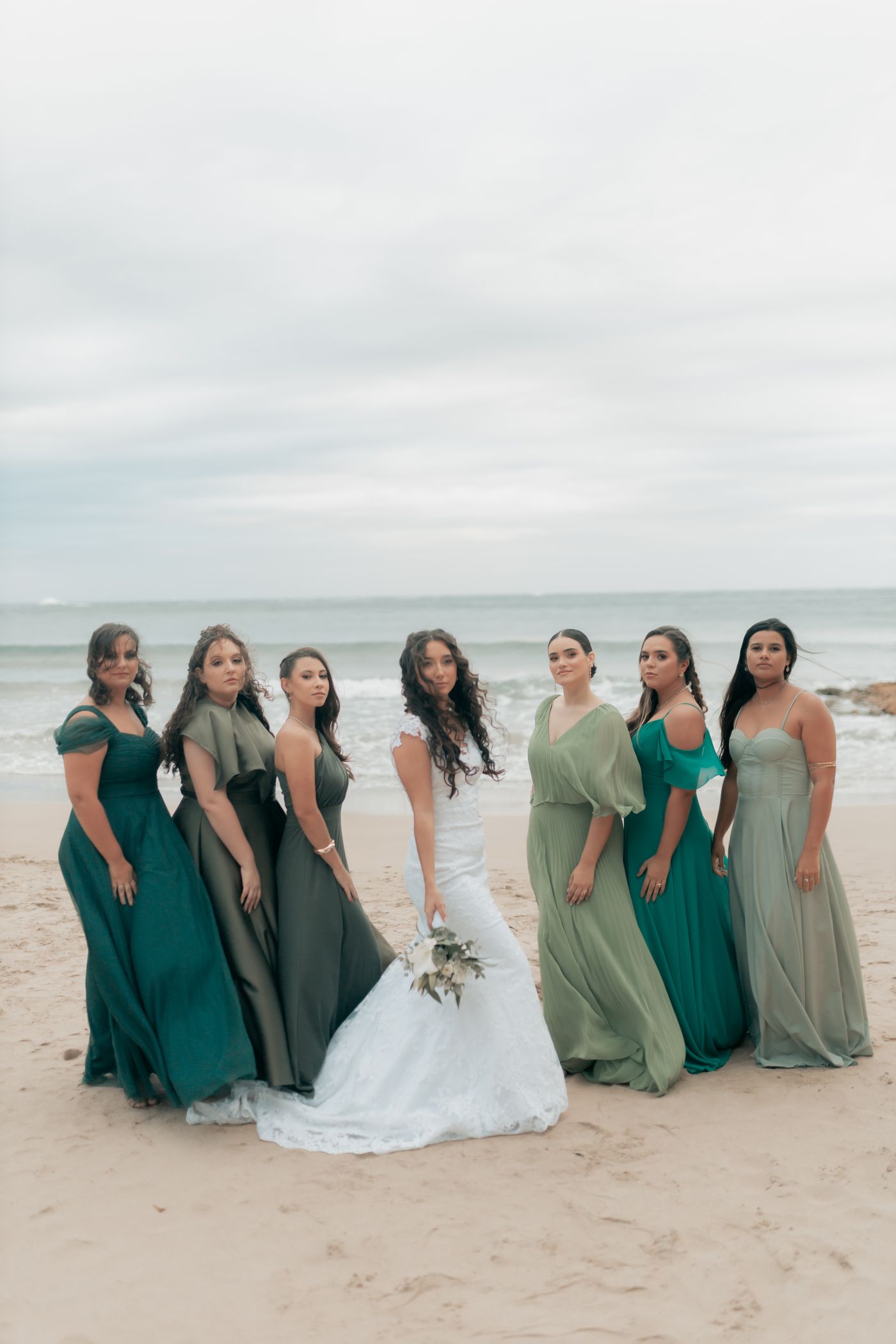
- Wedding and evening gowns — princess, A-line and train silhouettes
- Children's occasion dresses — hold their shape and "stand" beautifully
- Decor and interiors — bows, trims, shimmering curtains
Don't confuse the two: the taffeta in this article (shot/jacquard, dense) is a self-supporting main fabric for the outer shell. Lining fabric (euro-lining) is a thinner, cheaper material sewn inside. See our separate lining guide and the Lining fabric category.
? Looking for quality taffeta wholesale?
The Inter Tex catalogue carries taffeta in many colours and textures, including shot taffeta. Wholesale from the roll, shipping to the EU.
Taffeta vs satin and mikado
| Parameter | Taffeta | Satin | Mikado |
|---|---|---|---|
| Sheen | Moderate, shot | Strong, mirror-like | Soft, satin |
| Holds shape | Excellent | Average | Excellent |
| Drape | Crisp | Soft, fluid | Moderate |
| Wrinkles | Yes | Moderate | Almost none |
If you need a fabric that "stands" and rustles, it is taffeta. For a fluid shine — satin. For a matte lustre and sculptural shape without rustle — mikado.
How to sew with taffeta: 5 tips
- Cut in one direction — taffeta catches the light differently on each side.
- Use sharp fine needles 70-80.
- Do not stretch while sewing — taffeta does not give and may pucker.
- Finish edges with an overlock — the fabric frays.
- Press from the wrong side through a cloth at low temperature.
Common mistake: pressing taffeta with steam or dampening it. Taffeta "dislikes" water — droplets leave marks. Press with a dry iron at low temperature from the wrong side.
Caring for taffeta garments
Care rules: silk taffeta — dry clean only; polyester taffeta can be gently washed in cold water without heavy spinning. Dry away from sunlight, press from the wrong side at low temperature. Keep away from rain and splashes.