Guipure and Chantilly lace have already been compared in detail, so macramé deserves an article of its own. It is a lace with a character all of its own: woven, textured, with an artisan feel — exactly what boho gowns and brides after something off the beaten track are looking for.
What macramé lace is, and where the texture comes from
Macramé lace imitates hand-knotted work: thicker yarns, geometric or floral motifs in relief and a net with body to it. Unlike Chantilly lace, which is fine and airy, macramé has structure and holds its own shape without being as stiff as guipure.
Macramé lace = texture plus a hand-made look. Choose it when you want the lace to be felt, not only seen.
Where macramé lace works well
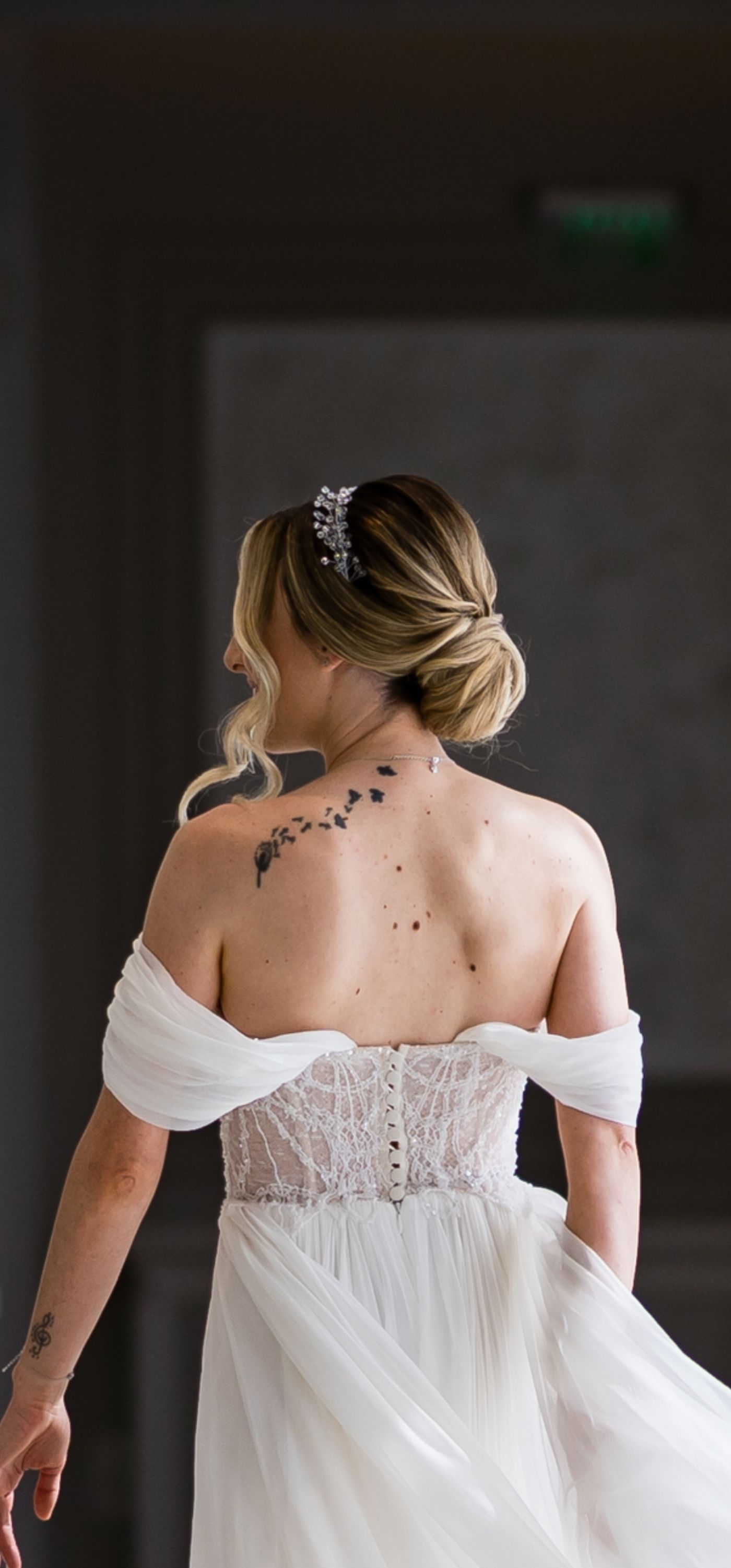
- The back of the gown — a macramé panel across the back is the signature of the boho look.
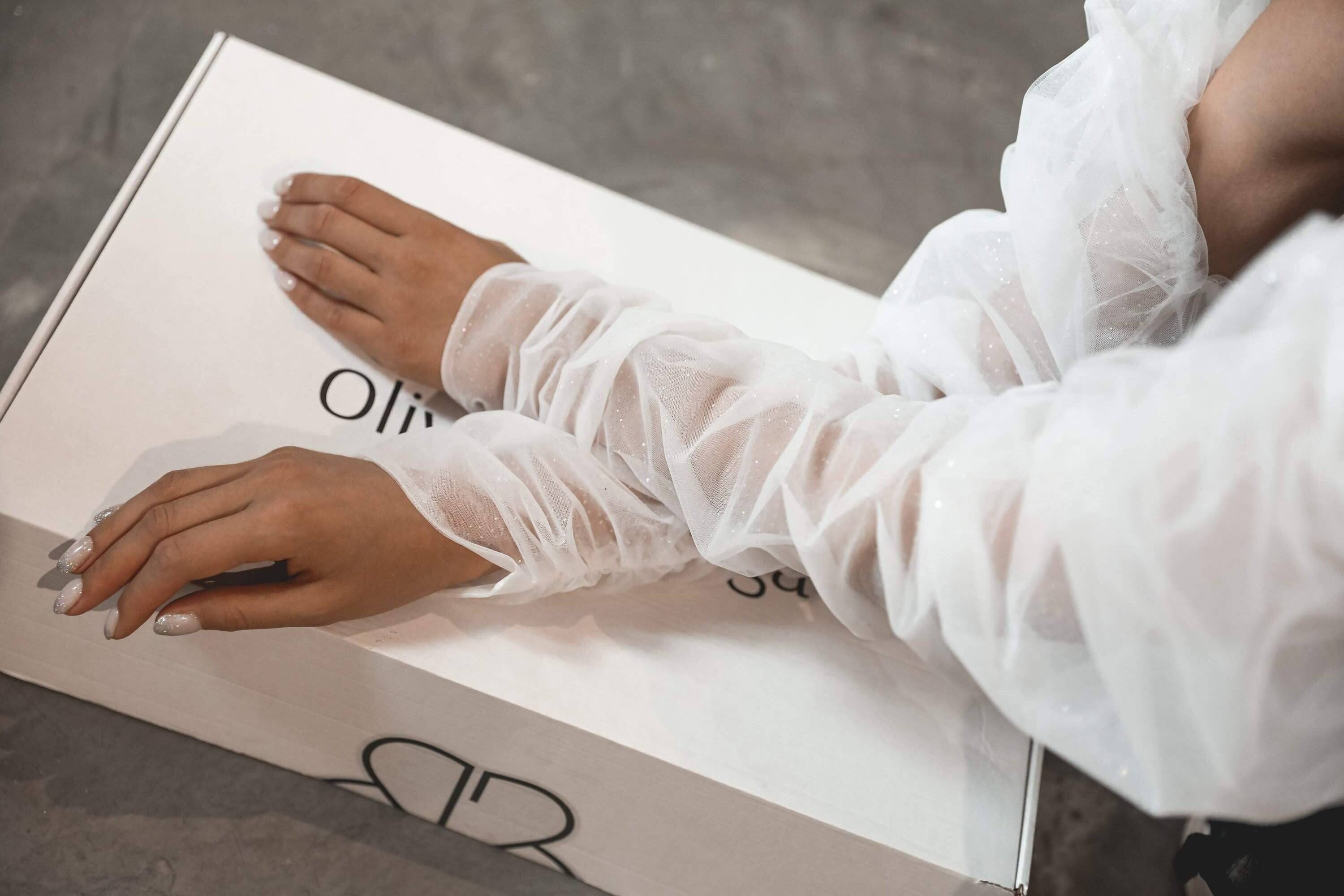
- Sleeves — long macramé sleeves, loose and textured.
- The border — a scalloped edge gives you a decorative hem with no extra finishing.
- A layer over the gown — a macramé topper over a plain dress changes the style completely.
Macramé vs guipure: two laces with body, but not the same
Both have structure, but guipure is denser, glossier and more formal, while macramé lace is more matt, more textural and more relaxed. For the classic comparison between the firm laces and the fine ones, see our guide to guipure vs Chantilly lace. Here we stay with macramé and how to show it off.
How to sew and finish macramé lace
- Use the scalloped border as the finished edge — it saves you the hem.
- On fitted areas, check the stretch: some macramé laces give a little, others not at all.
- A lining in a matching tone (nude or ivory) lets the texture come forward.
Macramé lace wholesale prices in 2026
Macramé lace for gowns starts at roughly $4–12/m wholesale, depending on the width of the panel and the complexity of the weave. Minimum order — $50 for Ukraine, $100 for international customers.
Looking for macramé lace samples?
We can send panels and borders before you place a wholesale order.