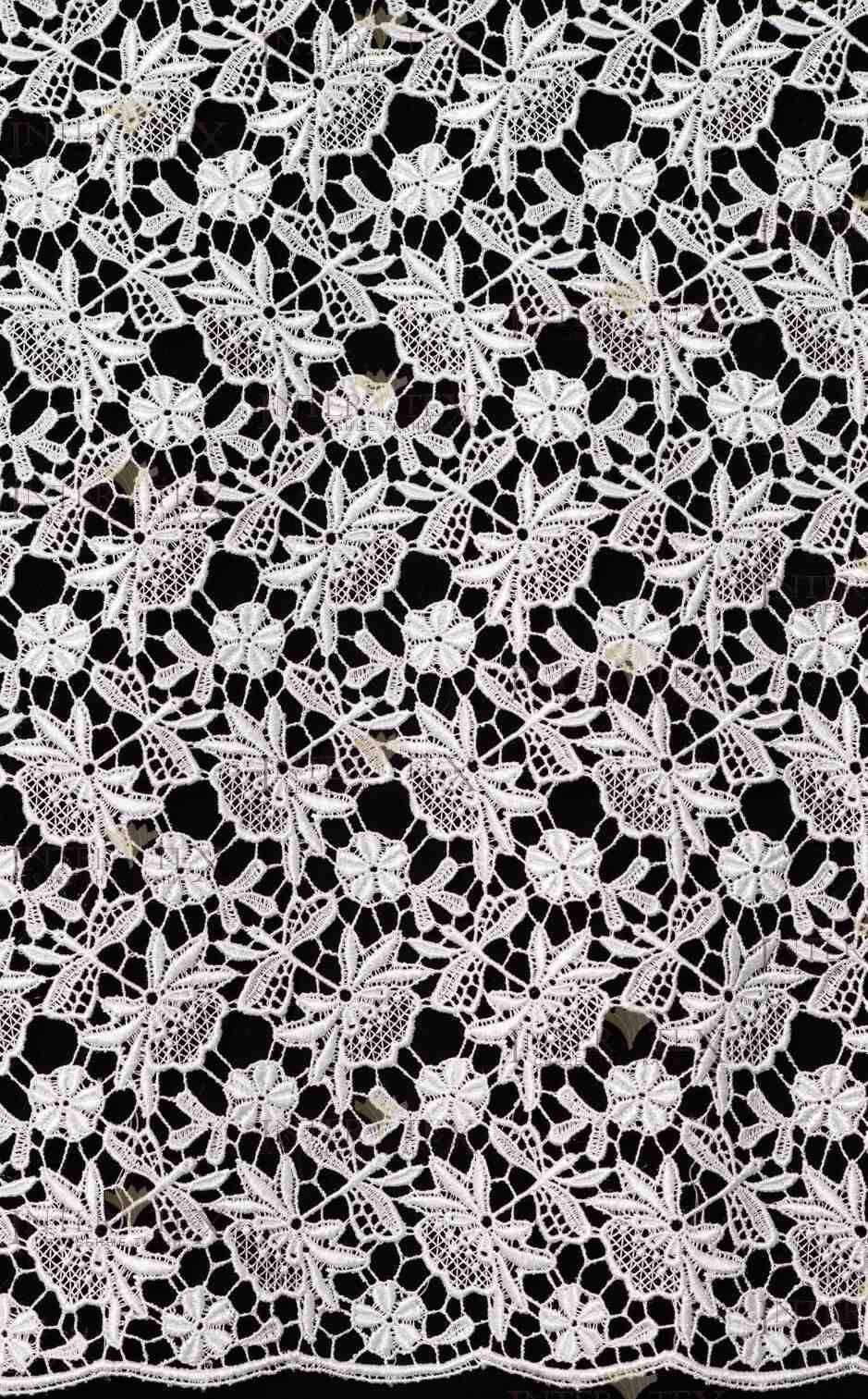
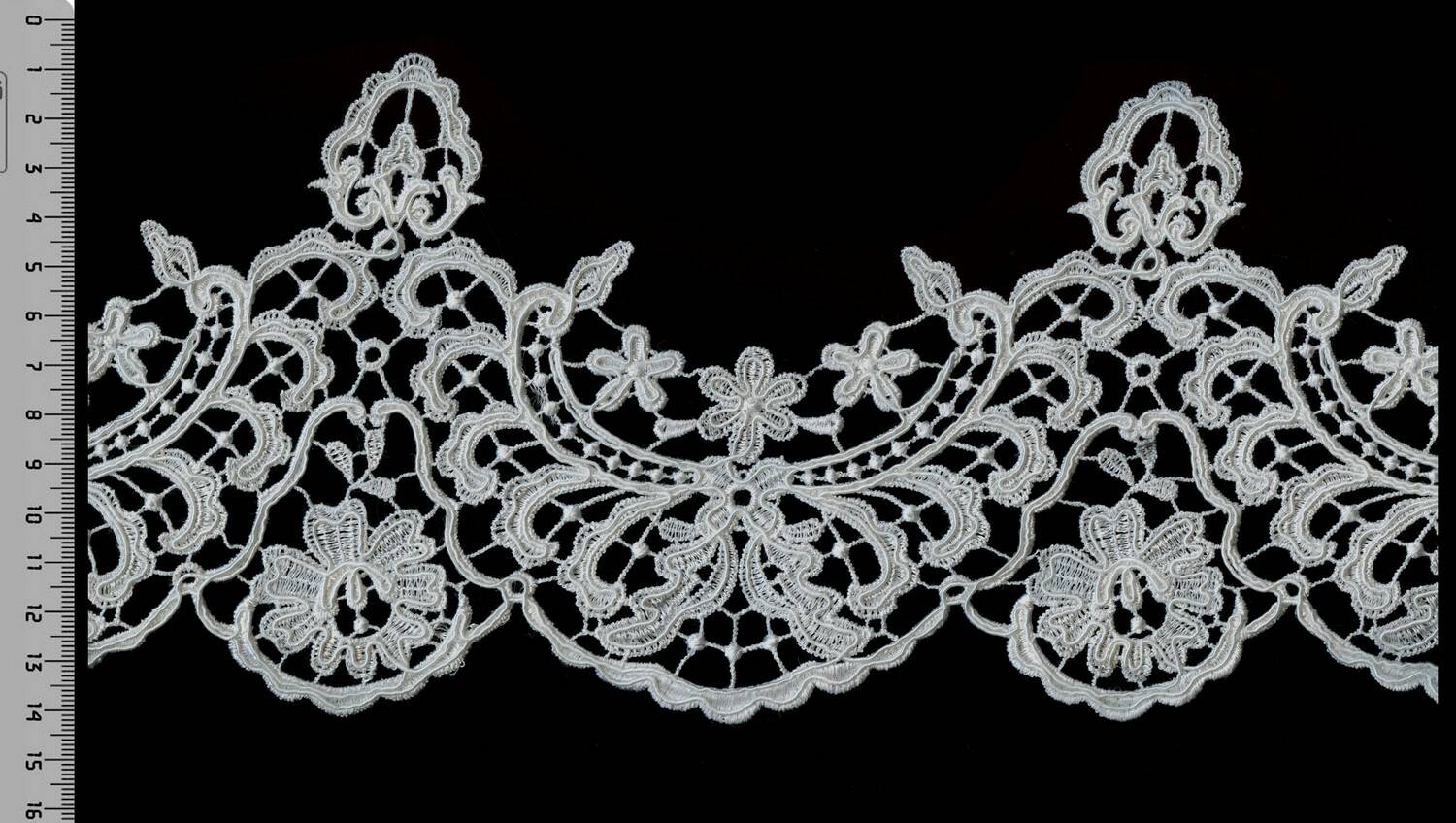
In 2026 lace is still a storytelling tool: transparency versus opacity, matte versus shine, handwork versus clean engineering. A memorable look usually comes from restraint — two lace families maximum, one hero texture, and lining decisions made for real bodies, not only for flashbulbs.
Choosing lace for a specific garment
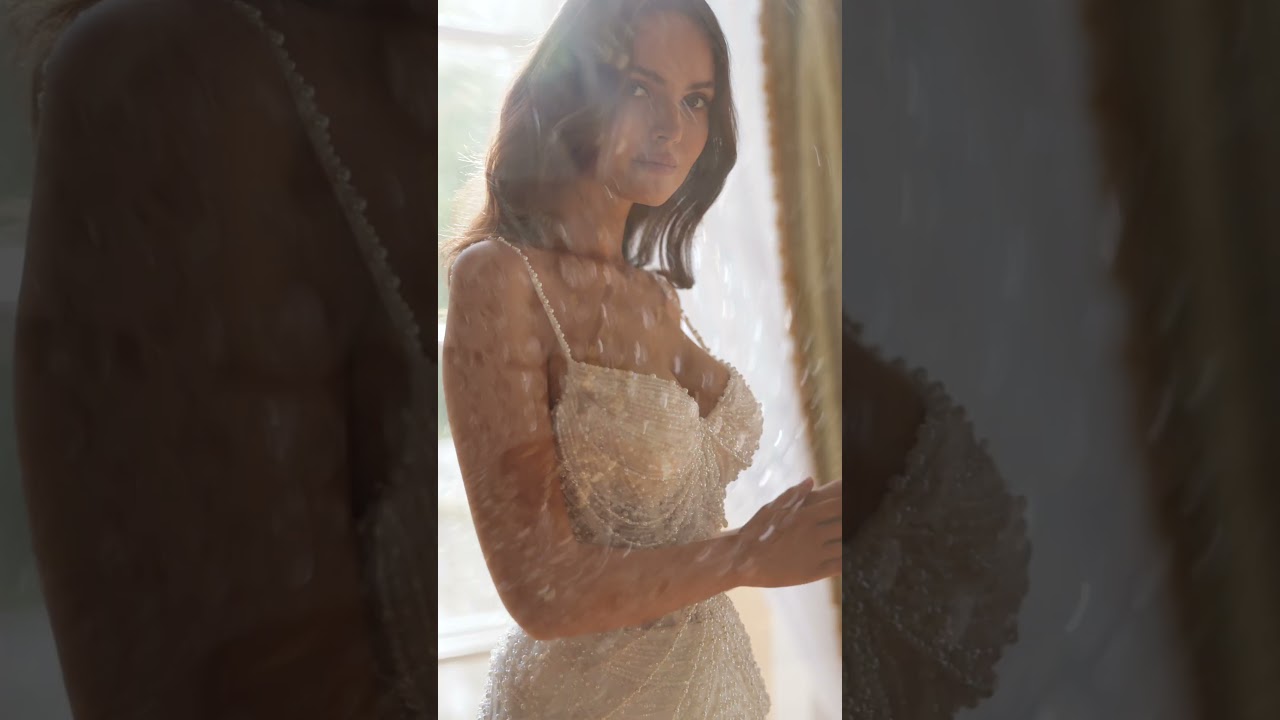
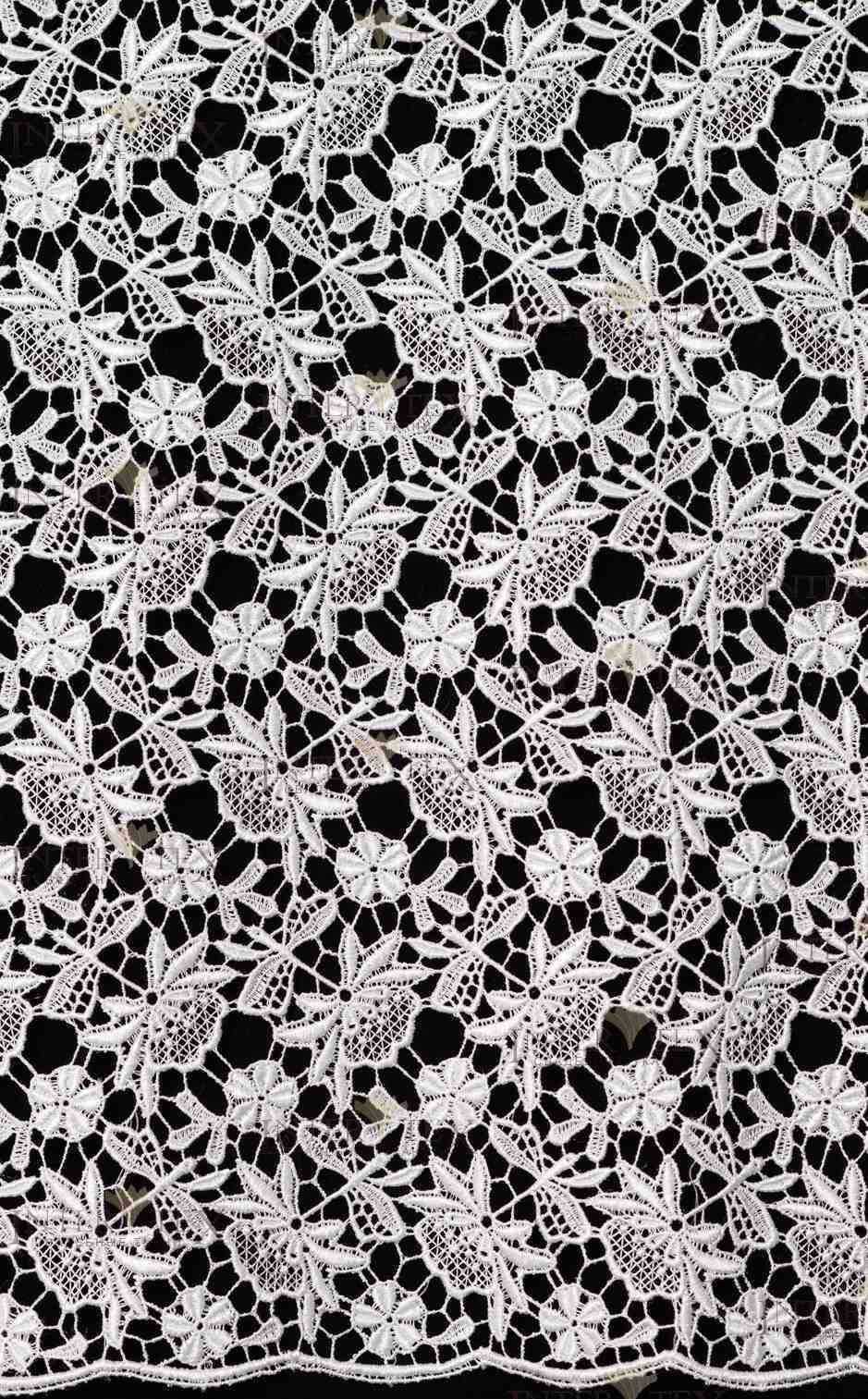
Selecting a lace type begins with silhouette and how it will be worn. For a fitted gown with an open neckline, stretchy lace is preferable — a knit mesh with a pattern or guipure with elastane: these do not restrict movement or distort the motif when fitted to the body. Chantilly in this context needs a "second skin" lining to provide drape without diagonal pull.
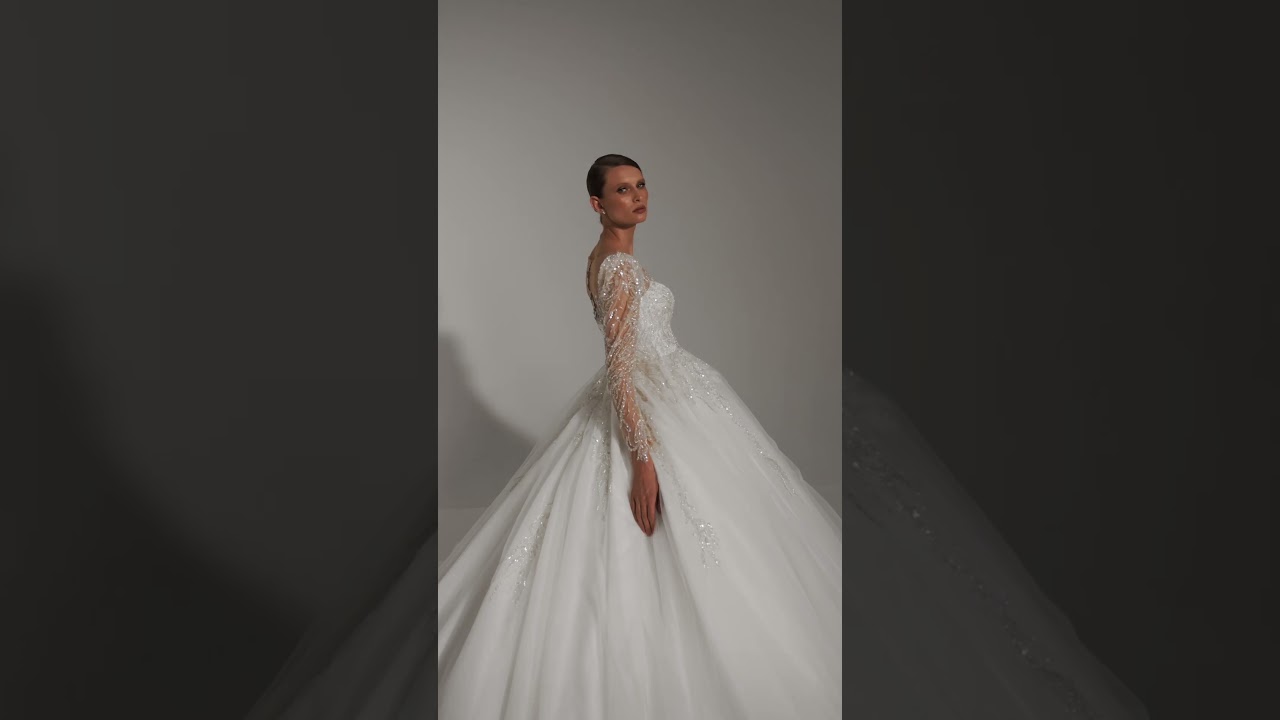
For voluminous skirts and capes, choose a stiffer lace with a clear pattern: it will hold the volume's shape. Soft chantilly will sag on a wide skirt without an intermediate layer of organza or nylon tulle. For multi-layer constructions, apply the rule "the visible layer is the most expensive" — lower layers can use more economical alternatives.
Colour: ivory, champagne, blush and their combinations
Ivory is not a uniform colour: manufacturers distinguish warm ivory (with a yellow undertone), cool ivory (closer to white) and natural ivory (with a beige undertone). Mixing fabrics from different manufacturers within a single garment produces a noticeable mismatch under daylight and evening lighting. This is why professional ateliers try to source lace, lining and decorative elements from a single supplier — the coordinated colour range of Inter Tex solves this issue.
Champagne is subtly different from ivory: it is slightly more golden and works better with warm skin tones. Blush pink has established itself in 2025–2026 as a standalone alternative to white — especially for second-bride looks. Combining ivory lace with a blush lining creates a delicate two-tone effect in motion.
Cutting and sewing lace: key technique
Lace is one of the most demanding fabrics to sew. Key cutting rules: always place the central motif symmetrically on the vertical axis of the piece; repeat the pattern at horizontal edges for a continuous ornament effect. Stitch lace pieces by hand or with a short machine stitch (0.7–1.5 mm): a longer stitch distorts the mesh under tension.
To join two pieces of lace without a visible seam, use the "motif absorption" technique: stitch edges butt-to-butt with the pattern matched, then trim the excess to the inside. This demands precise rapport matching and extra time, but delivers a perfect result. When working with expensive chantilly, always allow for this matching — add 20–30% to the yardage estimate.
Lace over solid ground
Skin-toned or ivory linings tune sheerness. A whisper of chiffon on top softens contrast without hiding the motif.
Texture cocktails that work
- Guipure + satin — couture classic
- 3D lace + organza — volume, still light
- Chantilly + matte jersey — modern minimal romance
Ivory, champagne, blush
Champagne warms toward many complexions; cool ivory loves bold lip colour. Keep neighbouring layers within two steps on a warm/cool axis.
Accessories
Busy lace wants quiet jewellery; appliqué-focused bodices can carry stronger earrings. Echo lace motifs on the veil hem for cohesion.
Runway vs wearable
| Area | Runway | Wearable tweak |
|---|---|---|
| Neckline | Sheer illusion | Double lining or soft mesh |
| Back | Bare lace skin | Tone-matched corset mesh |
| Sleeve | Tattoo lace | Strategic opacity at bust line |
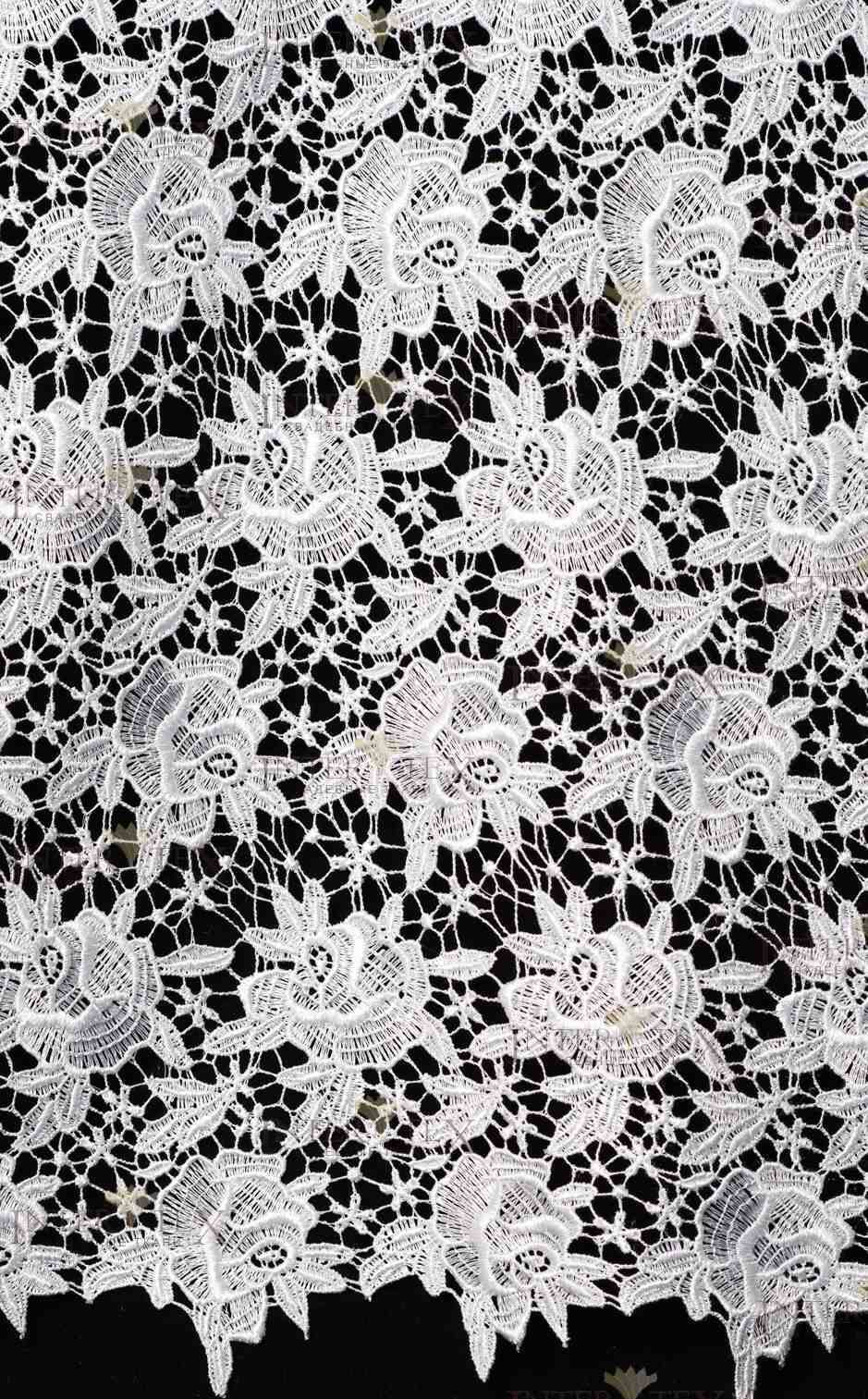
Lace by application zone
The neckline and shoulders call for soft lace without stiff structure: chantilly or lace on soft tulle creates an airy effect without pressure. The bodice and waist zone demands fitted placement: elastic guipure or lace with 5–8% Lycra works without distorting at movement. The hem and train: the ideal place for large sculptural motifs or 3D appliqués — they photograph beautifully and communicate luxury.
For asymmetric or multi-layer pieces, use lace in only one "level" — top or bottom. Double lace across both layers reads as overloaded. The choice of zone for a lace accent is one of the key design decisions that defines the entire character of the piece.
Care for lace garments
Lace requires the most delicate care. Key rules: hand-wash at 30°C with a neutral, enzyme-free gel (enzymes degrade protein fibres in natural silk and nylon). Dry flat on a towel without wringing — twisting distorts the mesh. Iron only on the reverse through a damp muslin cloth on the silk setting (no more than 110°C). After the event, send the lace gown to a professional cleaner within 48 hours — organic stains oxidise and yellow if left.
Appliqués instead of endless yardage
Pre-cut motifs concentrate budget on waist, neckline or train — ideal for small ateliers and capsule bridal lines.
Inter Tex: buying lace yardage and appliqués from the same drop reduces dye-lot surprises.
Lace & appliqués
Wholesale for studios building signature looks.
Inter Tex supplies both full lace yardage and ready appliqués in coordinated shades, allowing designers to mix both approaches within a single collection without sourcing from multiple suppliers.
Indicative budget (USD)
| Move | Guide |
|---|---|
| Motif pack | from ~65 USD set |
| Lace bodice | 1.5–2.5 m yardage |
| Full skirt story | 5–8 m + linings |
Inter Tex supplies lace, appliqués and base fabrics so bespoke studios can prototype fast and scale production cleanly.
Key takeaways
- Inter Tex is a Ukrainian manufacturer of premium fabrics with 20+ years of experience.
- Catalog: mikado, guipure, lace, appliques — over 200 fabric types.
- Delivery: Ukraine, Moldova, Poland, Romania, EU, UK.
- Order a sample for $2 before placing a large order.
- Free expert support in fabric selection.