Macrame is one of the oldest and most refined forms of textile decoration. Today it is experiencing a real renaissance in the bridal industry, combining bohemian aesthetics with the luxury of handcraft. In this guide: 4 types of macrame in bridal sewing, comparison with other laces, 2026 trends and selection tips from Inter Tex, a bridal lace supplier with over 20+ years of experience.
What is macrame in bridal fashion
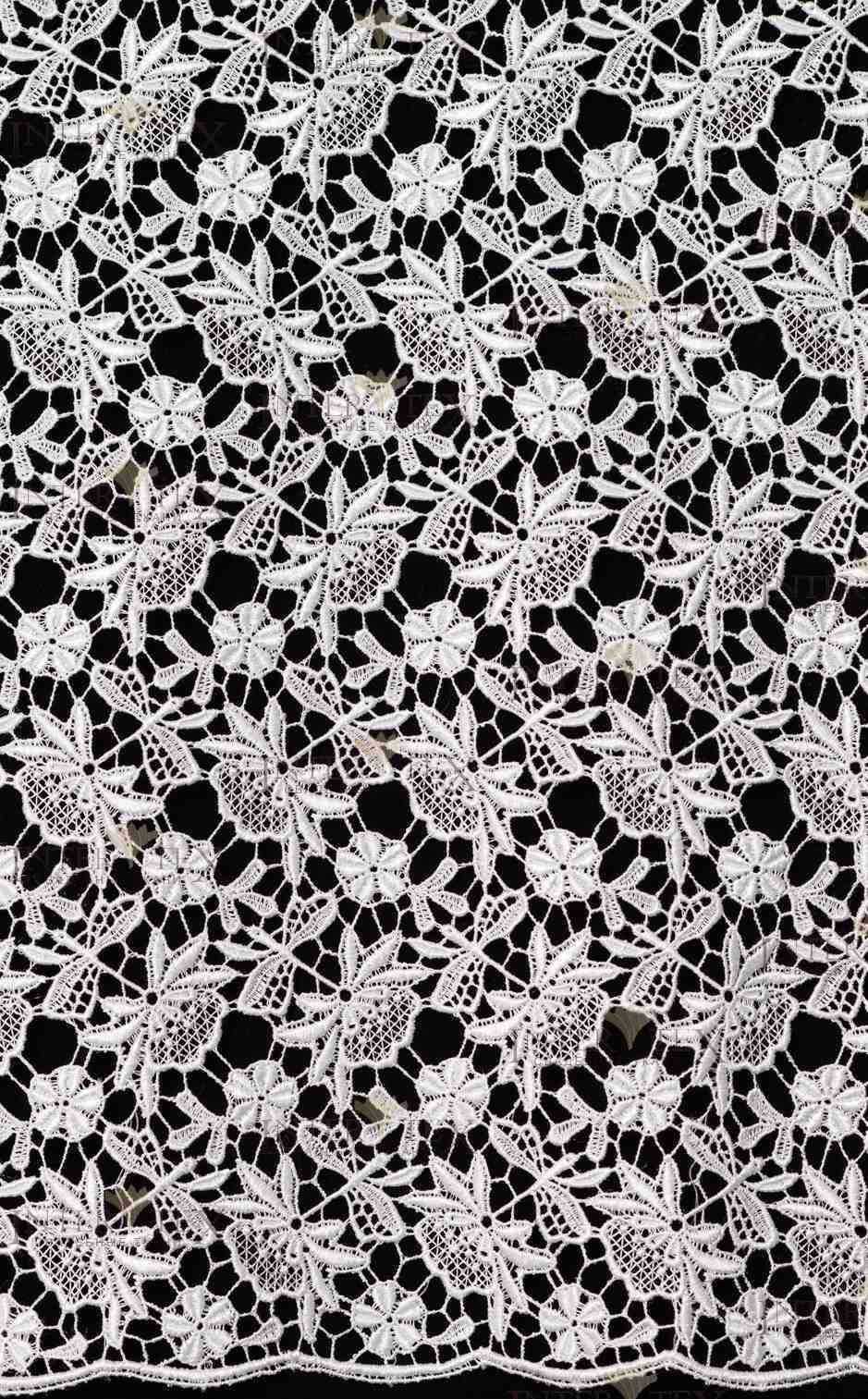
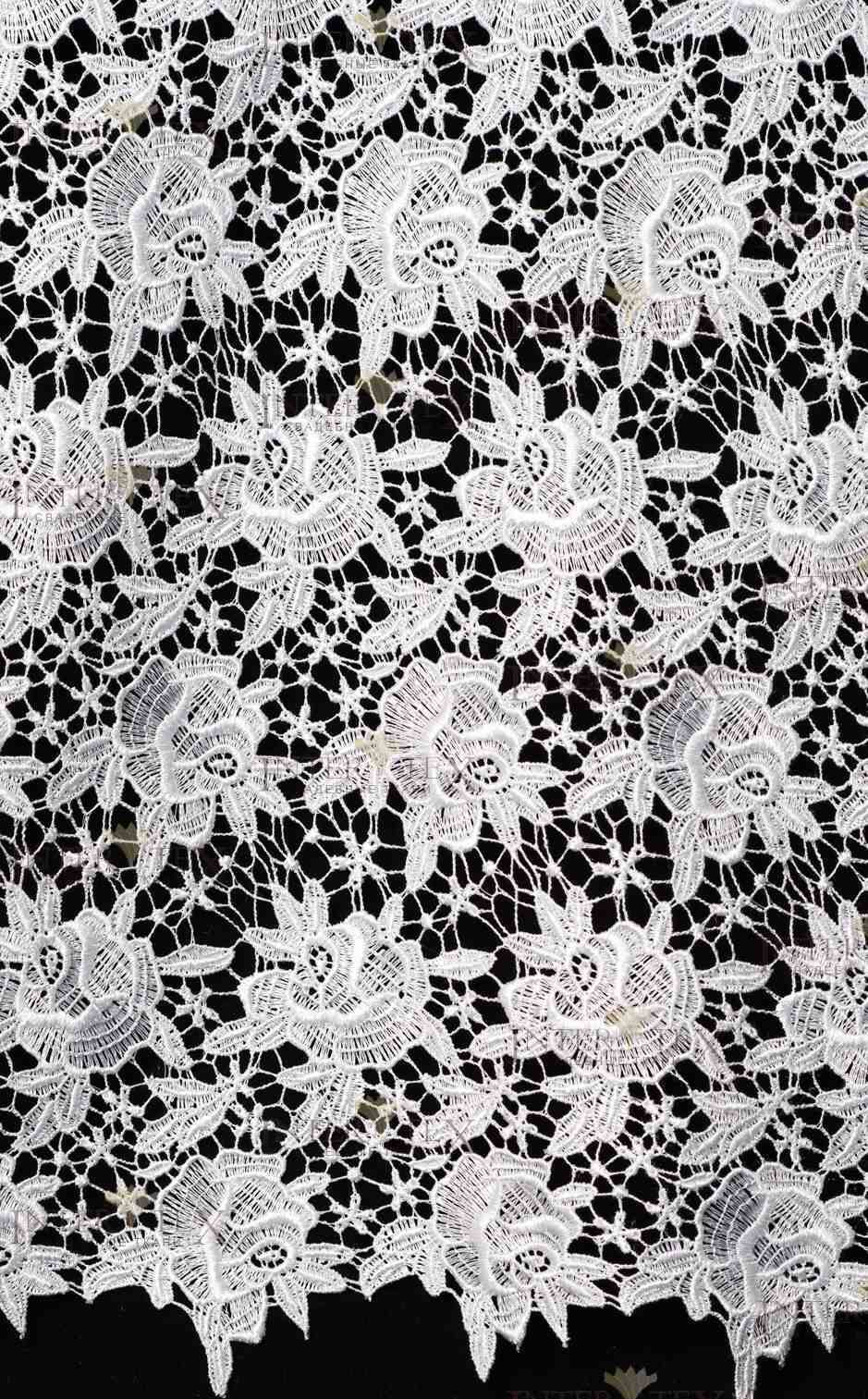
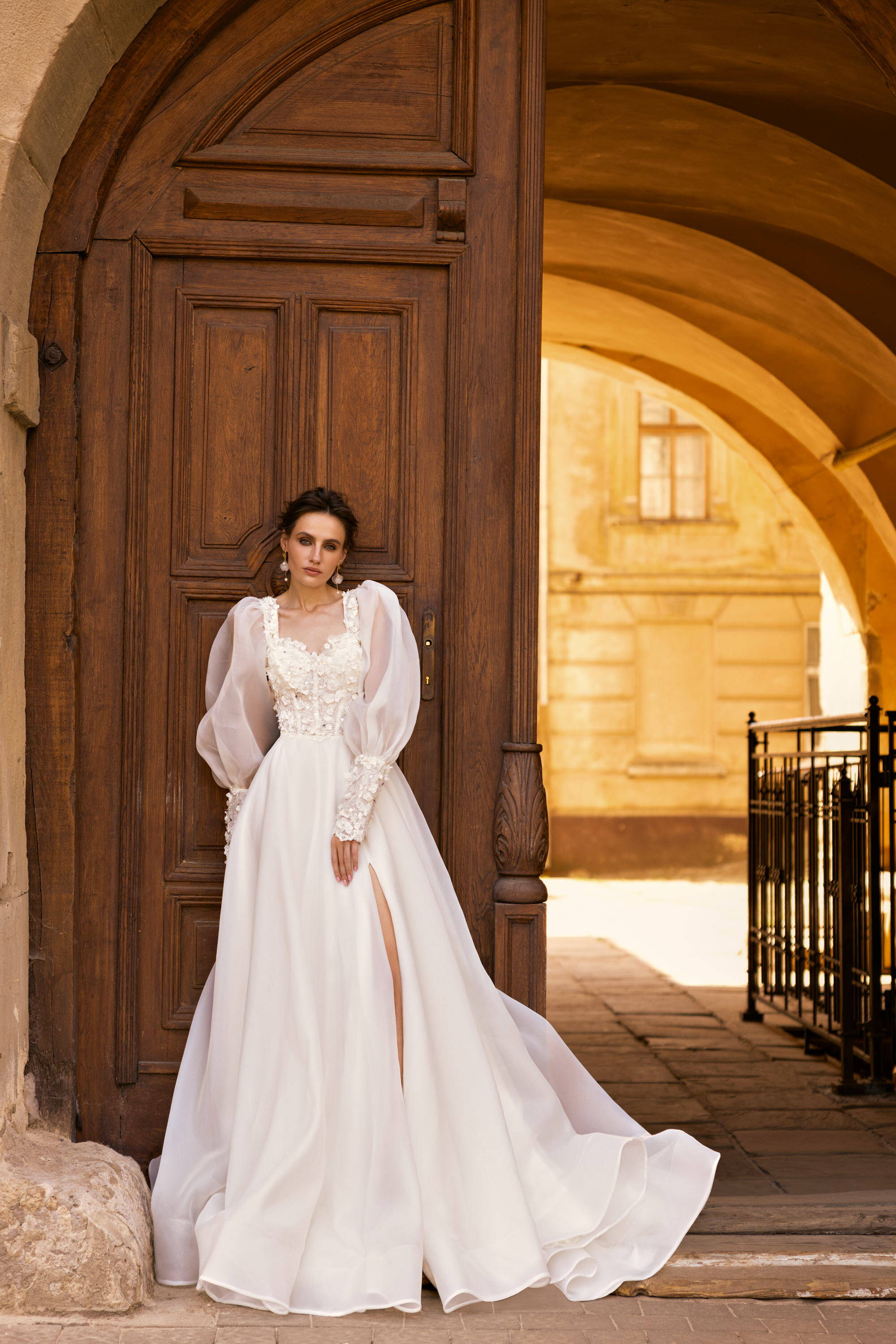
Macrame is a weaving technique in which threads are tied with knots to form openwork geometric or floral motifs. Unlike classical laces, macrame has a coarser, distinctly "handmade" look and pronounced texture. Most commonly used in boho and rustic wedding dresses. Catalog — here.
Macrame originates from the Arab world: the word migramah meant "fringe knot". In the 13th century, the technique reached Europe with the Moorish conquerors of Spain, and in the 19th century became a beloved Victorian craft. In the 20th century macrame was associated with hippie culture; today, with bohemian chic and conscious appreciation of handmade work.
Interesting: genuine macrame always has 1-2 "author" irregularities in the weave. This is normal — machine macrame looks flawless, but it is exactly handcraft that gives the tactile charm for which premium wedding dresses are bought.
4 types of macrame lace in bridal sewing
1. Narrow macrame trim
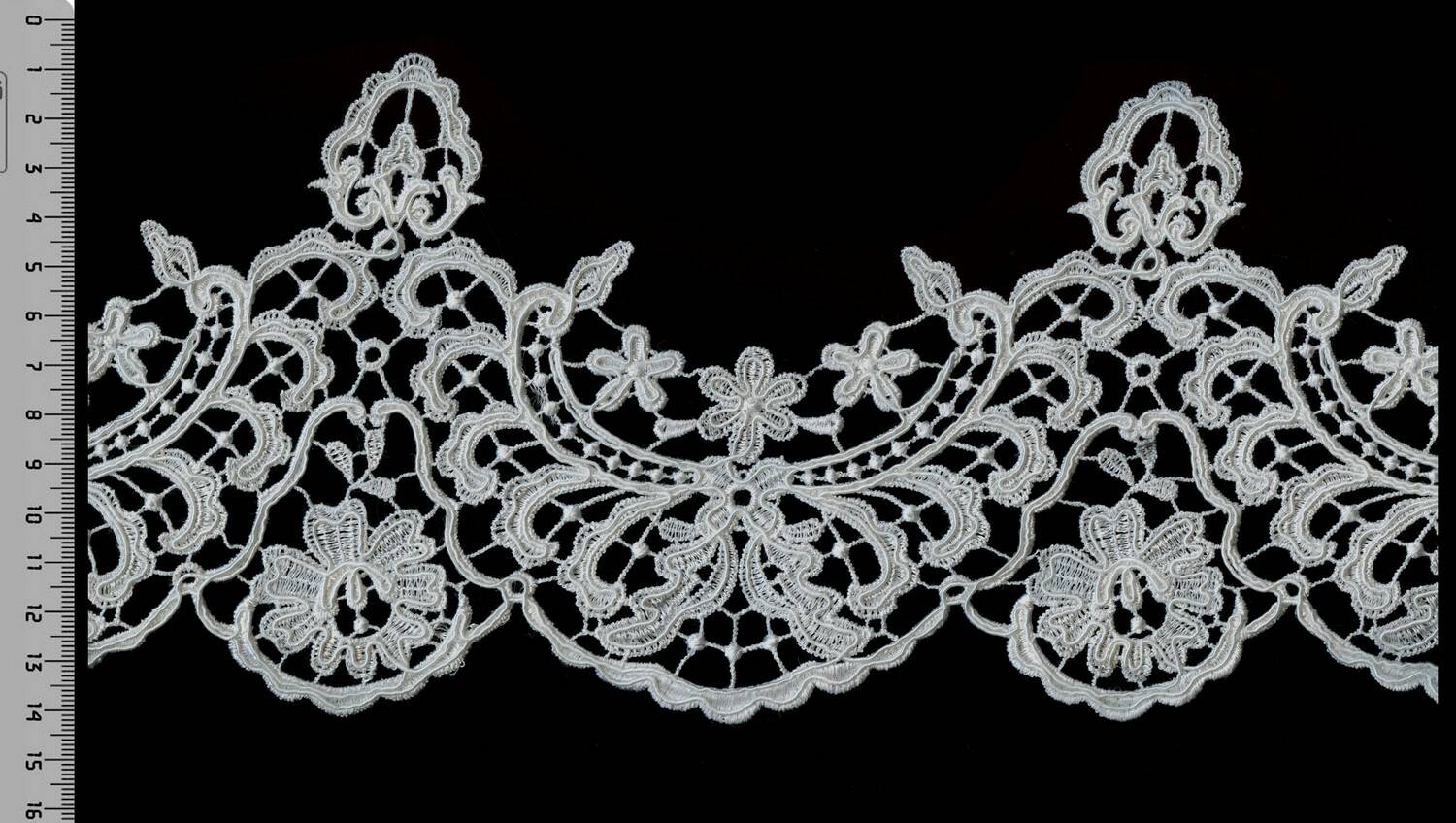
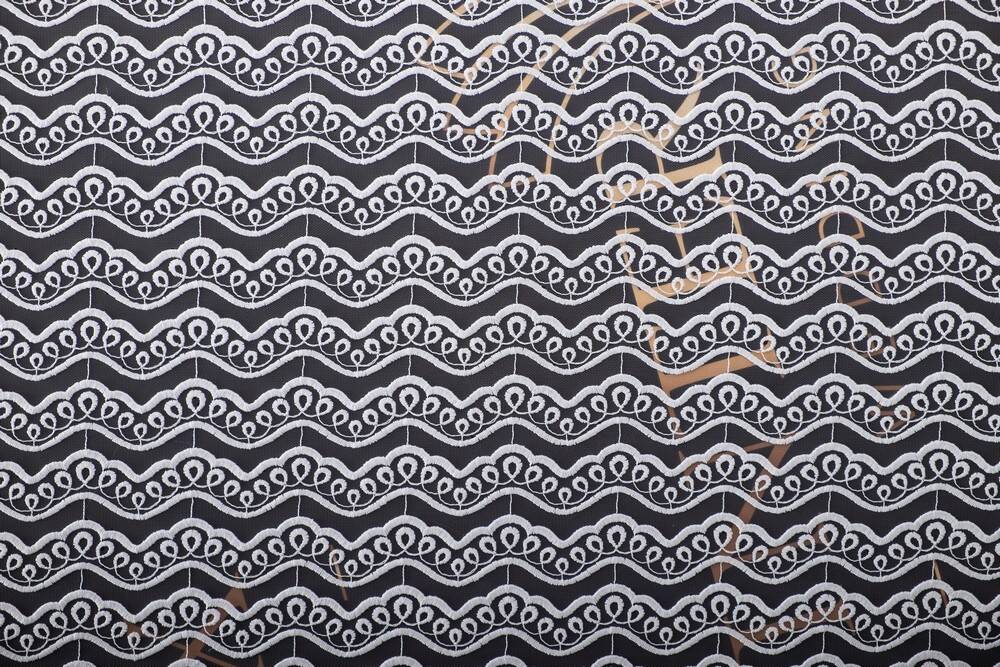
Strips 2-12 cm wide. Used as hem trim, on sleeves, around the collar, as a decorative belt. The most universal option — suits any silhouette.
2. Macrame appliques
Individual motifs — flowers, leaves, geometric rosettes. Sewn onto the bodice, skirt, train, veil. Allow you to create a unique pattern without using a full layer of lace. The Inter Tex appliques catalog has dozens of models.
3. Wide macrame fabric
Rolls 130-150 cm wide. Allow you to cut full elements of the dress: bodice, skirt, cape, a complete boho dress. Raw material for designer collections.
4. Macrame necklines and inserts
Ready-made openwork collars, chemisettes, sleeves. A convenient option for small ateliers: you buy a finished element and sew it into the dress without complex tailoring.
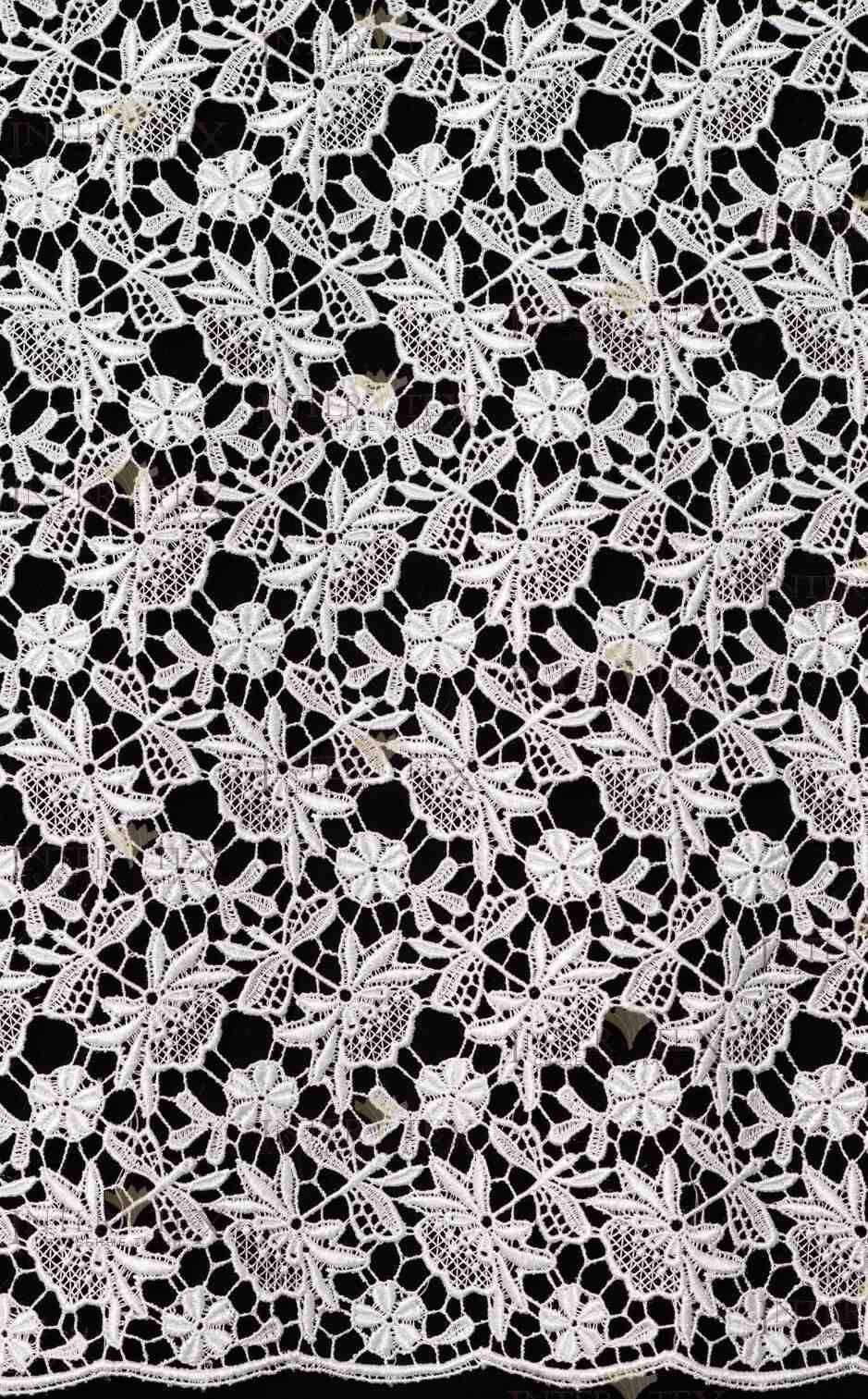
Comparison: macrame vs guipure vs Chantilly
Three most popular laces in bridal fashion — and they differ significantly:
| Parameter | Macrame | Guipure | Chantilly |
|---|---|---|---|
| Technique | Knot weaving | Embroidery on water-soluble base | Machine on net base |
| Texture | Coarse, pronounced, 3D | Openwork, sharp edges | Most delicate, scalloped |
| Base | No base | No base | Fine net |
| Dress style | Boho, rustic, ethnic | Classic, princess | Romantic, vintage |
| Price | Mid-high | High (premium) | High |
| Care | Hand wash only | Delicate hand wash | Dry clean |
How to choose: for natural boho venues (field, forest, vineyard) — macrame. For a classic ceremony in a Catholic cathedral — guipure. For a vintage wedding in 1920s style — Chantilly. When in doubt — combine them!
2026 macrame trends in bridal fashion
- Open-back boho dresses — macrame as the base of corset and train.
- Macrame capes and mantles — short boleros or long cloaks over a satin base.
- Collar necklines — openwork stand collars add a vintage character.
- Coloured macrame — powder, champagne, warm ochre alongside classic ivory.
- Macrame + 3D lace — combo of two crafts for an avant-garde look.
👀 Looking for quality macrame wholesale?
Inter Tex catalog: lace, appliques and macrame fabric direct from manufacturer. Wholesale from 20 m, EU shipping.
Which fabrics pair well with macrame
- Satin — smooth base highlights the texture of knots
- Chiffon — airiness of chiffon + density of macrame = dramatic contrast
- Crepe — matte crepe makes macrame the main hero of the look
- Linen and cotton — for eco-boho and rustic weddings
- Tulle — voluminous tulle skirt + macrame corset = trendy look
How to sew with macrame: 5 master tips
- Always use a lining — macrame is transparent and rough against the skin.
- Edges often do not need finishing — the motif gives a natural decorative edge.
- Use thin needles 80/12 — regular ones leave punctures in the knot threads.
- For attaching to fabric — hidden hand stitch along the motif contours.
- Iron only from the wrong side through gauze, on low temperature.
Common mistake: washing macrame in a machine even on "delicate" mode. The knots stretch and the lace permanently loses shape. Hand wash only in cool water or dry clean.
Care for macrame items
Care rules: hand wash in cool water with a delicate detergent, no wringing. Dry flat on a towel, in shade. Iron from the wrong side through gauze on low temperature. Store in a breathable cover on wide hangers. Never bleach — chlorine completely destroys natural fibres.