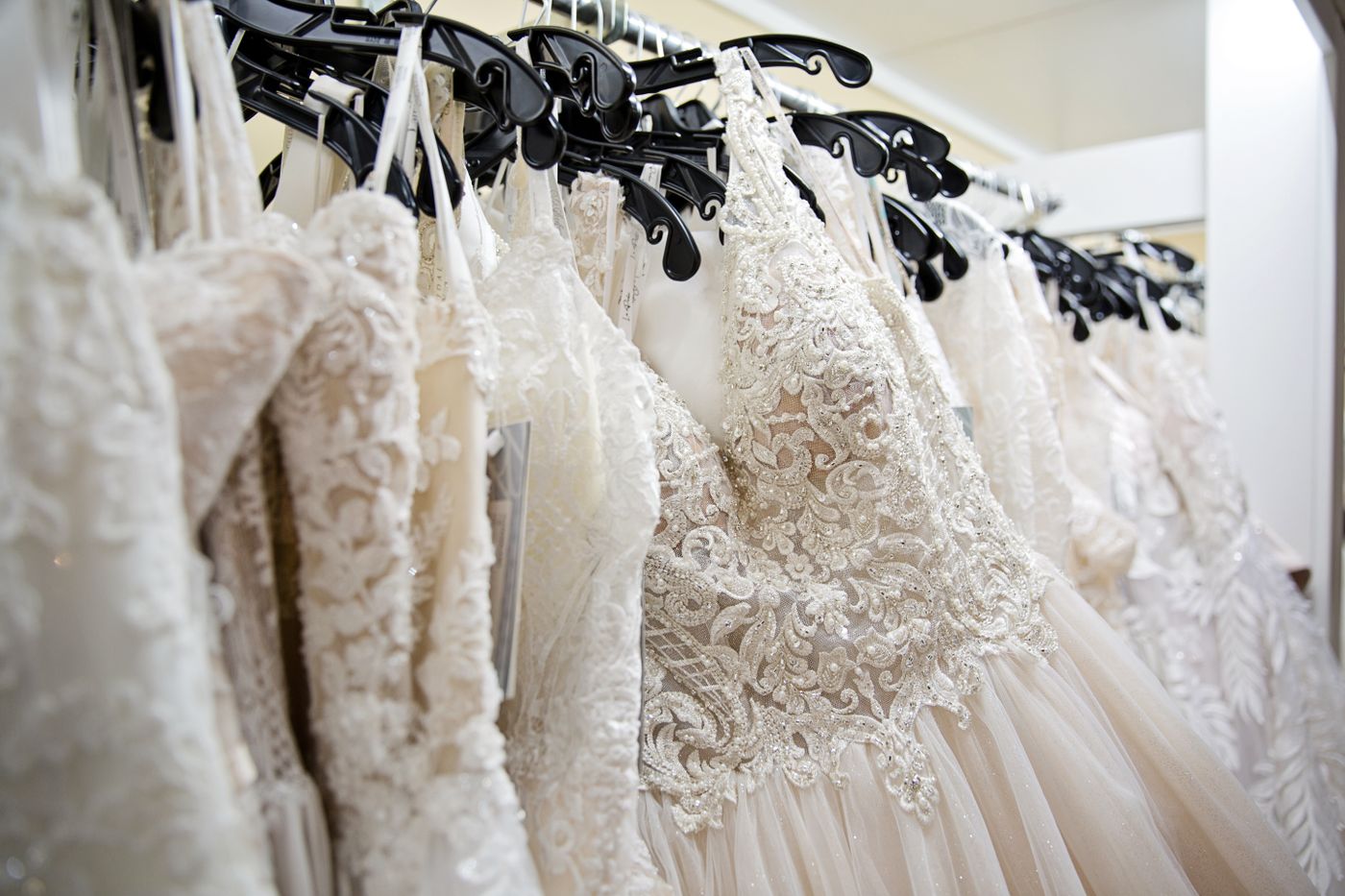
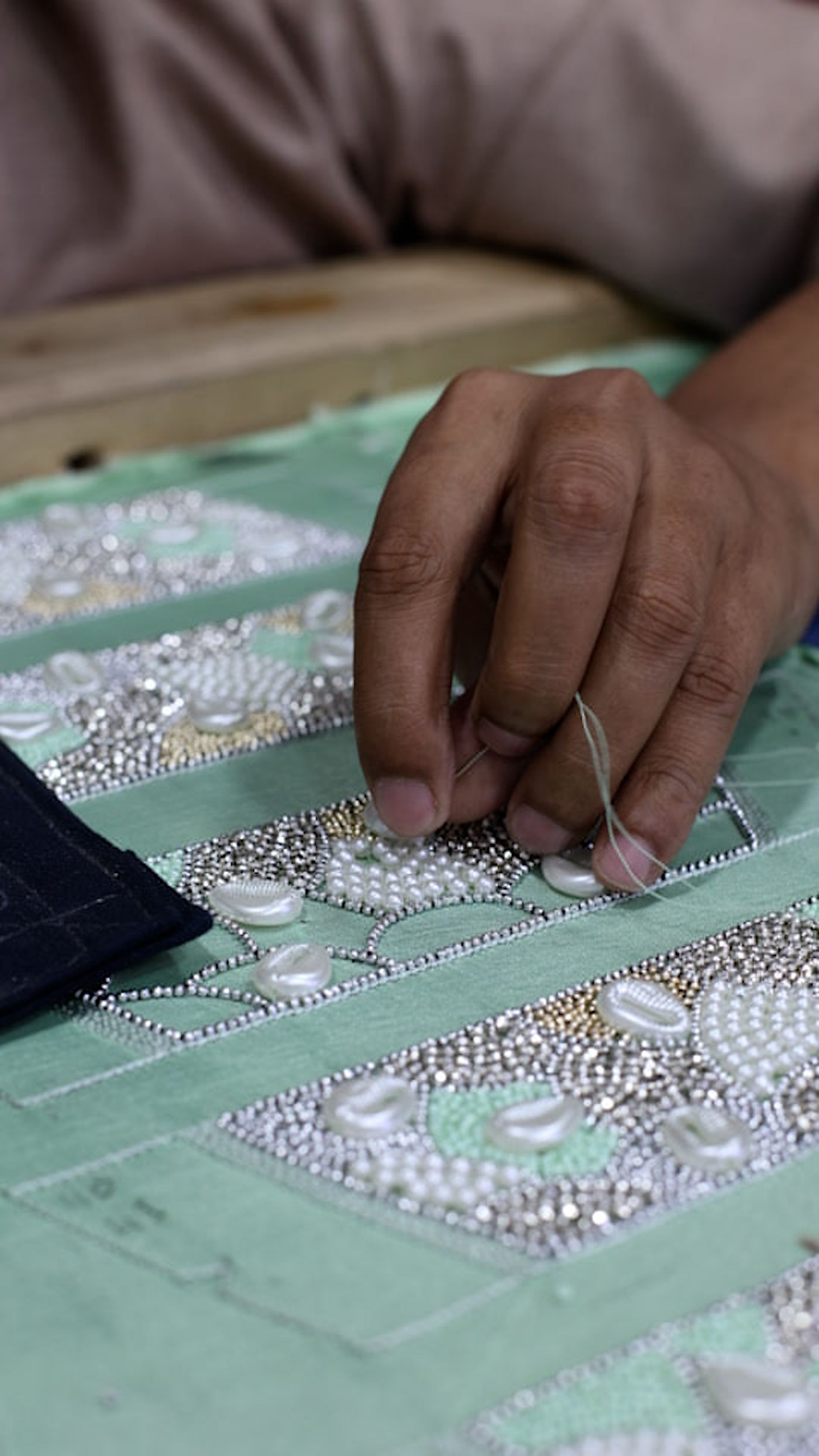
One of the most practical questions any atelier asks is not which lace, but how much. This guide gives you the numbers: meterage by silhouette, how width changes the total, and the buffer you need for cutting.
Lace meterage by silhouette
Planning estimates for a standard-size dress, lace at 150 cm width:
| Silhouette | Bodice only | Full lace dress |
|---|---|---|
| A-line | 1–1.5 m | 4–5 m |
| Ball gown / princess | 1.5–2 m | 6–7 m |
| Mermaid | 1–1.5 m | 3.5–4.5 m |
| Sheath / column | 1–1.5 m | 3–4 m |
Note: these are planning figures. Final meterage depends on the pattern, the size and how much of the motif is lost when cutting.
Width matters: 130 cm vs 150 cm
Lace at 150 cm covers more area per running metre than 130 cm. Switching from 130 to 150 cm can save you 1–1.5 m on the same dress. Always check the width before you calculate.
Motif repeat and scallop border: why you buy extra
With a scallop edge or a large motif, the seamstress has to match the pattern across seams and along the hem. That is why you add 10–15% on top of the raw calculation — running short means a new batch, which may differ slightly in shade.
Bodice, sleeves and veil — count each piece
- Bodice — usually under 1.5 m, but beaded lace needs extra for trial pieces.
- Sleeves — illusion sleeves use the lightest, finest lace.
- Veil / trim — scallop border lace doubles as a finished edge, saving on hemming.
Not sure which lace type yet?
This article is about quantity. If you are still deciding between Chantilly, guipure, macramé or embroidered lace, start with how to choose lace for a wedding dress, then come back here for the meterage.
Buying lace by the metre?
Tell us the model and we will estimate meterage and wholesale price.