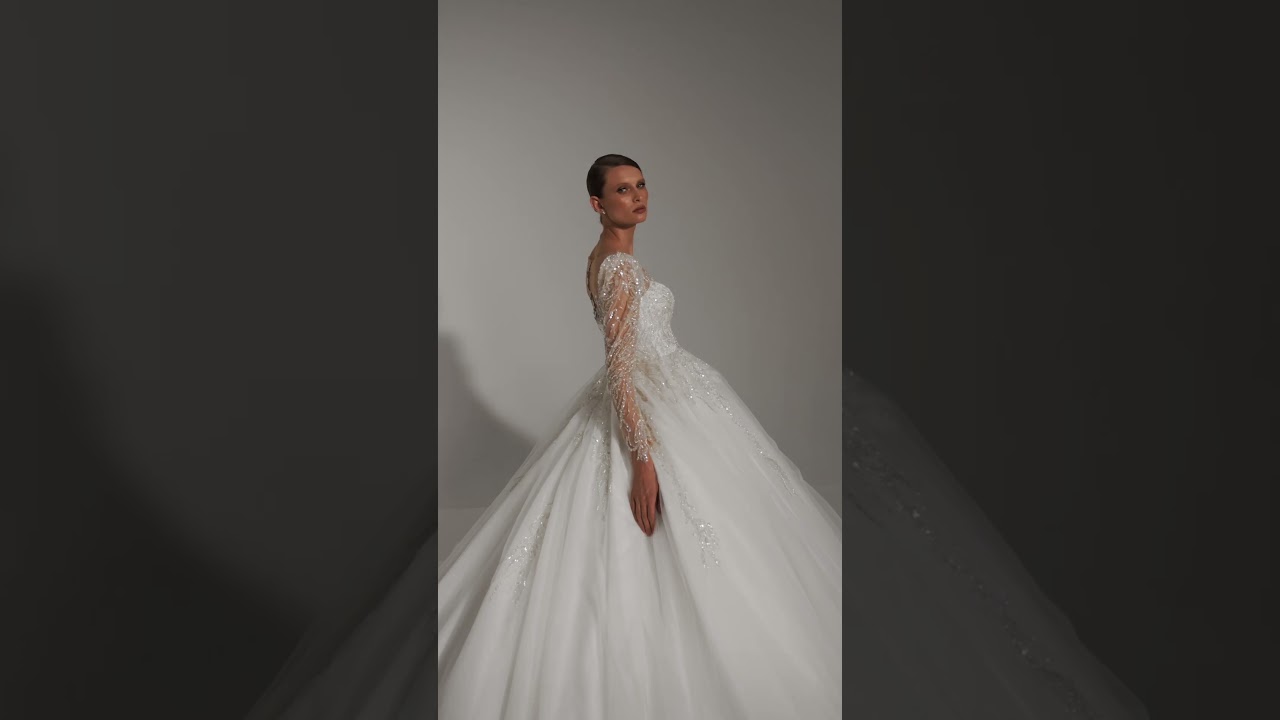
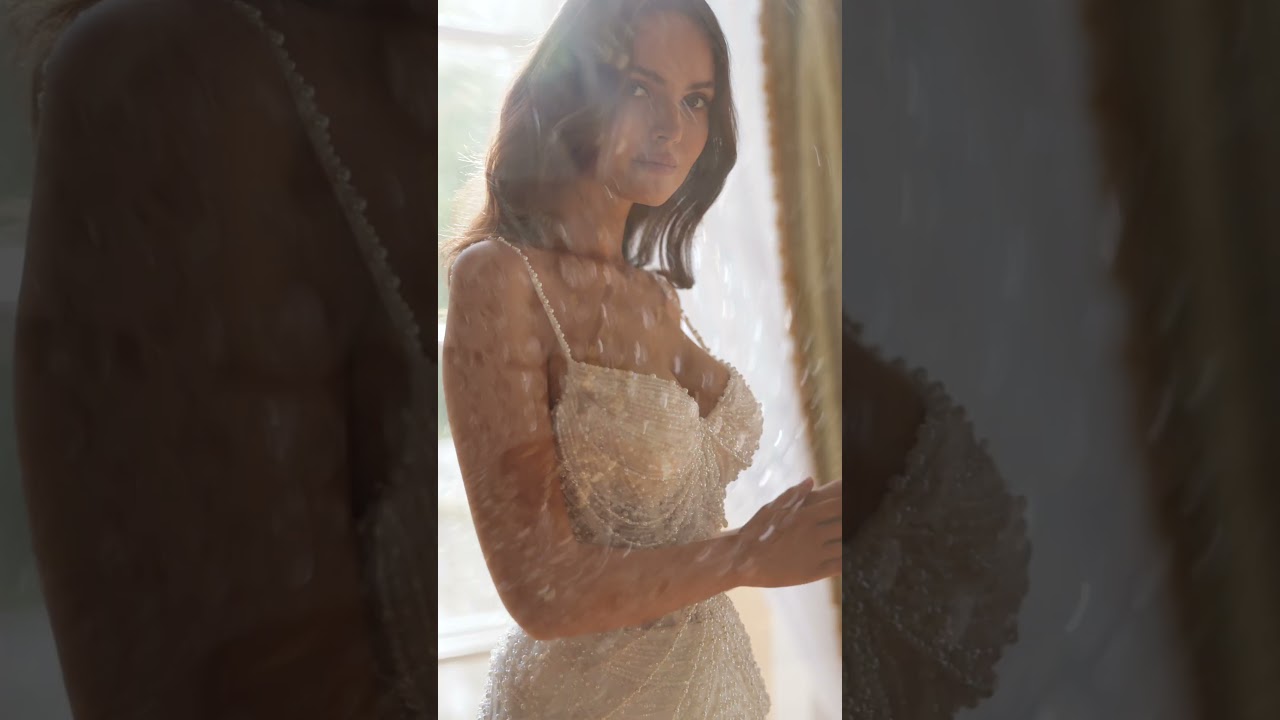
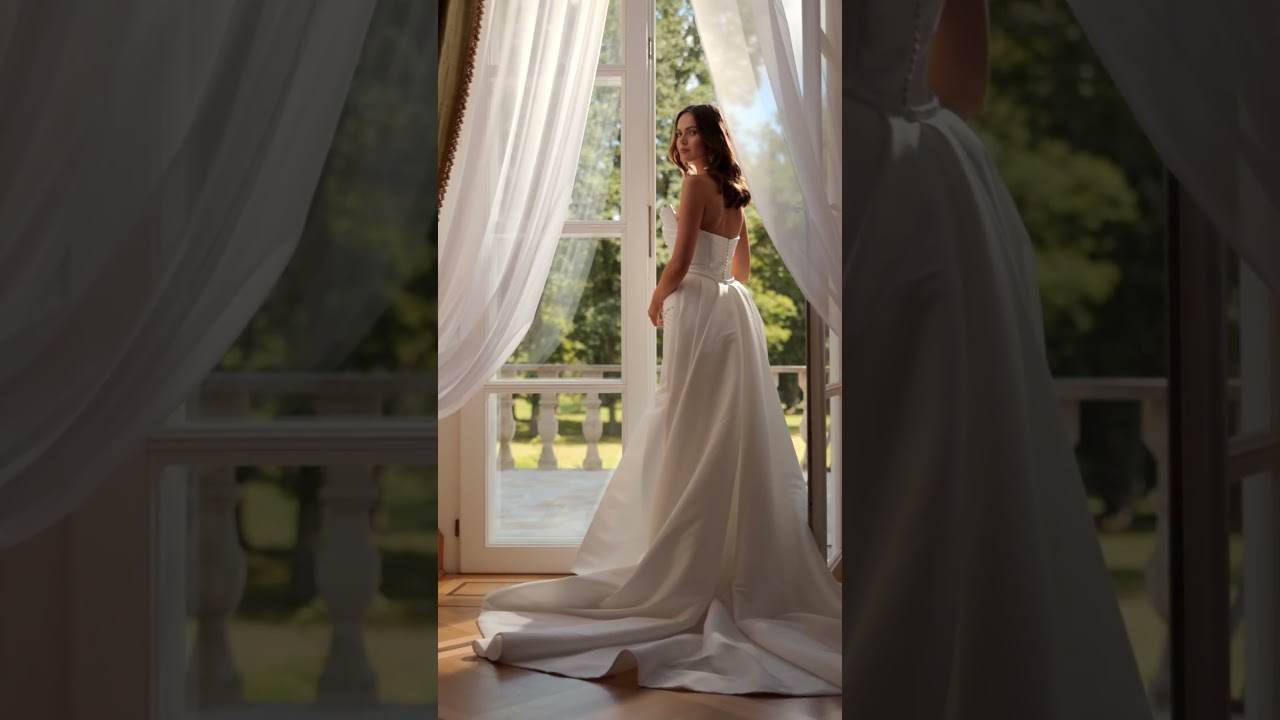
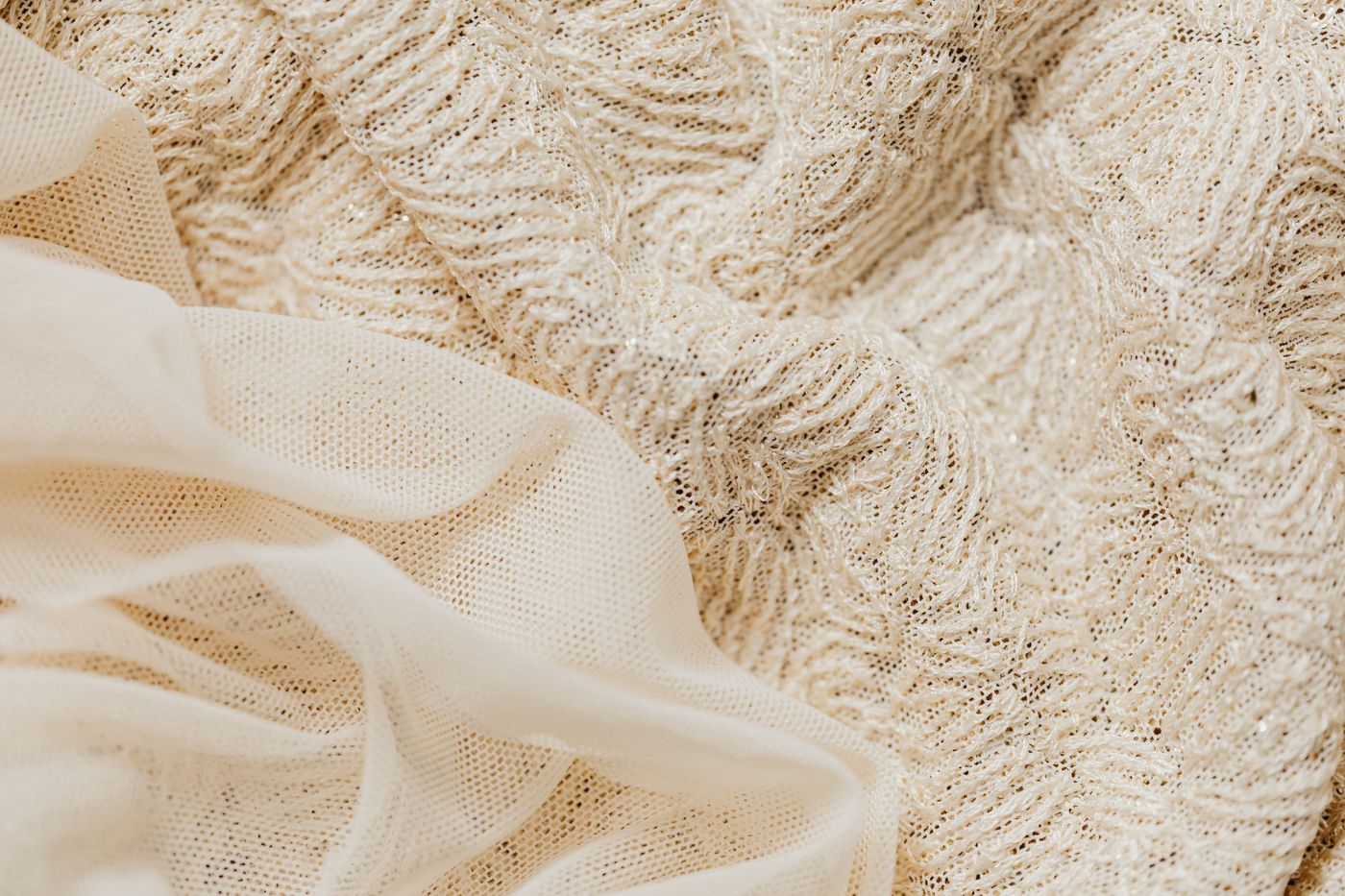
If there is one fabric that defines the idea of the "wedding fairy tale", it is organza. Light as cobweb yet crisp enough to hold volume; transparent as glass yet capable of turning the bride into a "cloud". For more than 100 years organza has been the staple fabric for bridal trains, veils and top layers. Vera Wang, Pronovias, Maggie Sottero, Inbal Dror, Christian Dior — none of these couture houses can imagine a bridal collection without it. In this complete guide: history, types, how to sew and how much organza costs in 2026.
What organza is
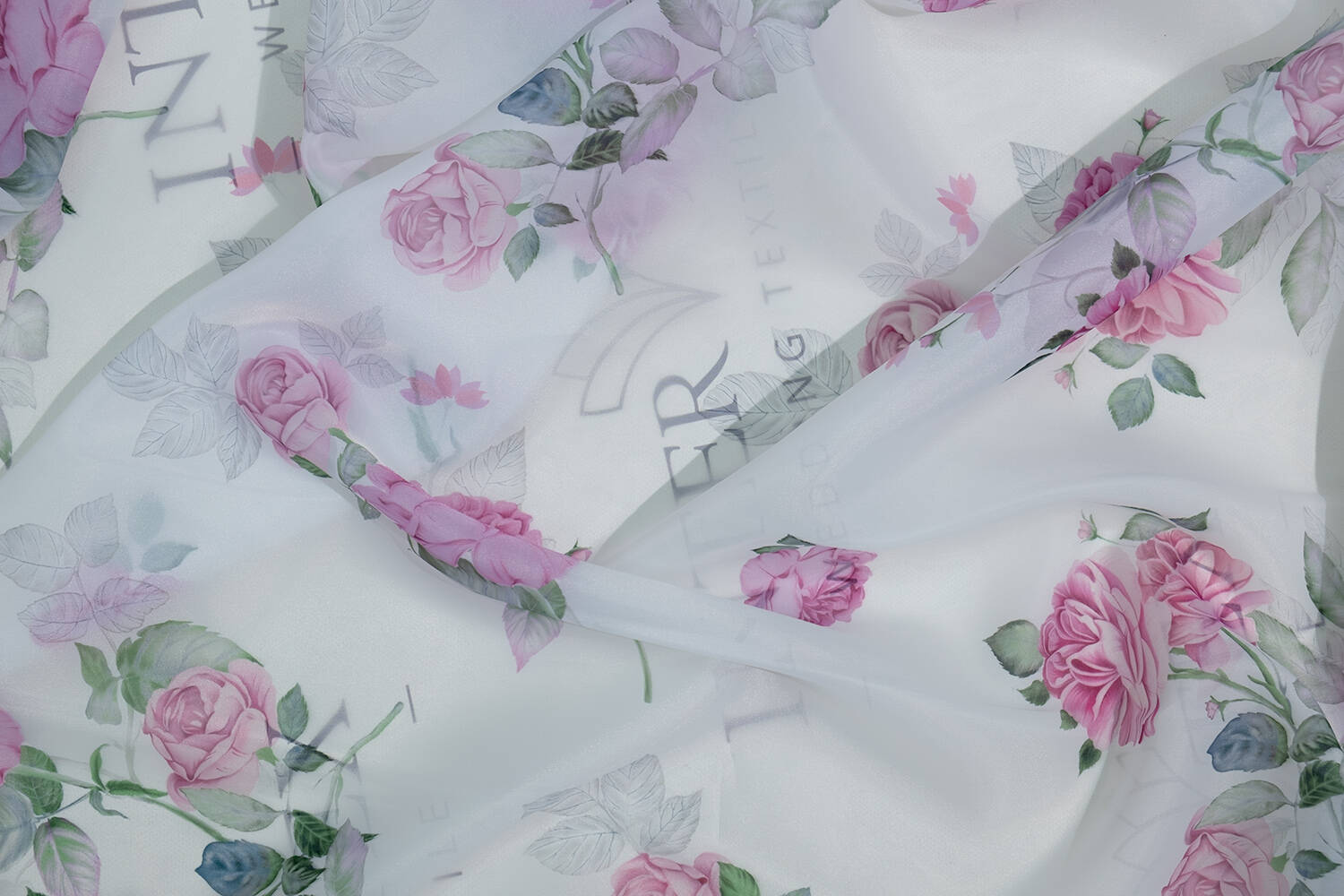
Organza is a sheer plain-weave fabric made from finely twisted yarns. The high twist gives it crispness and signature transparency. Composition: 100% polyester (affordable), silk (premium), nylon (rare). Width — 140–280 cm. Weight — 25–60 g/m².
History: from 19th-century Italy to Vera Wang
Organza was first produced in Italy in the 19th century — originally in silk, for finishing couture gowns and curtains. In the 1920s, French designer Madeleine Vionnet was the first to use organza as the main bridal fabric — light, transparent layers paired with silk. In the 1950s Christian Dior made organza part of "New Look": full ballgowns of 6–8 layers. In the 2000s Vera Wang re-discovered organza for modern bridal fashion: multi-layered "clouds" that became iconic on bridal Pinterest.
5 main types of organza
1. Classic organza
The base type. Smooth, even surface, moderate crispness. Holds shape but allows light drape. White, ivory, champagne, all pastels. The most popular choice for the top layer of a gown.
2. Crystal organza
Shinier than classic. Carries a soft "crystal" sheen thanks to a special yarn finish. For ceremonial gowns, veils and trains. Reads on camera like "polished glass".
3. Shot organza (shanjan / iridescent)
Iridescent effect — each yarn dyed in a different colour, the cloth "plays" with movement. Classic combinations: pink+blue, green+gold, burgundy+purple. A trend for evening wear and couture weddings.
4. Metallic organza
Woven with metallic threads (silver, gold, copper). Adds shimmer and structure. Often used for veils, scarves and capes. Popular for winter weddings.
5. Silk organza (premium)
Made of 100% natural silk. Lighter, softer and with a more "alive" sheen than synthetic. Costs 5–10× more. Dry-clean only. Found in couture gowns by Christian Dior and Inbal Dror.

Organza fabric properties
| Parameter | Value |
|---|---|
| Composition | 100% polyester, silk, nylon |
| Weight | 25–60 g/m² |
| Width | 140–280 cm |
| Sheerness | High (lining required) |
| Crispness | Medium–high (holds volume) |
| Drape | Moderate |
| Wrinkles | Heavily |
Brands that love organza
- Vera Wang — multi-layered "clouds" of 6–8 layers
- Pronovias — mass segment, ballgowns with organza
- Maggie Sottero — full princess gowns
- Inbal Dror — minimalist trains in silk organza
- Christian Dior — couture since the 1950s (New Look silhouette)
- Marchesa — organza as a base for 3D appliqués
Use in bridal wear
- Top layers of the gown — over a structured mikado or satin bodice
- Ballgown skirts — from 4 to 12 layers for fullness
- Train — thin and voluminous at the same time
- Capes and shawls — over a column dress
- Scarf / wrap — as an accessory
- Veil — organza adds volume and transparency
- Sleeves — wide loose sleeves cut from a sheer layer
Tip from Inter Tex: for the first project use a classic polyester organza of 30 g/m² in white or ivory. It forgives cutting mistakes, is easy to care for and photographs as luxuriously as silk — on camera the difference is almost invisible.
Pros of organza
- Creates a "cloud" — volume and lightness in one fabric
- Transparency — plays with light on the body
- Holds shape — the skirt stays full
- Photogenic — reads as airy and weightless on camera
- Wide bolts — 280 cm allows seamless cutting
- Pairs with lace, appliqués, beading
- Affordable — polyester organza from $5/m
Cons of organza
- Wrinkles heavily — creases stay after transport
- Catches — on jewellery, nails, wooden surfaces
- Needs lining — sheer, single layer only when intentional
- Silk is expensive — $40–100/m
- Hard to iron — melts at high temperatures
Organza vs tulle vs chiffon vs net
| Parameter | Organza | Tulle | Chiffon | Net |
|---|---|---|---|---|
| Crispness | Medium–high | High | Low | High |
| Sheerness | High | High | High | Very high |
| Drape | Moderate | Poor | Excellent | Poor |
| Holds volume | Excellent | Excellent | Poor | Excellent |
| Price per metre | $5–100 | $2–8 | $5–22 | $2–7 |
| Use | Top layers, trains | Skirt volume | Drape, top layers | Veils, volume |
Looking for organza wholesale?
Inter Tex stocks classic, crystal, shot and silk organza. Width 140–280 cm, free samples. Wholesale from 10 m.
How to sew with organza: 7 tips
- Fine 70–80 needles — heavier ones leave visible holes.
- Silk threads — polyester threads can be thicker than the fabric.
- Short stitch (1.5–2 mm) — for a clean seam.
- Edge — rolled hem or French seam. Overlock looks rough.
- Do not stretch when cutting — organza skews easily. Cut on a smooth surface.
- Use paper under the pattern — for stability.
- Lining is mandatory — except where the sheer effect is intended.
Common mistake: high-temperature ironing. Polyester organza melts at 130 °C+ — shiny iron marks appear and cannot be removed. Use only the lowest 1-dot setting through a thin cotton press cloth, or a vertical steamer.
How to wash and care for organza
Washing: polyester — hand wash in cool water with a mild detergent, no spin. Silk organza — dry-clean only. Drying: on wide hangers in the shade, do not fold. Ironing: through a cotton press cloth, 1 dot, no steam. A vertical steamer is better. Storage: in a garment bag on wide hangers; finished gown in a dedicated box.
Organza prices in 2026
| Type | Price, $/m (retail) | Segment |
|---|---|---|
| Classic polyester | $5–9 | Budget |
| Crystal organza | $8–13 | Mid |
| Shot / iridescent | $11–18 | Mid+ |
| Metallic | $13–24 | Premium |
| Silk organza | $40–100 | Couture |
Wholesale prices are 15–25% lower. Inter Tex stocks 140 cm and 280 cm widths and ships free 5×5 and 10×10 cm samples on request.