I remember a conversation with one of our clients — a dressmaker from Kharkiv with twenty years of experience. She picked up a swatch of mikado, held it for a few seconds and said: "Now this is a real fabric. It forgives everything." That moment stuck with me: the right bridal fabric is not about a specification sheet. It is about a material that works with you — in the workroom, in the fitting room, and for twelve hours on the most important day of your life.
In this guide, we break down the six essential bridal fabrics the way an experienced tailor would: what the fingers feel, how the material behaves on the body, where it will let you down and where it will surprise you. Technical data is here, but it comes last. First — the personalities.
Why fabric decides everything
A wedding dress design is 30% sketch and 70% material. The same pattern looks completely different in mikado versus chiffon. Structured mikado turns a silhouette into a sculpture. Chiffon turns the same pattern into a cloud. Any bridal atelier will confirm this — it is not an exaggeration.
Beyond aesthetics, the fabric determines comfort for the entire day. Eight to twelve hours in a wedding dress is no joke. If the bodice looks beautiful but the material does not breathe, by evening you will want to escape it at any cost. If the skirt is light but slips constantly, every photograph becomes a battle with fabric.
There is another underappreciated factor — how fabric reads in photographs. Satin creates reflective hotspots that blow out details on camera. Chiffon in a brightly lit venue becomes nearly transparent. Mikado looks like mikado under any lighting — which is exactly why it is so beloved by wedding photographers. This nuance is rarely mentioned in a shop, but it matters as much as how the dress looks during a fitting.
1. Mikado — for the bride who wants to look like royalty
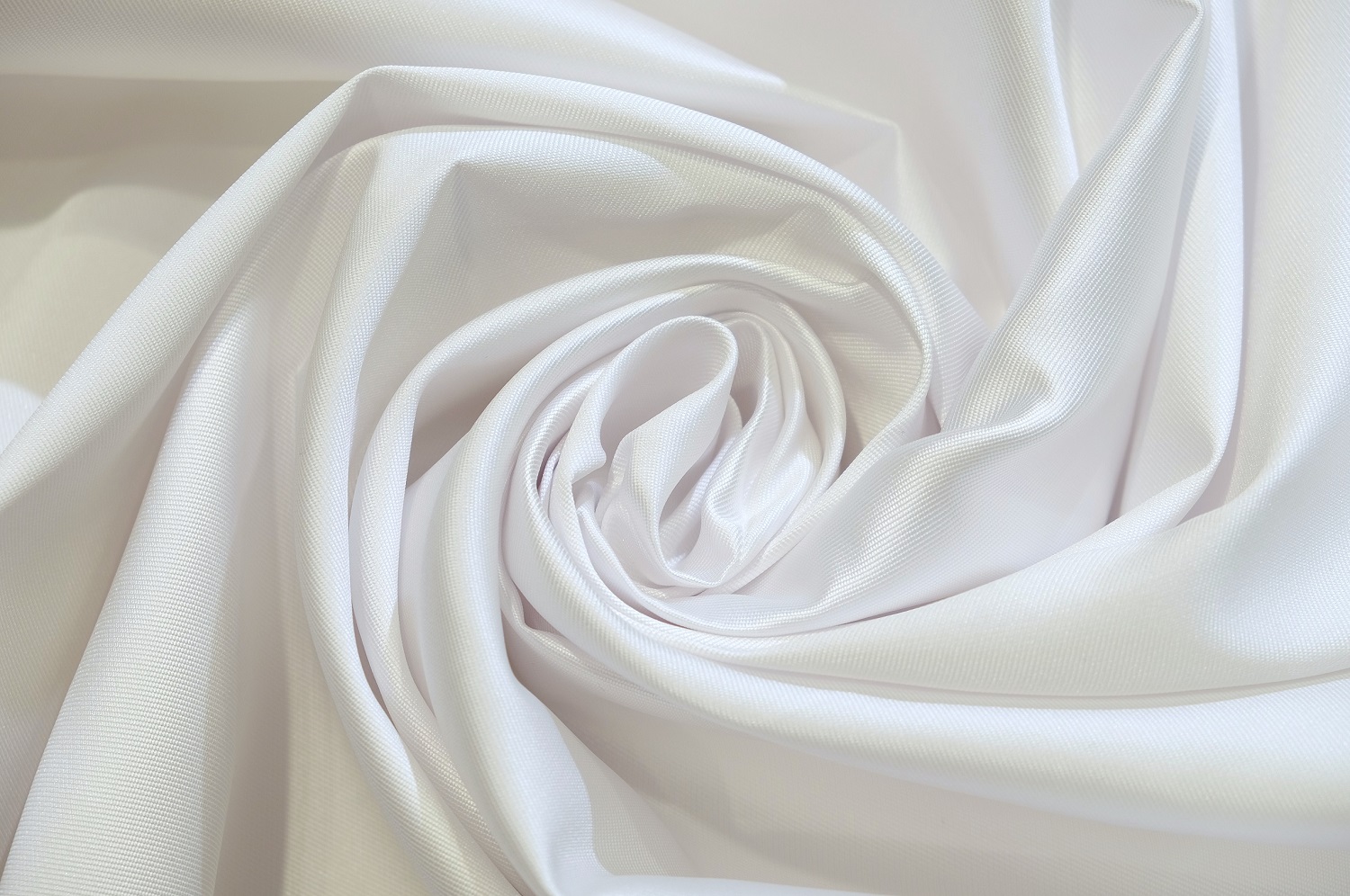
Mikado is a dense satin-weave fabric with a two-directional structure and characteristic soft sheen. Weight: 200–350 g/m². For comparison, standard lining fabric weighs 80–100 g/m², meaning mikado is at least twice as dense. That density creates the «form-holding» effect: even without boning or crinolines, mikado holds a sculpted silhouette, supports the bodice and smooths the waistline.
The name comes from the Japanese imperial title — «mikado» means «one who stands above all». No marketer could have done better. A woman in mikado genuinely stands — straight, confident, with a sense of her own presence. Not the delicate airiness of organza, but the commanding weight of structured material. It is a fabric that tolerates no uncertainty — neither in posture nor in silhouette.
The Inter Tex catalogue carries four types of mikado, each very different to the touch:
Mikado Soft ($8–30/m) — 100% polyester, machine washable at 30°C. The most affordable and versatile option. Ideal for princess and A-line silhouettes. For a bride choosing fabric for the first time who does not want to take risks — this is the safest choice.
Mikado Kelly ($20–50/m) — stiffer, springier, with a more pronounced sheen. Perfect for ballgowns with complex structured skirts that need maximum «stand». If you dream of a dress that fills the entire lift mirror — Kelly is your fabric.
Mikado Stretch ($22–60/m) — contains 8–12% elastane. For mermaid or trumpet silhouettes — body-hugging styles where the fabric needs to move with the body while maintaining its shape. This mikado fits like a second skin.
Silk mikado ($60–200/m) — real silk or silk-blend. Lighter, with a warm milky sheen, entirely different to the touch. Dry clean only, but the feeling is incomparable — like wearing something from a museum collection.
Who chooses mikado? Brides who want the classic fairy-tale wedding — a sculpted silhouette, a sense of grandeur and preciousness. It works at any height and body type. In a palace, castle or grand reception hall — it is the undisputed king of bridal fabrics.
2. Organza — the airy princess
Organza is a sheer, crisp fabric with a firm, structured character. To the touch — slightly stiff, it rustles at every movement, holds volume. This is not a soft cloud like chiffon — it is more like starched poetry, where every fold is a sculpture. If mikado is a monarch, organza is a ballerina: light but not shapeless, airy but not without backbone.
Made from natural silk or synthetics (polyester, acetate, nylon). Silk organza is a world apart from polyester: warmer to the touch, more «alive» in its sheen, behaves completely differently on the body. But the price reflects this — from 1,500 to $110/m versus $5–22/m for polyester. For most wedding dresses, polyester organza is the optimal balance of appearance and price.
The Inter Tex range covers five types: classic (for skirt foundations and veils), crystal organza (with a glittering sheen, looks like frost in photographs), shot organza (two-colour, shifts with the angle of light — very popular in spring collections), metallic (for decorative accents and evening wear) and silk organza (for premium commissions).
Organza is a building material: it does not hold shape on its own, but layered multiple times it creates extraordinary skirt volume. For this reason organza is rarely used alone. Most often it appears as a top layer over mikado or satin, where it creates a soft radiance and «breathing». This combination is an eternal classic from Vera Wang to local ateliers.
Key warning: organza does not forgive poor seams. Every thread, every stitch will show through the fabric in bright light — especially in a photo. This is why it is more demanding to sew than mikado, and an experienced dressmaker is essential. For the same reason, organza is notoriously difficult to iron: the slightest overheating and it permanently stiffens and yellows.
3. Chiffon — for light, free-spirited weddings
Chiffon is perhaps the most romantic of all bridal fabrics. It does not structure, does not support, does not contain — it flows. Every breath of air, every step and chiffon responds, surrounding the bride in a soft luminous cloud. This is why it is so beloved for outdoor weddings: beach, meadow, orchard — wherever there is breeze and natural light. In photographs with chiffon there is always movement, even when the bride stands perfectly still.
Technically, chiffon is a very open plain-weave fabric of fine twisted yarns. Classic chiffon is silk, but 99% of what is sold commercially is polyester. The difference is felt only in price (polyester: $4–15/m, silk: $29–85/m) and in how it falls on the body: silk chiffon drapes more naturally, polyester is lighter and does not stain as easily. Both versions have their merits — it comes down to budget.
The main challenge with chiffon: it is mercilessly unforgiving of figure. It conceals nothing and no one. A tummy, wide hips, an uneven bodice — all of it will show. This is why chiffon is almost always combined with a structured bodice or lining underneath: a cloud of chiffon on the outside, a form-holding layer beneath. In its pure form, chiffon works best for a bride with model proportions or for a free-form style — Greek goddess, bohemian — where «imperfect» draping is part of the look.
One more characteristic: chiffon creases easily when packed or folded. If you put the dress in a bag after the wedding, smoothing it without professional cleaning will be very difficult. But on the body it never creases — it continuously falls away from the body on its own, looking fresh throughout the entire day. That compensates for its temperamental storage behaviour.
4. Satin — timeless elegance
Satin never goes out of fashion. Its strong mirror sheen has been associated with luxury since the Middle Ages, when satin gowns were worn at royal courts. When we picture the archetypal «wedding dress» from a film — it is almost always satin: smooth, gleaming, precise. Princess Diana married in ivory duchess satin. Grace Kelly married in satin and lace. The majority of iconic cinematic bridal looks are satin.
Structurally, satin is formed by a satin weave in which most threads surface on the face — hence the even, reflective appearance. Weight: from 80 to 250 g/m², meaning it is lighter than mikado. Natural satin is 100% silk, but today it is virtually absent from mainstream production. The standard: polyester, polyester-silk blend or polyester-viscose. Price: $4–$1/m depending on composition and quality.
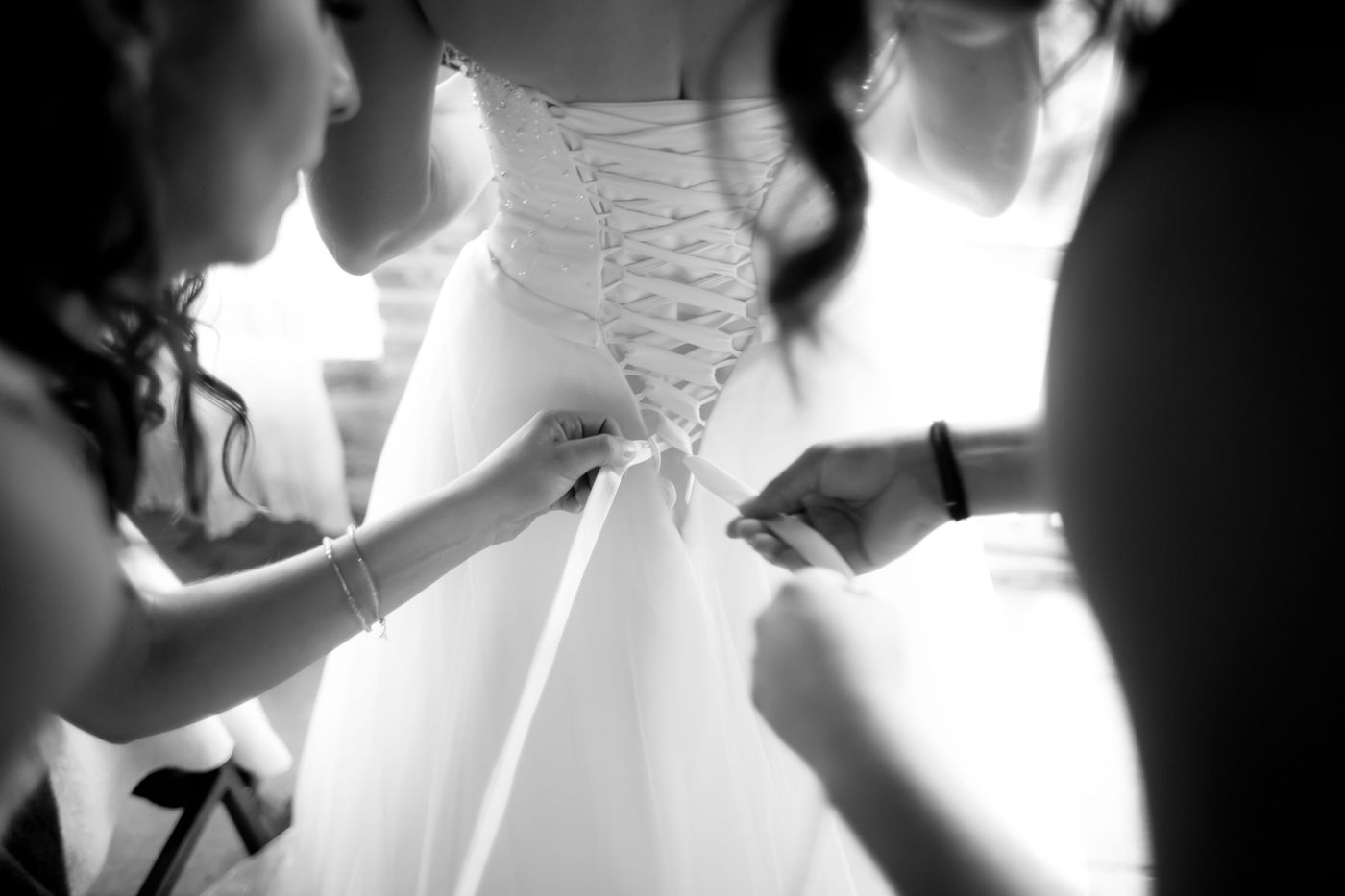
Satin lies beautifully on the body, conceals minor imperfections and holds stitched construction lines well. Unlike mikado, it has more give, which is why it is frequently chosen for corset bodices and fitted tops. The combination of a satin corset with an organza or chiffon skirt is one of the most universal recipes for a wedding dress worldwide.
Important: satin creates reflective hotspots in photography. In bright sunshine or a venue with flash, dress details can blow out — disappearing into white light. Mikado, by contrast, gives an even, never-overexposed tone. If photography is a priority and you are planning outdoor shots in summer sun, factor this in when choosing. Alternatively, discuss it with your photographer — an experienced professional knows how to tame satin's shine.
5. Lace — character and detail
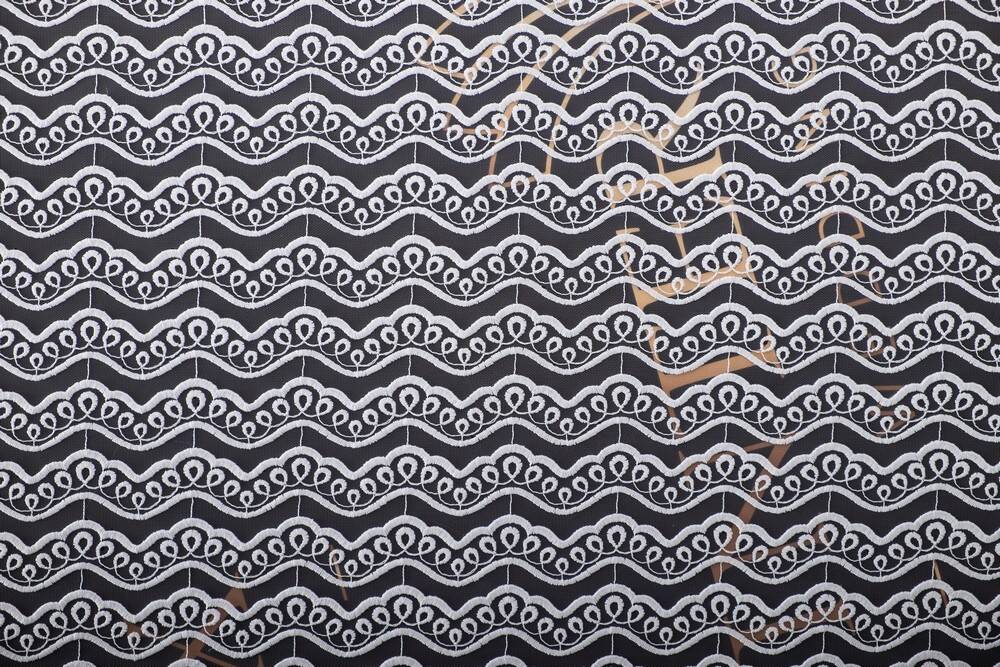
Lace in bridal wear is not one material but an entire universe. Three main types are used in wedding dresses: macramé, guipure and Chantilly — and each has a completely different character, price point and production method. Confusing them is an extremely common mistake, even among experienced brides and dressmakers.
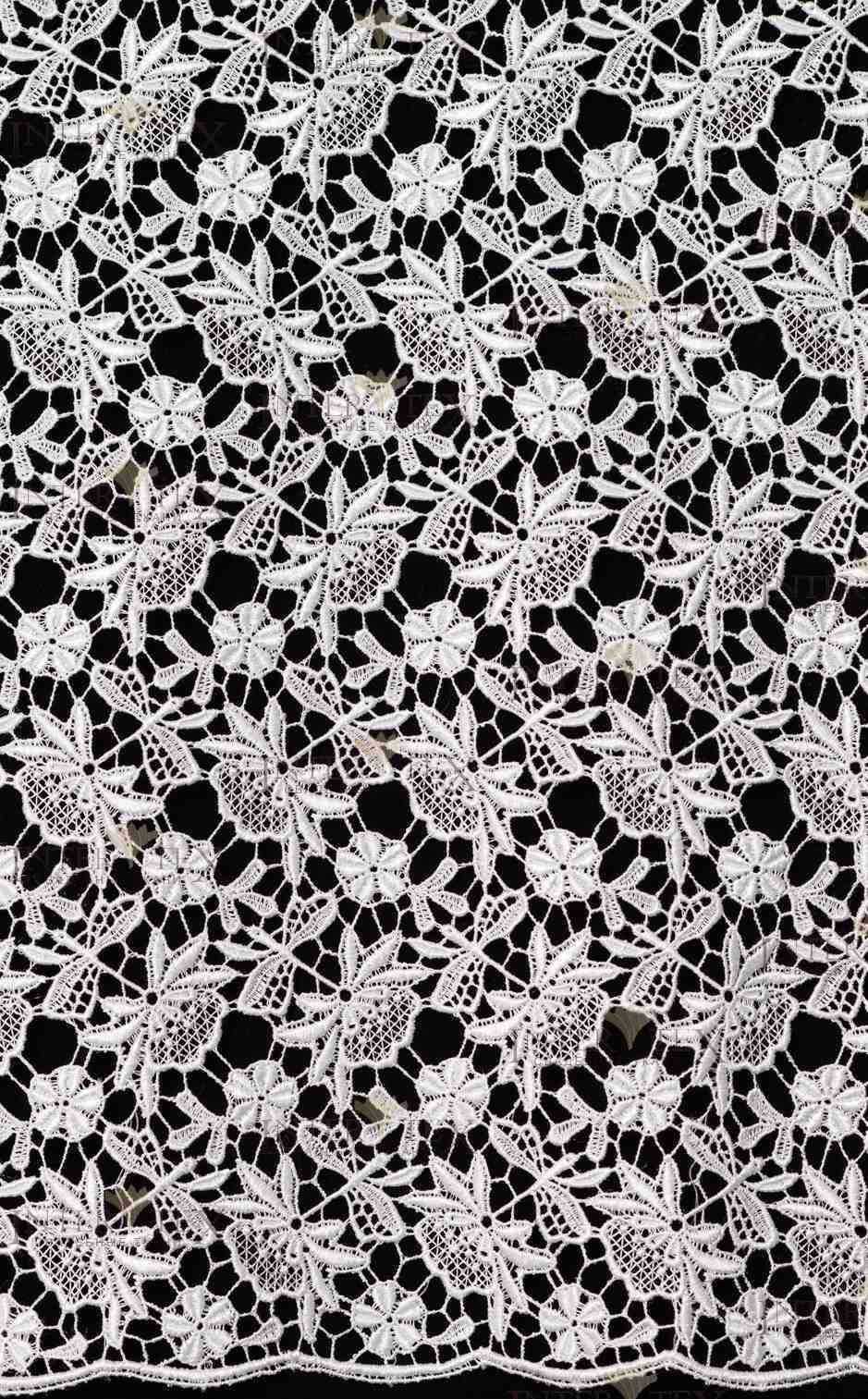
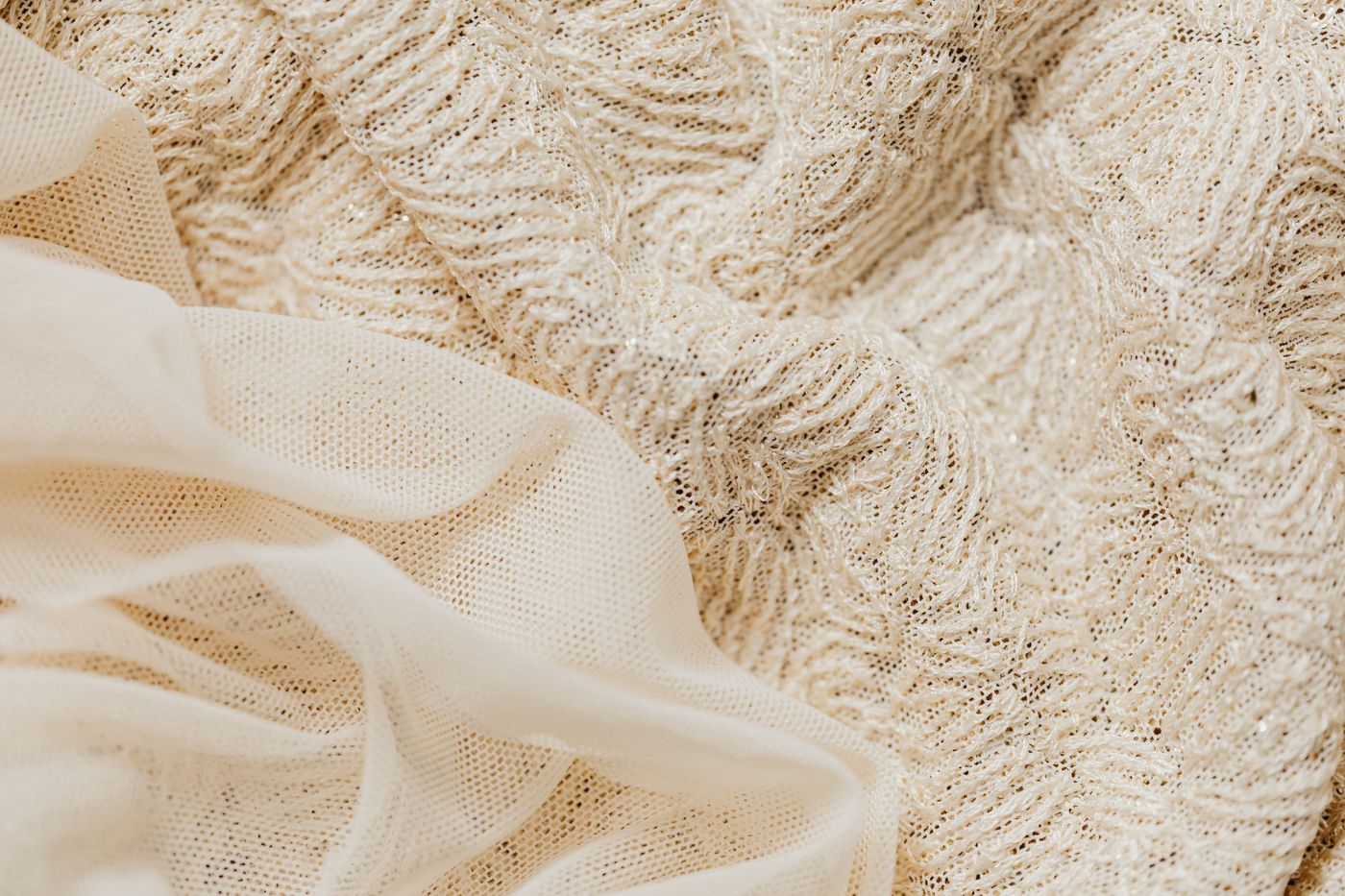
Macramé lace is dense and three-dimensional with a sculptural raised pattern. Relatively heavy, it holds its shape and looks substantial. Most commonly used in bodices, sleeves and skirt panels. Price: $10–60/m. It never goes out of fashion — retro brides, bohemian brides, and «princess with an edge» brides all find macramé works for them. It pairs well with mikado, satin and even chiffon, given the right weight balance.
Guipure is lighter and more open than macramé, with large three-dimensional motifs visible through the fabric. The classic choice for a romantic wedding dress. Widely used as a top layer over satin or mikado — precisely this creates the «lace fairy-tale» effect where a bold pattern interacts with the shimmer of the underlayer. Price: $9–55/m.
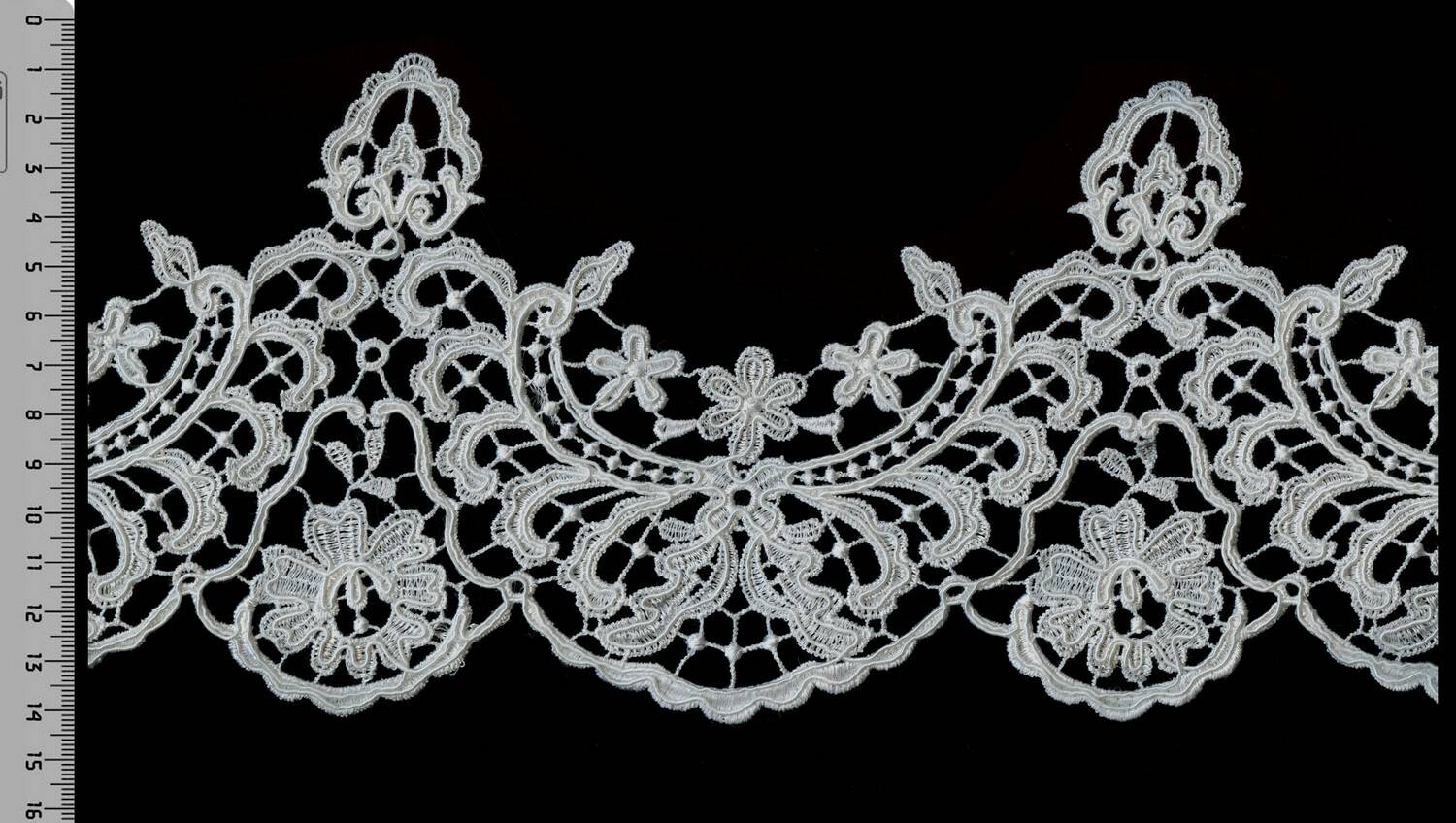
Chantilly lace is the finest and most exquisite of the three. Delicate, mesh-based, with floral motifs and its characteristic scalloped edge. Chantilly is the favourite material of haute couture houses. Kate Middleton wore it (Alexander McQueen lace), as did Nikki Hilton and scores of other celebrated brides. Chantilly is extremely delicate: dry clean only, minimal pressing, no exposure to moisture or abrasion. Price: $20–145/m. But if you have chosen it — it is chosen for life.
Lace is rarely used as the sole material for an entire dress — it is too technically demanding and too translucent on its own. More often it functions as an overlay on satin or mikado, adding depth and texture. Or as a statement element: a lace bodice, lace sleeves, a lace-trimmed veil. A Chantilly veil is one of the most beautiful objects in bridal fashion, full stop.
6. Crepe — for the minimalist who means business
Crepe is for the bride who knows precisely what she wants: nothing unnecessary. No shine, no volume, no complex textures. Just a clean silhouette line, a soft fall and quiet matte elegance. Perfect for minimalist weddings, nude-glamour aesthetics or an intimate civil ceremony. It is a fabric that looks like a twenty-thousand-hryvnia dress even when the garment cost considerably less.
Technically, «crepe» describes a weave method rather than a single fabric: yarns are heavily twisted during production, creating the characteristic grainy, slightly textured surface. Types: classic polyester crepe ($6–20/m), silk crepe ($29–100/m), crepe-back satin (combines a matte reverse with a satin face, $15–45/m), and double crepe — a two-layer construction that is extremely stable ($22–60/m).
Double crepe is the preferred material of Stella McCartney, Victoria Beckham and the broader modern minimalist bridal movement. Meghan Markle wore Givenchy double crepe at the Frogmore evening reception — one of the most discussed bridal looks of the decade. It does not crease, holds its shape, is genuinely comfortable for an entire day, and photographs with a clean, elegant tone that requires no special lighting treatment.
Crepe's primary demand: it requires absolutely precise cutting — even more so than satin. Any inaccuracy in a seam line will be visible. But in the hands of a skilled dressmaker it is one of the most rewarding materials: it slides over the body evenly, holds construction, and wears with extraordinary comfort.
Comparison table: all six fabrics
| Fabric | Sheen | Weight | Price UAH/m | Silhouette | Care |
|---|---|---|---|---|---|
| Mikado Soft | Soft matte | 200–350 g/m² | $8–200 | Ball gown, A-line, mermaid | Machine wash 30°C |
| Organza | Crisp glassy | 40–90 g/m² | $5–110 | Layered, voluminous | Delicate hand wash |
| Chiffon | Delicate soft | 30–70 g/m² | $4–85 | Boho, free, romantic | Machine wash 30°C |
| Satin | Mirror | 80–250 g/m² | $4–60 | Classic, corset | Dry clean (silk) |
| Lace | Open | from 100 g/m² | $9–145 | Overlay, inserts | Dry clean |
| Crepe | Matte | 150–280 g/m² | $6–100 | Minimalist, sheath | Machine wash 30°C |
Choosing fabric by body type
This is the most practical section of the guide. The same fabric can look completely different on different figures. Do not trust sellers who say «this works for everyone» — in bridal fashion, no such fabric exists.
Hourglass (balanced shoulders and hips, defined waist): Lucky — almost everything works. Mikado emphasises your natural form, satin adds sensuality, chiffon provides lightness. Avoid only very heavy dense crepe, which can flatten the expressiveness of your waist.
Pear (narrow shoulders, wider hips): Your fabric is mikado or organza for a full A-line skirt. This deliberately balances proportions by making the lower half wide by design. Avoid body-hugging styles in dense crepe or satin — they will emphasise the hips in a way you likely do not want.
Apple (rounder middle): Chiffon and light mikado in an A-line or empire silhouette — they skim the waist area and fall freely below. A mikado corset provides support at the top. Lace with a lining layer adds elegance without creating unwanted focal points.
Rectangle (similar width at shoulders, waist and hips): Mikado Kelly or organza for a ballgown with a constructed skirt — they create curves where there are none. Alternatively a modern sheath in double crepe for a very contemporary editorial look.
Inverted triangle (broad shoulders): Chiffon and light satin. A-line. Avoid heavy structural details at shoulder level and horizontal design elements across the upper body — they will make broad shoulders appear even wider.
Seasonal guide: what to wear when
Fabric and season are an important partnership. Summer heat and Mikado Kelly are not a good idea. But mikado is perfect for autumn and winter weddings. Chiffon in spring and summer is almost ideal.
Spring (April–May): Chiffon, light organza, Chantilly lace. The temperature is comfortable, natural light is excellent. Chiffon plays on the spring breeze and makes every photograph feel magical.
Summer (June–August): Chiffon (the lightest option), thin organza, lace on a light lining. Heavy mikado and dense satin — only in air-conditioned venues. Never wear Kelly outdoors in summer heat; the weight and density will make it genuinely uncomfortable within hours.
Autumn (September–October): Mikado Soft, satin, crepe. Champagne or cappuccino mikado against golden autumn foliage is one of the most beautiful combinations in bridal photography. The cooler air only emphasises the fabric's richness.
Winter (November–February): Mikado Kelly or Stretch, heavy satin, double crepe. Layer with an organza or Chantilly bolero or wrap. Do not fear heavy fabrics in winter — they retain warmth and look spectacular against snow.
How to care for your wedding dress and preserve it for years
After the wedding, two scenarios exist: forget the dress in a bag for thirty years and discover it with dismay, or store it properly so it looks pristine decades later. For the second scenario, a few simple rules that are rarely explained at the point of purchase.
Immediately after the wedding: Do not put a damp or perspiration-damp dress straight into a garment bag. Allow it to breathe — at minimum twenty-four hours hanging freely before packaging. If there are any stains, take it to a dry cleaner within the first week: older stains are far harder to remove, particularly on mikado and organza.
Home laundering: Polyester mikado — 30°C, delicate cycle, hang to dry vertically. Chiffon — hand wash in cool water, no wringing, dry flat on a towel. Organza — never in a machine; hand wash only or dry clean. Polyester satin — 30°C gentle hand wash. Any silk — dry clean only. This rule has no exceptions.
Storage: A cotton garment bag (never polythene — it does not breathe and provokes yellowing). Acid-free tissue paper between fabric layers. Horizontal storage in a box or vertical hanging depending on the weight. A cool, dark, dry location. Inspect annually for any signs of yellowing or fabric adhesion.
Frequently asked questions
Depends on silhouette and season. Full gown — mikado. Romantic — chiffon or lace. Classic — satin. Minimalist — crepe. Mikado is the top choice for 2026 for its weight and soft sheen.
Ball gown: 6–8 m + 3 m lining. A-line: 5–6 m. Sheath: 3.5–4.5 m. Train: +2–3 m. Always add 15% for cutting and alterations.
Polyester (mikado, chiffon, satin): yes, 30°C delicate cycle. Natural silk, lace: dry clean only or hand wash in a mesh bag.
Inter Tex — 20+ years experience, Chernivtsi warehouse, delivery to Ukraine and EU. Minimum order — $50 for Ukraine and $100 for international customers. Free swatches. +38 (050) 337-00-77.
At least 3–4 months before the wedding. Ateliers need 4–6 weeks to sew plus 2–3 weeks for fittings. For a summer wedding, order in February–March.
Macramé — dense three-dimensional lace ($10–60/m). Guipure — lighter, large sculpted motifs ($9–55/m). Chantilly — the finest, floral motifs, haute couture standard ($20–145/m). All three serve different purposes and budgets.
Where to buy bridal fabrics wholesale in Ukraine and the EU
Inter Tex has supplied bridal fabrics wholesale since 2004 — to ateliers, designers and garment manufacturers across Ukraine and the EU. We are not a retail shop; we are a supplier for professionals. Our warehouse is in Chernivtsi and we deliver across Ukraine and to EU countries including Poland, Romania, Moldova and the Baltic states.
Minimum order — $50 for Ukraine and $100 for international customers. Volume discount from 50 m. Free 10×10 cm swatches on your first order. Collections are updated monthly with new mikado, organza, chiffon and lace articles. All prices in hryvnias, any convenient payment method accepted.