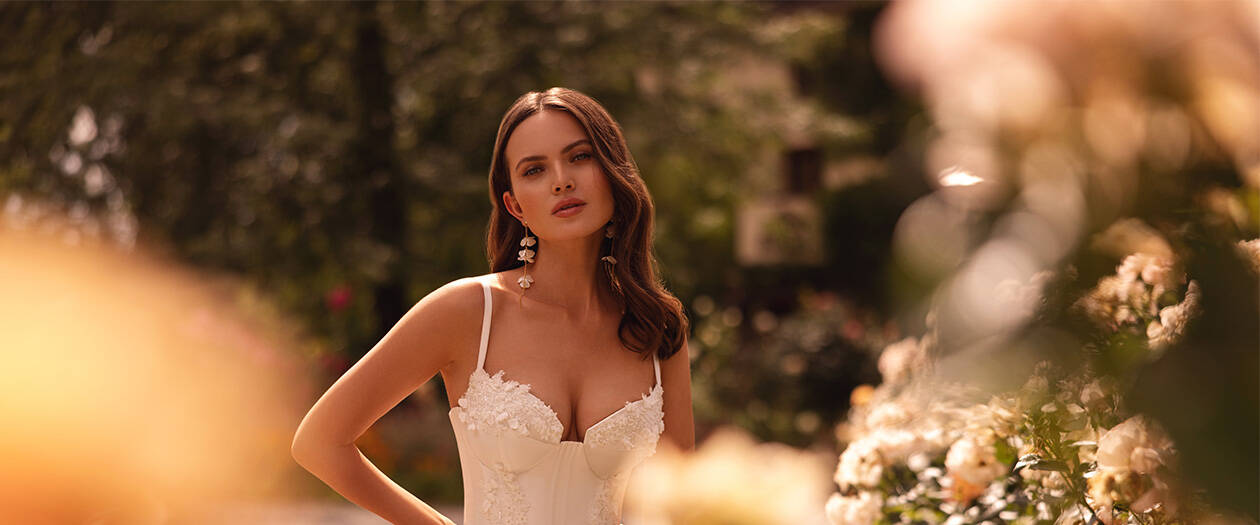
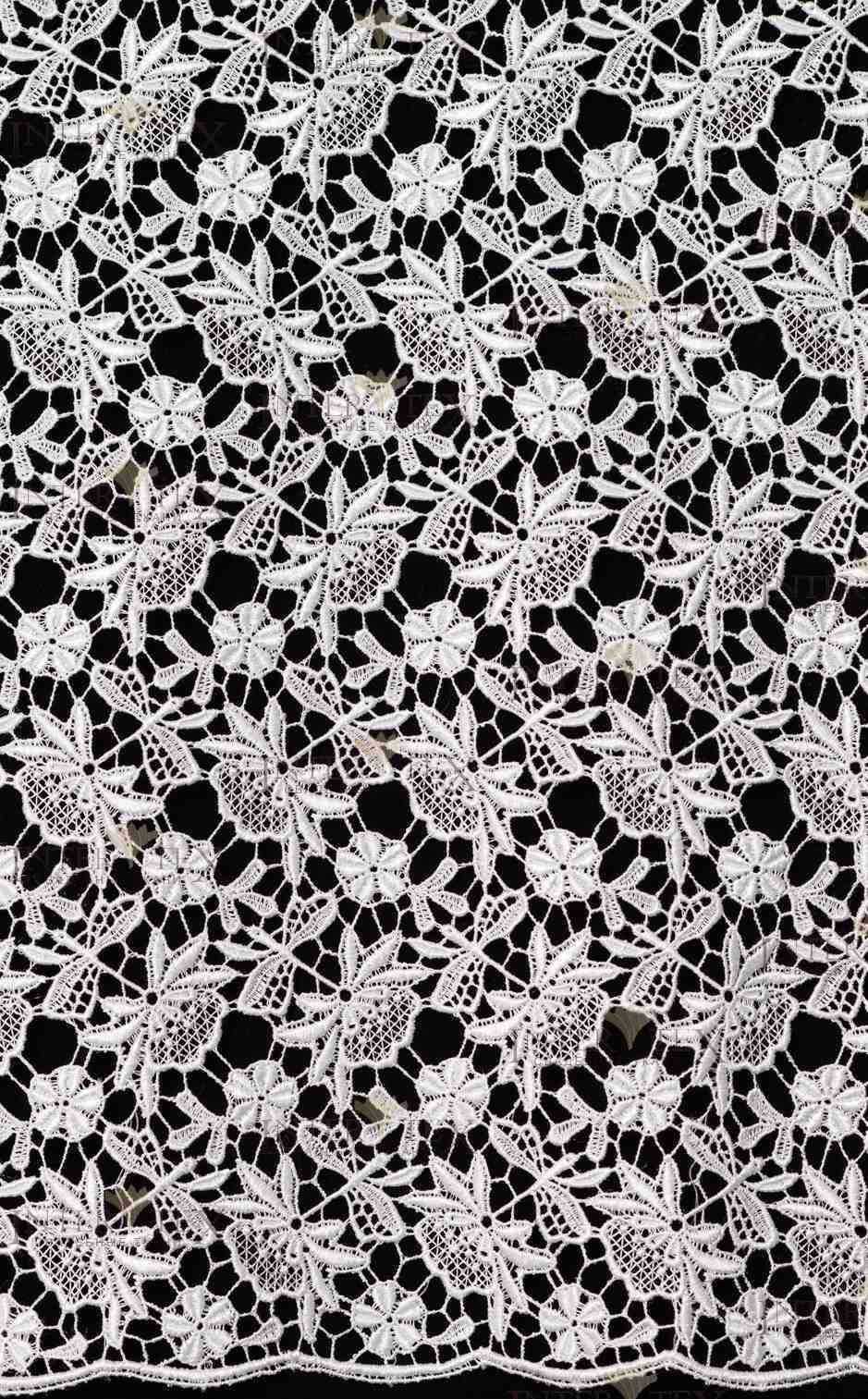
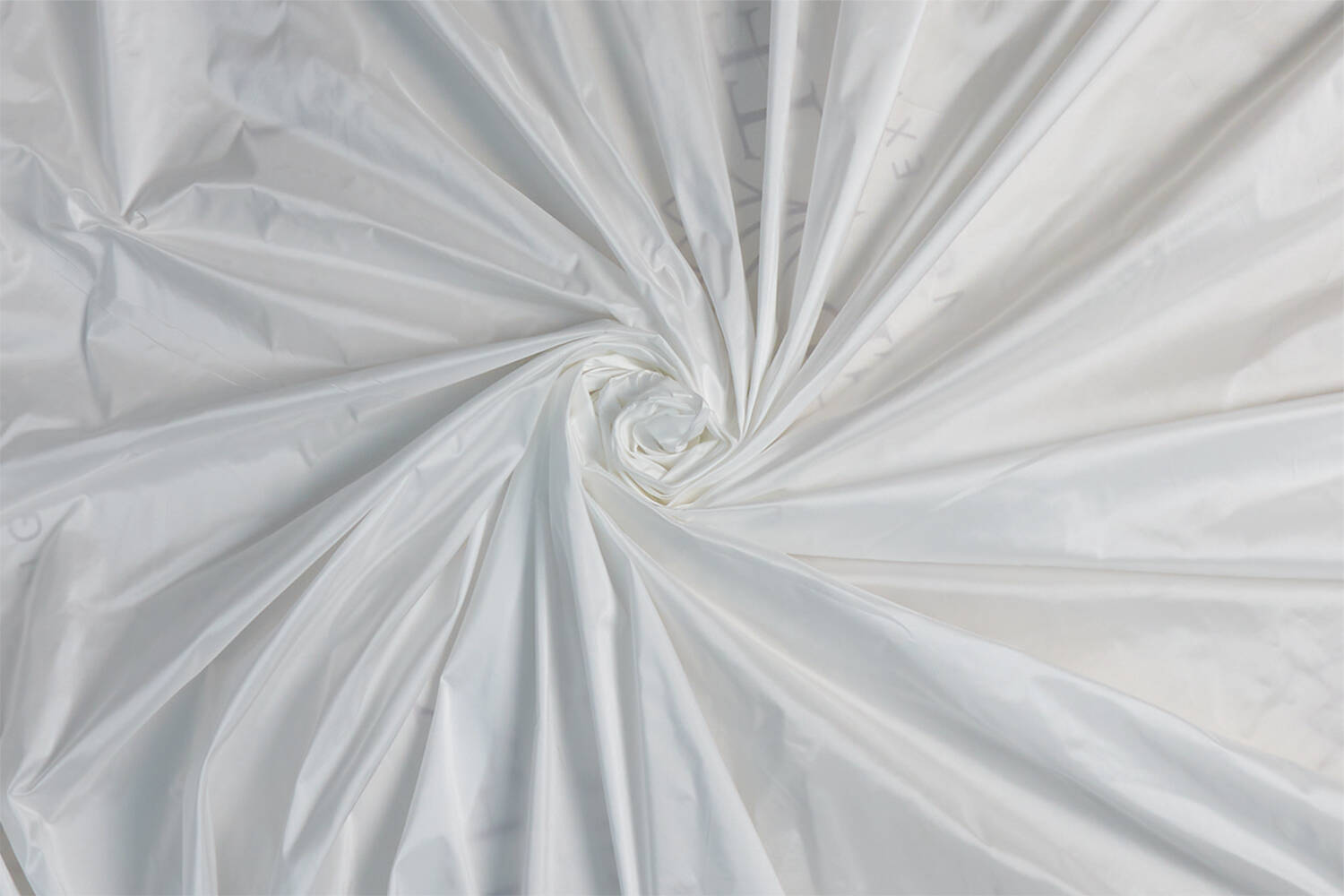
I remember a bride who came into our showroom with her mother. She worked through the sample books — mikado, organza, satin — shaking her head at each one. Then she picked up a piece of plain Chantilly, held it up to the window, and went very still. "That's it," she said quietly. No further explanation was needed.
Chantilly is a lace that needs no justification. It has existed for more than three and a half centuries, and every time the fashion world declares the end of lace, Chantilly comes back — on Valentino runways, in Elie Saab collections, in vintage Dior gowns. Queens and film stars, avant-garde designers and classicists — all have chosen it.
But picking the right Chantilly for a wedding dress is not quite as simple as it sounds. There are nuances: the type of lace (corded, beaded, stretch), the weight, the colour, and how it combines with other fabrics. This guide answers every question — so you can walk into your atelier fully prepared.
Why Chantilly is the queen of bridal lace
Chantilly lace was born in the French town of Chantilly (Oise, Île-de-France region) in the seventeenth century. Lace-makers developed delicate patterns in silk and linen, depicting flowers, leaves and Rococo motifs. In the nineteenth century, black Chantilly became essential to aristocratic dress — Spanish mantillas, French boas, Second Empire evening gowns.
In the twentieth century Chantilly found a new home in the bridal boutique. Christian Dior used it in his New Look collection of 1947. Later, Jackie Kennedy and Audrey Hepburn wore gowns where lace was the star. Today Vera Wang, Carolina Herrera and Monique Lhuillier regularly show wedding collections built around Chantilly.
Three features set Chantilly apart from other bridal laces:
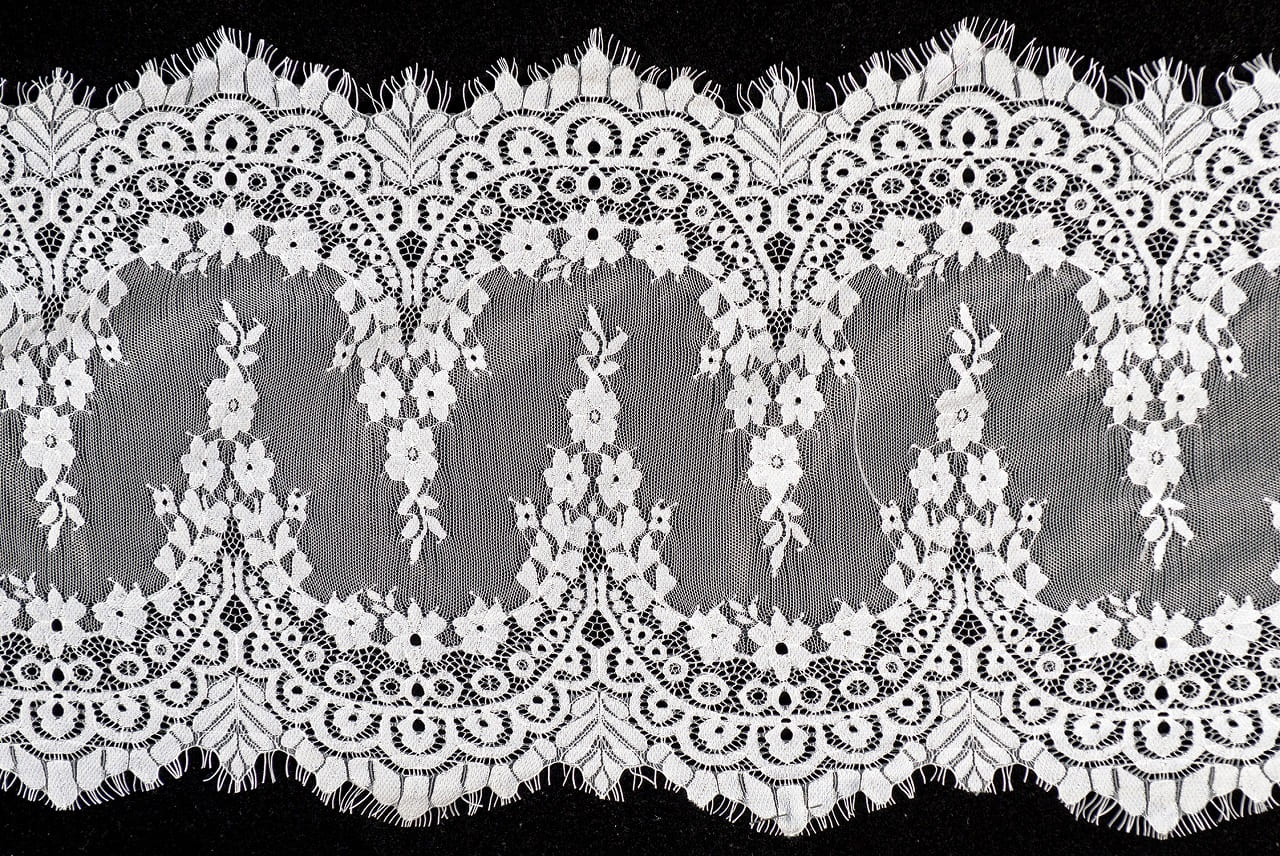
- Net ground (tüll de fond) — the fine mesh through which body or lining shows. This is what gives the "second skin" effect.
- Floral motif with a running cord — each element of the pattern is outlined in cord, making the design crisp and legible on both sides.
- Flat structure — unlike guipure, Chantilly has no raised inserts. It lies flat, drapes softly and does not add unwanted volume to the figure.
Types of bridal Chantilly
By decoration
- Plain (pure Chantilly) — minimalist, lightest weight, ideal for summer gowns and boho styles. Price: $4–9/m.
- Corded (soutache) — an additional cord traces the pattern, giving definition and a slight three-dimensional feel. Popular in classic styles. Price: $7–14/m.
- Beaded or pearl-encrusted — small beads are worked into the key points of the motif, creating a "morning dew" shimmer in light. Price: $10–20/m.
- Sequined — the most dramatic option, perfect for an evening reception or winter wedding. Price: $15–35/m.
By stretch
- Non-stretch (woven Chantilly) — traditional. Requires careful grain-line cutting. Ideal for A-line and ball gowns.
- Stretch Chantilly — 2–8% elastane added. Hugs every curve effortlessly. Essential for mermaid and trumpet silhouettes.
By weight
- Light (50–70 g/m²) — overlays, veils, top layers of full skirts.
- Medium (80–100 g/m²) — the most common weight for the main fabric panel.
- Heavy (100–130 g/m²) — autumn/winter weddings; holds shape without heavy lining.
Chantilly and silhouette: what works with what
Mermaid and trumpet
The natural home of Chantilly. Stretch lace wraps the body like a second skin. Use only stretch Chantilly with at least 5% elastane. Weight 85–110 g/m². Beaded or sequined versions are stunning under reception lighting.
A-line
The most versatile silhouette for Chantilly. Any type works: corded for classic elegance, plain for romance, beaded for luxury. Non-stretch Chantilly is cut on the straight grain. A satin or taffeta lining gives the gown its shape.
Ball gown
Chantilly is most often used here for the bodice or as a top layer over a full tulle skirt — the "lace cloud" effect. For the bodice, use medium or heavy non-stretch Chantilly. The combination of a mikado bodice with a Chantilly-covered tulle skirt is one of the most requested designs in our atelier clients' portfolios.
Sheath
A minimalist silhouette calls for minimalist Chantilly. Plain, lightweight, cut perfectly on grain. The lining determines how the lace lies against the body.
Mini and tea-length
Lightweight plain or finely corded Chantilly — for civil ceremonies, beach weddings, and parties. Weight 50–70 g/m². Often worn without lining or with a very sheer underskirt.
Choosing Chantilly for your body type
Hourglass
Lucky you — any silhouette, any Chantilly type. Most striking: mermaid in stretch Chantilly with sequins or beads. A-line in plain Chantilly is effortlessly feminine without excess drama.
Pear shape
Goal: balance shoulders and hips. Choose an A-line or ball gown with a fitted Chantilly bodice and a full skirt that softens the hips. Beaded Chantilly on the neckline and shoulders draws the eye upward.
Apple shape
A straight fall from the bust or an empire waist works best. Medium-weight plain Chantilly is the most flattering choice. Avoid heavy beading or sequins at the waistline.
Rectangle
Aim to create the illusion of a waist and hips. Corded or beaded Chantilly adds visual texture and apparent volume. An A-line cut with princess seams in Chantilly gives beautiful shape.
Plus size
Stretch Chantilly is your ally. It moves with the body without pulling or cutting in. Weight 90–120 g/m². Lining is essential. Best silhouettes: A-line and straight cut with a V or square neckline.
Colour palette: from timeless to avant-garde
Ivory
The most popular choice — around 60% of Chantilly wedding gowns. The warm tone flatters olive and tanned skin and looks sumptuous in any lighting.
White
Modern and confident. Best for cool or rosy skin tones. Clean white Chantilly with minimal decoration reads as designer-minimal.
Champagne and nude
Romantic for autumn and evening weddings. Nude Chantilly over a skin-tone lining creates the illusion of a bare back — simultaneously daring and elegant.
Blush and pastels
Pink, blue, lavender Chantilly — for brides who want to step beyond tradition without abandoning romance. Particularly beautiful for boho and garden ceremonies.
Black Chantilly
Utterly contemporary. Black Chantilly over a white or nude lining is not a funereal choice — it is a sophisticated fashion statement for cocktail weddings and second-day celebrations.
Chantilly combined with other fabrics
Chantilly + mikado
The classic pairing. A dense mikado bodice holds structure. Chantilly over the skirt or sleeves adds femininity and movement. Budget: $8–15/m mikado + $7–14/m Chantilly.
Chantilly + organza
For full skirts. Organza provides volume and crispness; Chantilly adds pattern and refinement. Construct each as a separate layer — do not sew them together — to preserve the movement of both.
Chantilly + satin
The most sensuous combination. A satin lining reflects light and deepens the colour. Chantilly over satin reads as a patterned second skin. The satin should match the lace or be one to two tones darker.
Chantilly + tulle
The fairytale silhouette. A full tulle underskirt with a Chantilly overlay creates a magical princess gown. Use 60–80 g/m² Chantilly so it does not crush the tulle volume.
Chantilly + crepe
For contemporary brides. A matte crepe base with Chantilly inserts or sleeves is restrained and refined — popular for city ceremonies and intimate celebrations.
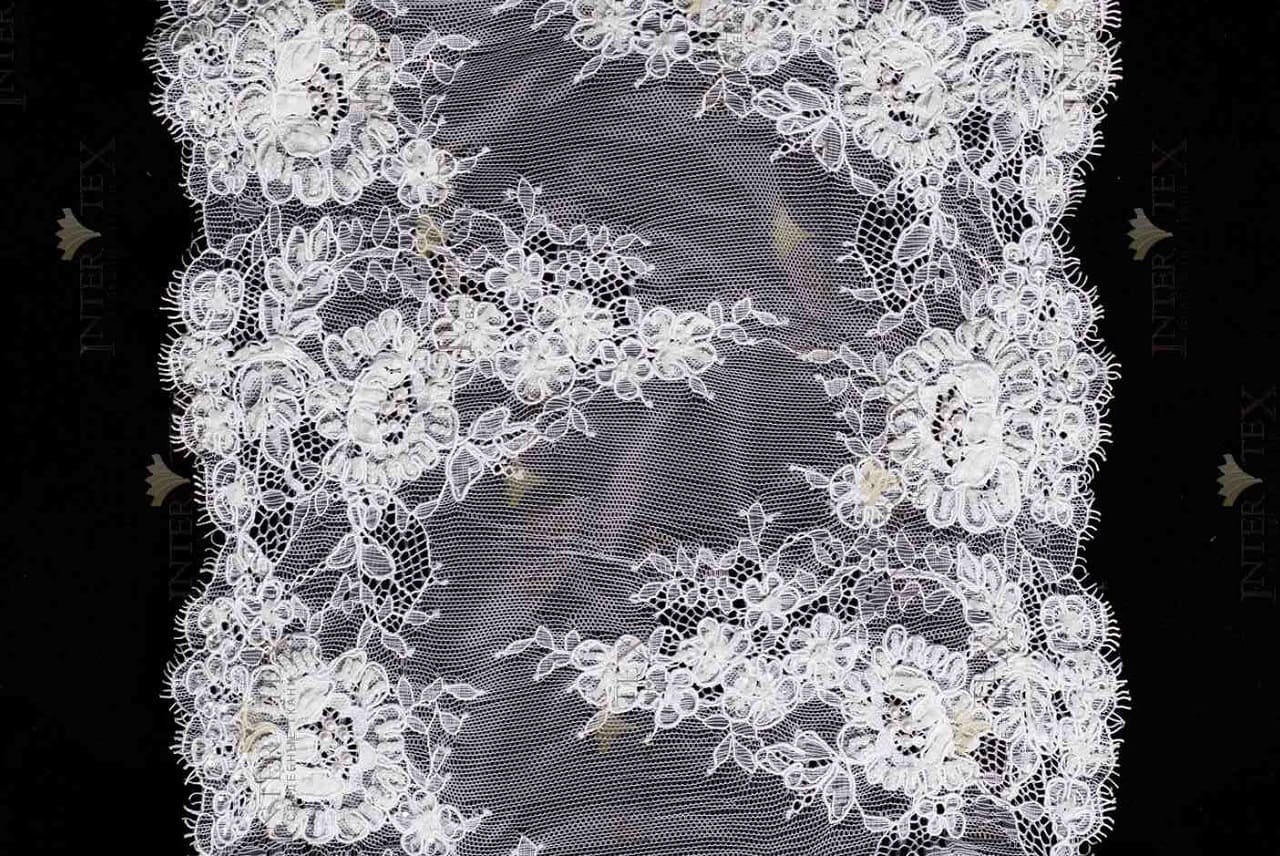
Chantilly lace in the Inter Tex catalogue


How to sew Chantilly lace: 6 professional tips
1. The right needle and thread
Non-stretch Chantilly: 70/10 or 80/12 Microtex needle (sharp, fine). Stretch Chantilly: 80/12 Jersey needle (ball point, won't snag the net). Thread: 100% polyester size 50–60. Always test on a scrap before starting.
2. Cut only on the straight grain or on the bias
Off-grain cutting causes immediate distortion and motif shift. Non-stretch: always on the straight grain (warp direction). Stretch: on the bias (45°) or crosswise — whichever gives the most stretch in the direction you need.
3. Place tissue paper under the lace
When machine-stitching, the lace can be dragged into the feed dogs. Solution: slip a strip of tissue paper or tracing paper under the bottom layer. Tear it away cleanly after stitching.
4. No steam pressing
Steam distorts fine ornament and can felt delicate fibres. Press only through a thin cotton pressing cloth, iron on the "synthetic" setting (110–130°C). For finished garments, use a steamer held 20 cm away.
5. Finish seam allowances properly
Raw Chantilly edges fray quickly. Best options: serging/overlocking with matching thread, or a French seam for lightweight fabric. For decorative edges and armholes, turn under 0.5 cm and slip-stitch.
6. Store in acid-free tissue paper
Polythene bags are an enemy of Chantilly: plastic doesn't breathe and the lace yellows. Correct storage: wrap in acid-free tissue paper, place in a cardboard box in a cool, dark location. Check every two to three years.
Video: how to cut and sew a simple Chantilly lace dress
Video: Monique Lhuillier — Spring 2025 Bridal Collection. All rights belong to the respective owner.
Seasonal guide: which Chantilly for which wedding
Spring and summer weddings (April — September)
- Weight: 50–80 g/m²
- Type: plain or finely corded
- Colour: ivory, white, blush, pastels
- Pairing: chiffon or organza beneath, Chantilly over
- Tip: avoid heavy sequins outdoors in bright sun — they can be blinding
Autumn and winter weddings (October — March)
- Weight: 90–130 g/m²
- Type: beaded, sequined or heavily corded
- Colour: ivory, champagne, nude, black
- Pairing: mikado or heavy satin as base fabric
- Tip: sequins and crystal beading are magical under candlelight and ballroom chandeliers
Caring for a Chantilly lace wedding dress
Washing
Polyester Chantilly: delicate cycle 30°C, mesh laundry bag, liquid detergent without bleach or optical brighteners. After washing, lay flat on a clean towel, reshape, and air dry horizontally. Never wring. Silk Chantilly — dry clean only.
Pressing
"Synthetic" temperature setting (110–130°C), always through a cotton pressing cloth. Sequined Chantilly must never be pressed — sequins melt even at low temperatures. Use a steamer at 20 cm distance instead.
Long-term storage
After the wedding, take the gown to a dry cleaner even if it looks clean — invisible stains oxidise and yellow over months. Then: wrap in acid-free tissue paper, place in a cardboard box. No polythene. Ideal storage temperature: 15–20°C without humidity swings.
Comparison table: Chantilly vs other bridal laces
| Feature | Chantilly | Guipure | Macramé | Alençon |
|---|---|---|---|---|
| Structure | Net ground + corded motif | No ground, raised motif | Woven cord ground | Net + relief cord |
| Weight (g/m²) | 50–130 | 150–350 | 120–250 | 80–150 |
| Stretch available | Yes (and non-stretch) | No | No | No |
| Drape | Excellent | Poor | Moderate | Good |
| Price ($/m) | 4–35 | 8–80 | 6–40 | 20–120 |
| Best for | All silhouettes | A-line, sheath | A-line, boho | Classic, A-line |
| At Inter Tex | Yes, 60+ styles | Yes | Yes | By order |
Where to buy Chantilly lace wholesale in Ukraine and the EU
Inter Tex is a wholesale supplier of bridal fabrics and laces with 20+ years of experience. We work with wedding ateliers, dress manufacturers and designers across Ukraine and in Romania, Moldova, Poland and other EU countries.
- Warehouse in Chernivtsi — 500+ fabric and lace articles in permanent stock
- Chantilly: plain, corded, beaded, sequined, crystal-embellished — 60+ styles
- Minimum order — $50 for Ukraine and $100 for international customers
- Swatches — 10×10 cm samples sent on request to Ukraine and EU
- Delivery: Nova Poshta across Ukraine, international shipping to the EU