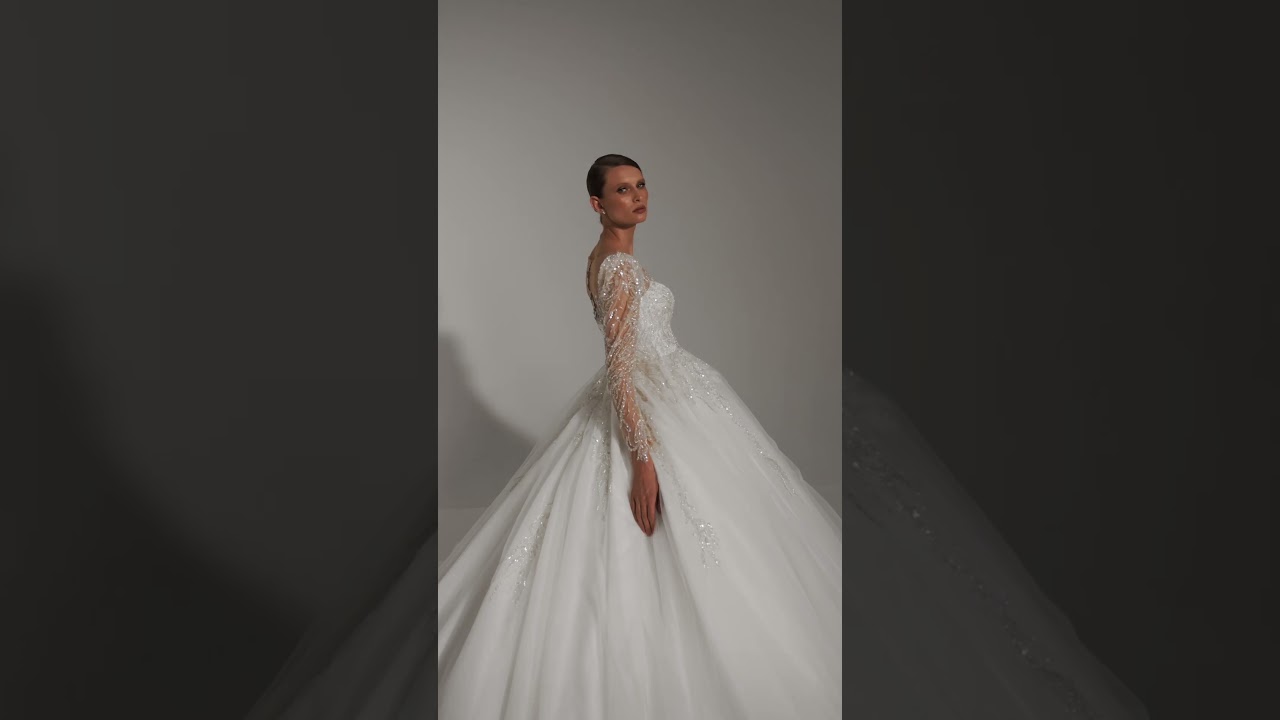
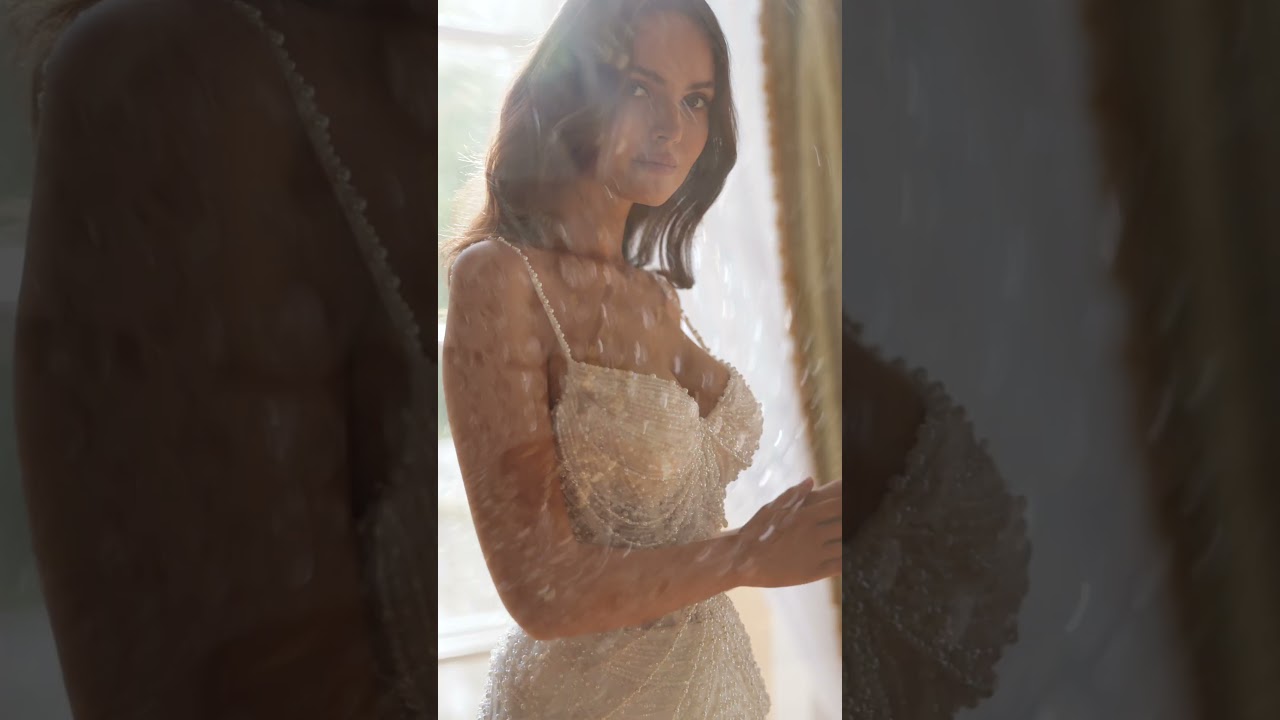
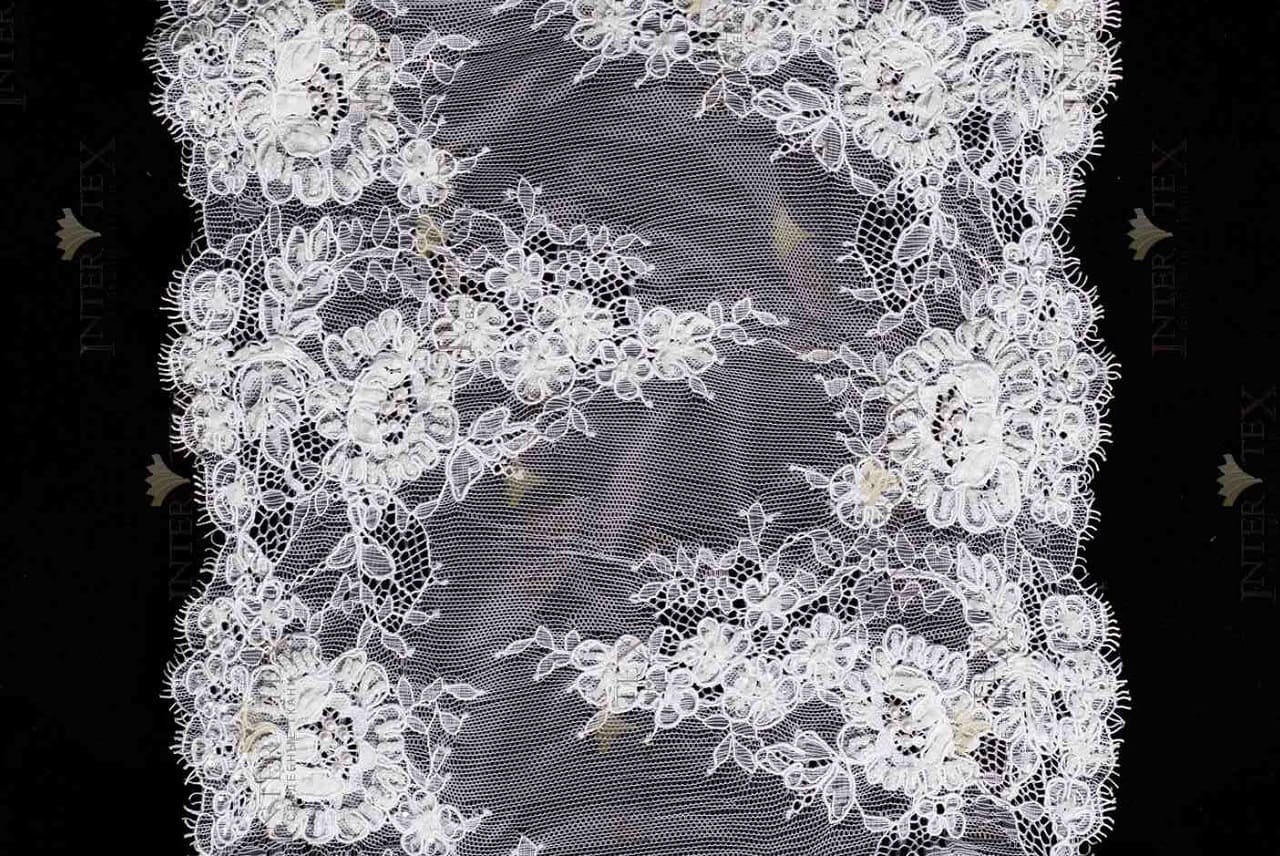
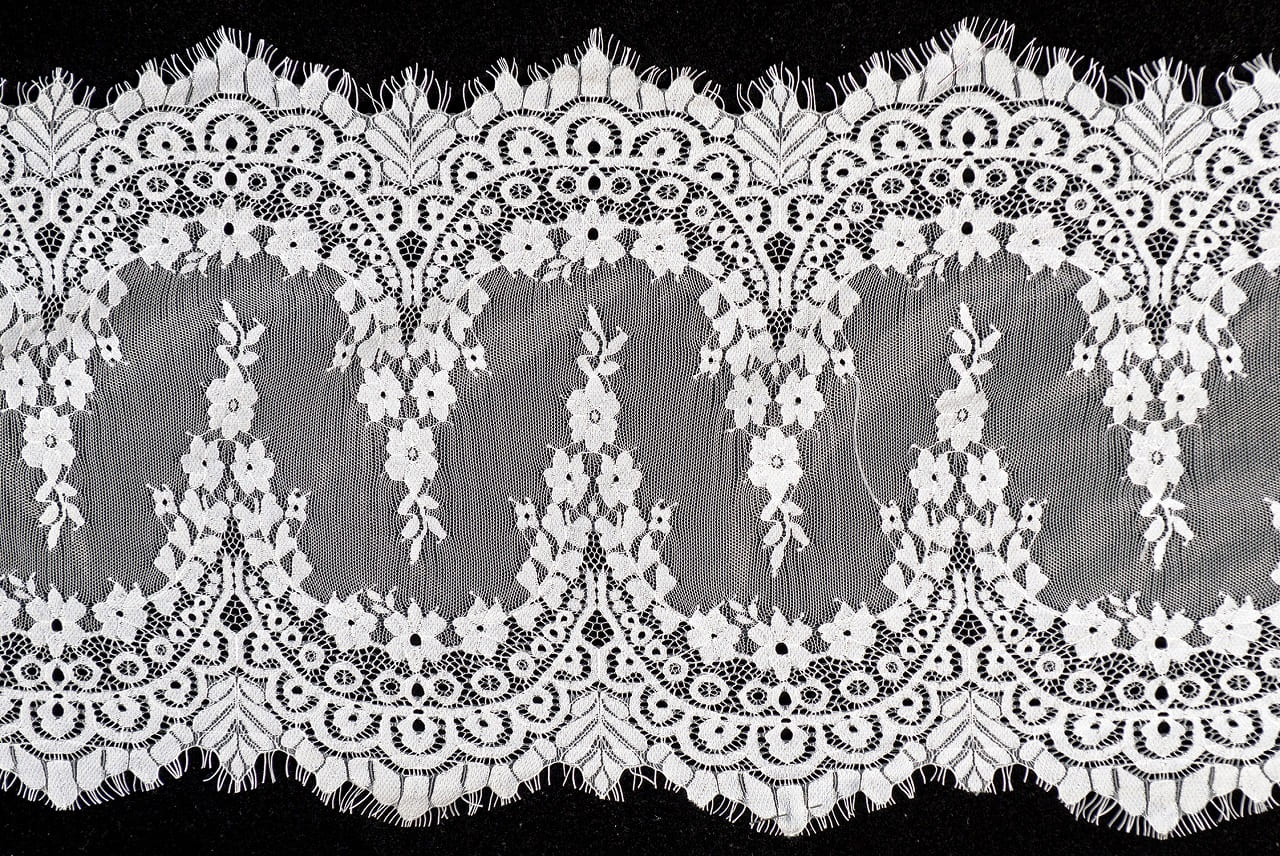
Chantilly is not just lace. It is history, legend, and one of the most recognisable textures in the bridal world. The name comes from the French town of Chantilly, where in the 18th century craftswomen began weaving incredibly fine black silk lace. Today Chantilly is available in ivory and pure white, decorating the most expensive wedding dresses in the world.
What is Chantilly lace
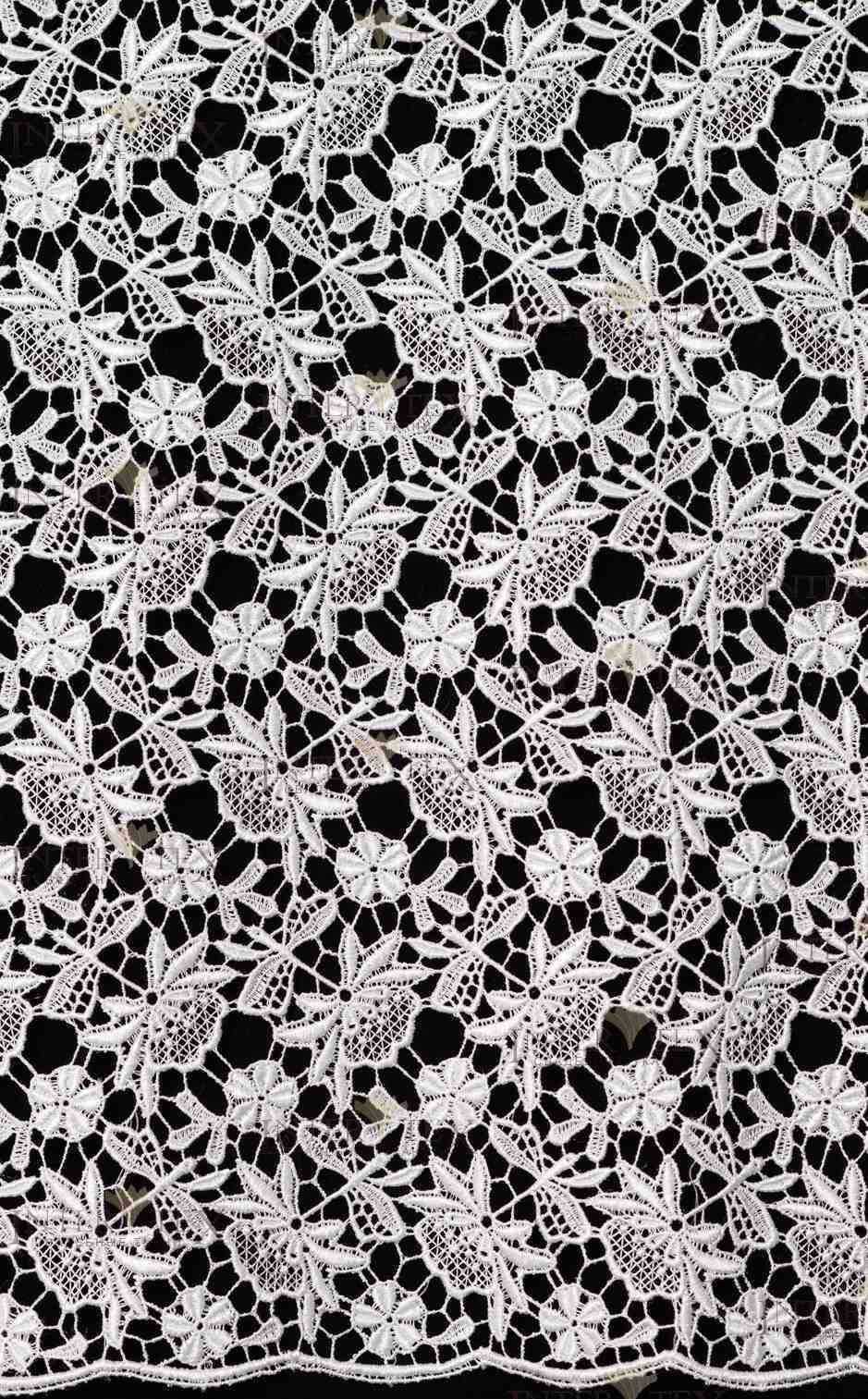
Chantilly is a French lace on a fine transparent net base with openwork floral motifs and characteristic scalloped edges. It originated in the town of Chantilly in the 18th century. Today produced by machine, but retains the delicate, light look of the original. Most popular for classic wedding dresses.
Brief history of Chantilly
The first samples of the lace appeared in Chantilly around 1750. Its distinctive feature was the bobbin lace technique. Originally the lace was black silk and symbolised aristocratic elegance. During the French Revolution, lace makers were persecuted and production almost disappeared. Revival came in the 19th century, when Empress Eugenie, wife of Napoleon III, made Chantilly fashionable again.
In the 20th century the lace began to be produced on Leavers machines — this allowed lower prices without losing quality. Today, genuine "Leavers Chantilly" lace is mainly produced in Calais (France) and is considered premium. Other manufacturers make excellent equivalents — including those supplied by Inter Tex.
Interesting fact: Queen Elizabeth II at her 1953 coronation wore a dress with Chantilly-inspired elements. Kate Middleton, marrying Prince William in 2011, chose a Sarah Burton dress (Alexander McQueen) with numerous Chantilly motifs.
5 key features of Chantilly lace
- Fine transparent net as base — main difference from guipure.
- Floral motifs — roses, lilies, leaves, twigs.
- Scalloped edges — wavy openwork teeth.
- Soft drape — lace "lays" on the body, does not stand out.
- Delicate texture — the most delicate of all bridal laces.

Chantilly vs Alencon vs Guipure: differences
Three classical bridal laces are easy to confuse. Let us clarify:
| Parameter | Chantilly | Alencon | Guipure |
|---|---|---|---|
| Origin | Chantilly, France | Alencon, France | Switzerland, 16th century |
| Base | Fine net | Fine net with cordonnet | No base |
| Texture | Most delicate | Voluminous, with cordonnet | Dense, openwork |
| Edge | Wavy scallops | Sharp contours | Straight or shaped |
| Style | Romantic, vintage | Luxurious classic | Modern classic, boho |
| Price | High | Very high | High |
How to choose: for a romantic soft dress — Chantilly. For a luxurious princess gown — Alencon. For a modern elegant look — guipure.
Where Chantilly is used in wedding dresses
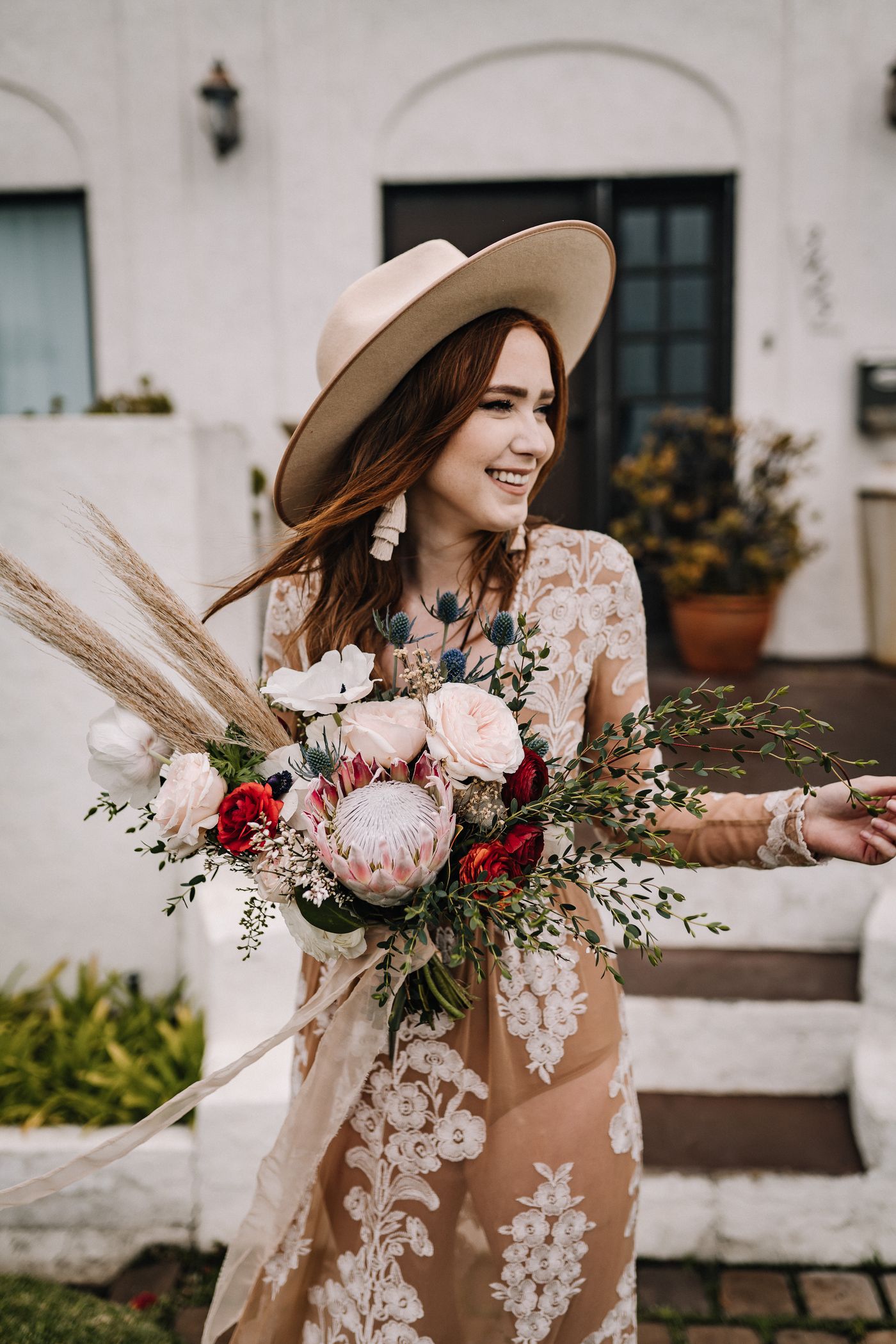
- Bodice — most popular use
- Mermaid skirt — drapes the figure, scallops on the hem
- Sleeves and cuffs — most delicate accent on the arms
- Capes and boleros — classic detail for church ceremonies
- Veil — lace edging adds vintage character
- Gloves — returning to trend in 2026
👀 Looking for lace for a classic dress?
Inter Tex catalog: Chantilly and Alencon-style lace fabrics from manufacturer. Wholesale from 20 m, EU shipping.
Which fabrics pair well with Chantilly
- Satin — classic pair, smooth base highlights the lace
- Silk — for premium dresses
- Crepe — matte crepe makes lace stand out
- Tulle — voluminous tulle skirt + Chantilly bodice = princess look
- Chiffon — airy summer option
How to sew with Chantilly: 6 tips
- Always use a satin or chiffon lining — lace is transparent.
- Cut respecting the motifs — main flowers should be in visible spots.
- Preserve scalloped edges — they are the dress's decorative edge.
- Sew with thin needles 70-80 and silk threads.
- Iron only from the wrong side through gauze on low temperature.
- Before measuring — iron the lace, it stretches.
Common mistake: cutting lace "like regular fabric" without considering the pattern. Result: chopped flowers, broken petals, lost beauty. Always lay the lace following the full pattern and find the optimal motif placement.
Care for Chantilly items
Care rules: dry cleaning at companies specialising in bridal garments. Very delicate hand washing in cool water with silk detergent is acceptable — no rubbing or wringing. Dry flat on a white towel. Store in acid-neutral paper inside a box, not on hangers — the lace must not stretch.